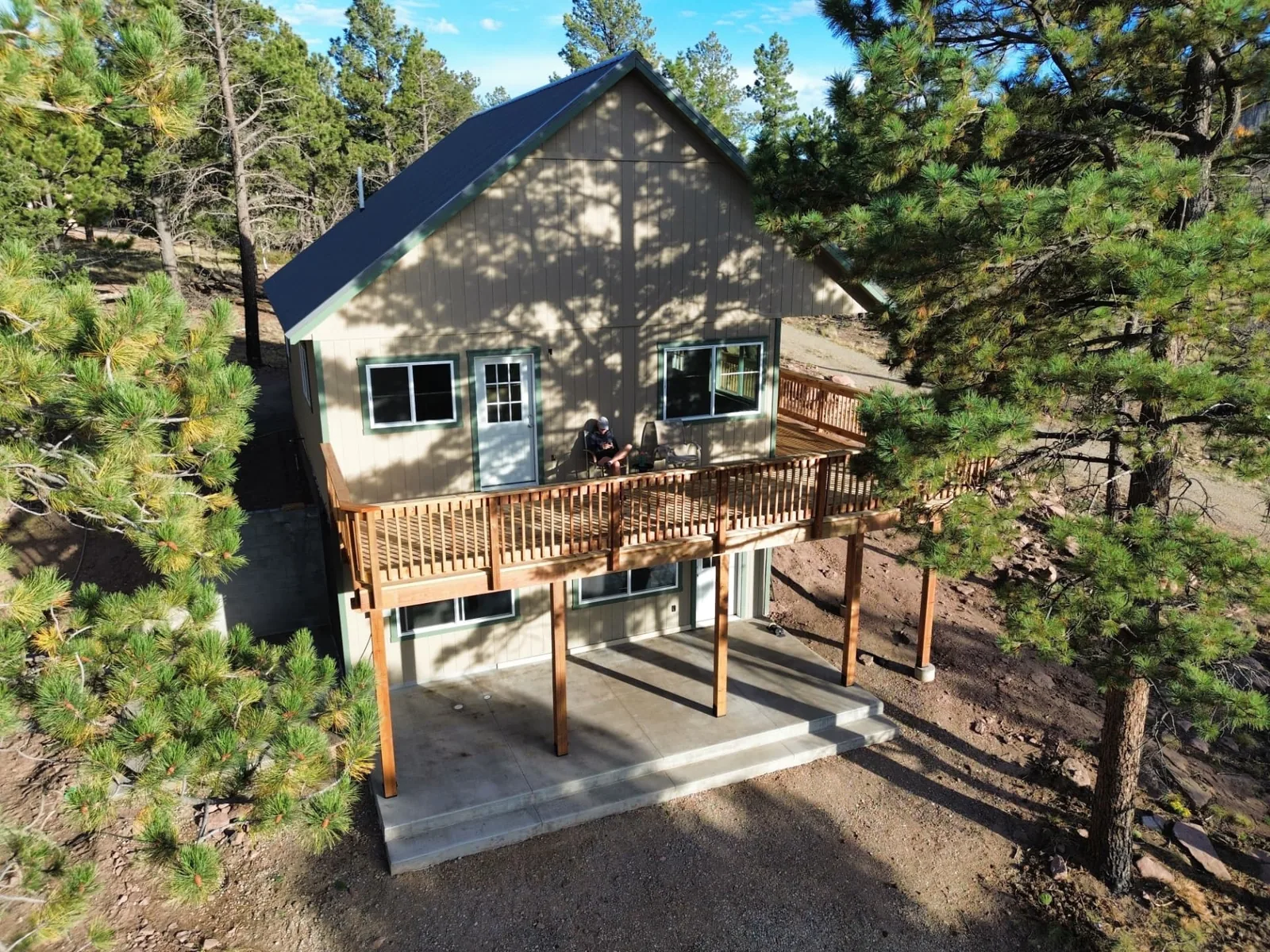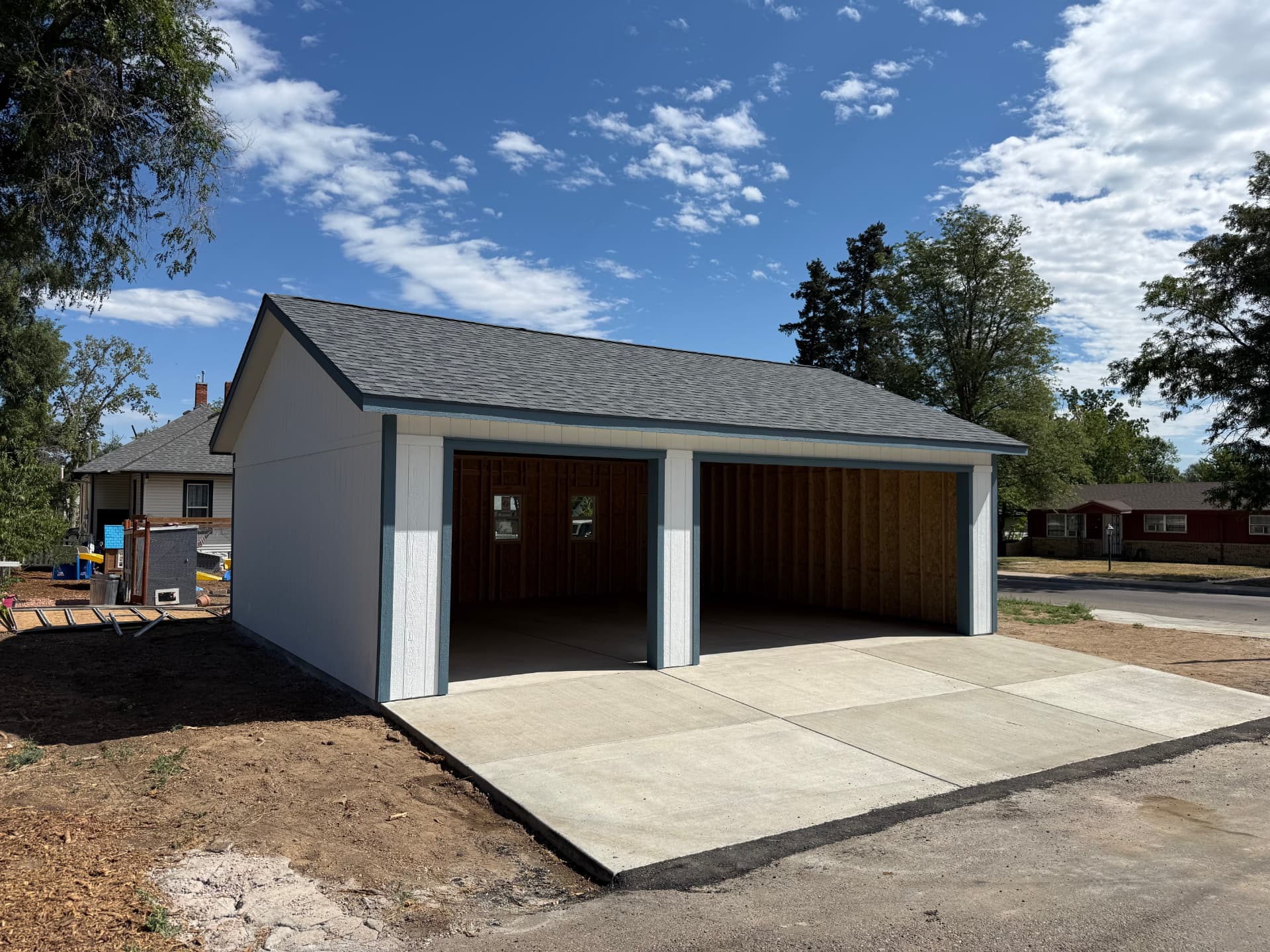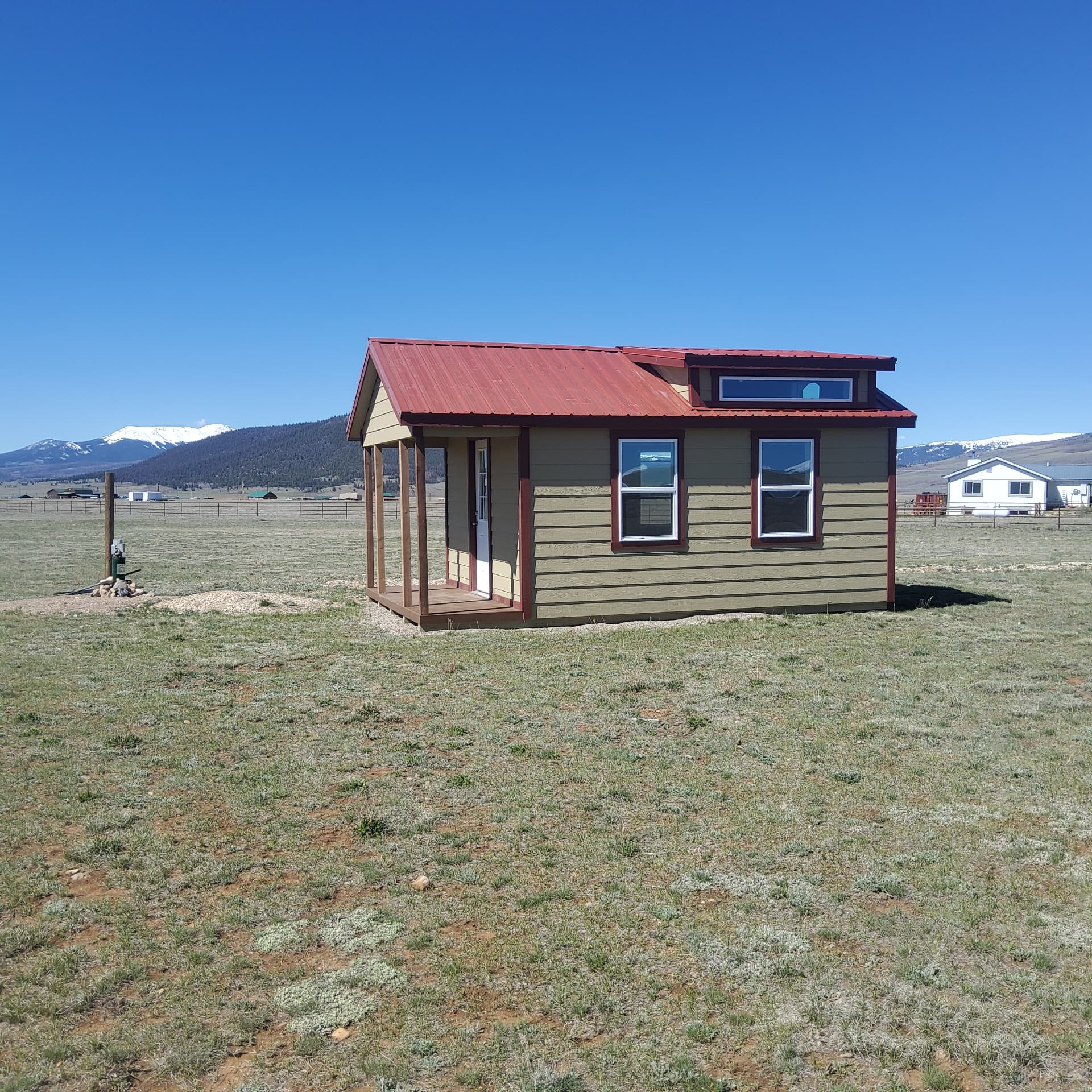
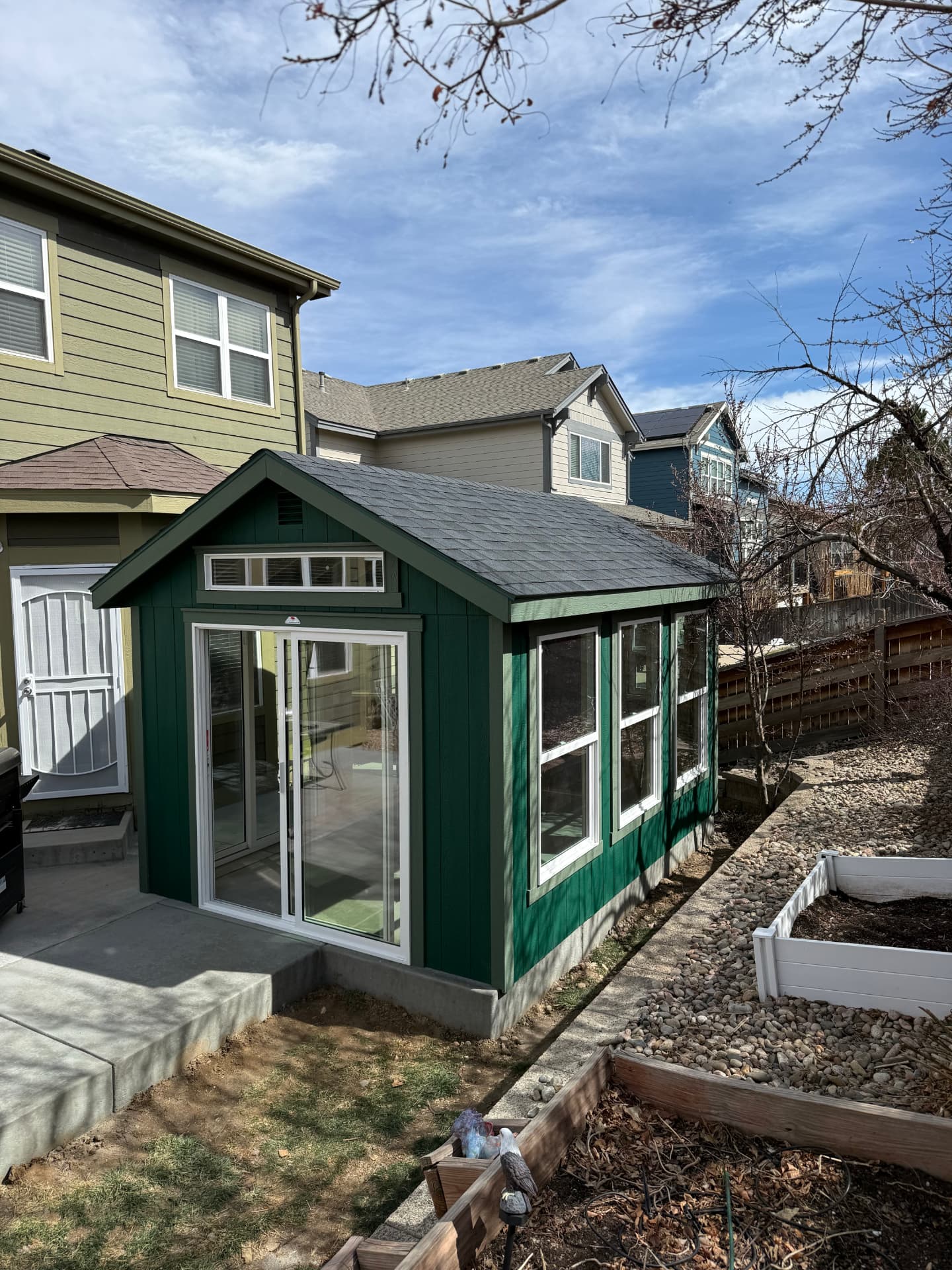
No — you usually can't put a shed anywhere in your backyard. Even on your own property, a shed has to pass three separate tests. First, the location has to be allowed: your city or county sets setbacks and zoning rules, recorded easements may be off limits, an HOA may have its own covenants, and the project may need a permit. Second, the ground has to support the building, which means a level, well-drained base. Third, the building has to be able to get there — through gates, past fences and trees, and under overhead lines.
None of these rules is the same for every Colorado property. Requirements change by county, municipality, zoning district and HOA. As a Colorado shed builder delivering from Penrose, The Shed Yard sees these questions on almost every order, so this guide walks through what to check before you choose a spot — and when to verify with your local authority.
Before You Order a Shed, Check These 3 Things
- ✓ Rules: setbacks, easements, HOA and permits
- ✓ Site: slope, drainage and foundation
- ✓ Access: gates, clearance and delivery route
Disclaimer: This article is general information for Colorado homeowners, not legal advice or a determination for your property. Zoning, permit and HOA requirements vary and change over time. Always confirm current requirements with the city, county, building department or HOA responsible for your property.
Can I Put a Shed Anywhere in My Backyard?
Your yard may look wide open, but several invisible lines decide where a shed can go: the property line, the setback lines your zoning district draws inside it, and any easements recorded on your plat. Layered on top are HOA covenants and building-permit thresholds. Then come the physical limits — the slope, where water flows after a storm, and whether a truck and trailer can actually reach the spot.
The good news: most backyards have at least one workable location. The goal is to find it before the shed arrives, not after.
The 3 Tests Your Shed Location Has to Pass
| Test | What it covers | Who decides |
|---|---|---|
| 1. Can I legally put it there? | Zoning, setbacks, property lines, easements, HOA rules, permits | Your city or county, building department, HOA |
| 2. Can the site support it? | Slope, drainage, soil, foundation, trees, nearby structures | Site conditions and your foundation choice |
| 3. Can the building actually get there? | Gate width, turns, fences, trees, overhead lines, terrain | Your delivery route and our delivery equipment |
1. Check Colorado and Local Shed Setback Requirements
A setback is the minimum distance a structure must sit from property lines, streets and sometimes other buildings. Colorado has no single statewide shed setback. Setbacks come from the zoning code of your city or, in unincorporated areas, your county, and they often differ by zoning district, lot type and which side of the lot you are on.
Setbacks generally apply even when a shed is small enough to skip a building permit. A permit exemption only means you may not need a building permit — it does not exempt the shed from zoning. Our shed setbacks FAQ explains the basics, and the Colorado shed permit requirements guide compares jurisdictions.
How close can I put a shed to my property line in Colorado?
It depends entirely on your jurisdiction and zoning district. Ask your zoning office for the rear and side setbacks for an accessory structure on your parcel, and whether height or size changes the distance. If you live in one of these areas, start with our local guides: Colorado Springs, El Paso County, Pueblo and Fort Collins.
Can I put a shed in my front yard?
Often not. Many zoning codes restrict accessory buildings in front yards or require larger front setbacks, while rural parcels may have more flexibility. See our front yard shed FAQ and confirm with your zoning office.
Can I put a shed in my side yard?
Sometimes. Side yards are usually where setbacks are tightest, and they are also the most common delivery bottleneck. Measure the space between the house and fence, then check the side setback for your lot. A narrow side yard may be legal but still too tight for fully assembled delivery.
2. Check Your Property Lines and Easements
Do not assume your fence marks your property line — fences are often set inside or outside it. Your plat, survey or improvement location certificate from closing is the best place to start, and your county assessor's map can help. If the line is uncertain and the shed will sit near it, a survey is worth considering.
Can I put a shed over a utility easement?
Usually not. Easements give utility companies or drainage systems the right to use part of your land, and many jurisdictions restrict permanent structures there. A utility may also need access later, which can force the shed to move. Details are in our utility easement FAQ.
Can I put a shed under power lines?
We recommend against it. Your utility provider may have clearance rules for structures near its lines, and overhead wires can block delivery of a fully assembled shed. Before any digging for a foundation or anchors, Colorado law requires contacting Colorado 811 so underground utilities can be marked.
Can I put a shed next to my fence?
If the fence is on or near the property line, the shed may fall inside the setback. Even where it is allowed, leave enough space to paint, repair and clear snow from the wall and roof edge on that side.
3. Check Your HOA Rules
If your home is in an HOA, its covenants can restrict shed size, height, roof style, colors, materials and placement, and many require written approval before installation. HOA approval and government approval are separate — getting one does not mean you have the other.
Can my HOA stop me from putting a shed in my backyard?
An HOA can enforce its recorded covenants, which may limit or condition a backyard shed. Read your covenants and architectural guidelines, then submit the shed details your HOA asks for. Our HOA shed FAQ covers what to prepare, and our 3D customizer can help you match colors and styles to HOA guidelines.
Do I need a permit for my shed?
Permit thresholds are set locally and usually depend on square footage, height, foundation and utilities. Start with do I need a permit for a shed in Colorado, and if paperwork is not your thing, see whether we can help with your shed permit.
4. Make Sure the Ground Is Suitable for a Shed
A shed needs a level, stable base. Soft fill, roots, rock outcrops and old concrete all affect what it will take to prepare the spot. The base you choose — gravel pad, concrete slab or piers — should match the building size, the soil and your local requirements. Our shed foundation guide compares the options, and the gravel pad vs. concrete slab FAQ answers the most common question.
Get the Most Up-to-Date Pricing
Prices shown are current as of Sep 2026 and can change at any time. Options, site prep, permits, and delivery conditions all affect the final cost.
Can I put a shed next to my house?
Possibly, but check three things. Your zoning code may require a minimum distance between buildings, and fire or building codes can add requirements for structures close to a home. Roof runoff and snow sliding off either roof can also damage the shed or the house. Leave room for maintenance and confirm the spacing locally.
Trees and roots
Large roots can make leveling difficult, and overhanging branches drop debris and snow on the roof. Trimming branches before delivery also helps clear the path for the trailer.
5. Consider Drainage Before Choosing Your Shed Location
Water is the most common long-term problem we see. Watch where water flows and pools after a storm or snowmelt, and avoid low spots, swales and the bottom of a slope. A gravel pad with proper grading helps water move away from the building.
Can I put a shed in a drainage area?
Avoid it. Drainage swales and recorded drainage easements often must stay open, and a shed in the path of runoff can cause flooding on your lot or a neighbor's. If you are near a floodplain, check with your local floodplain administrator before building.
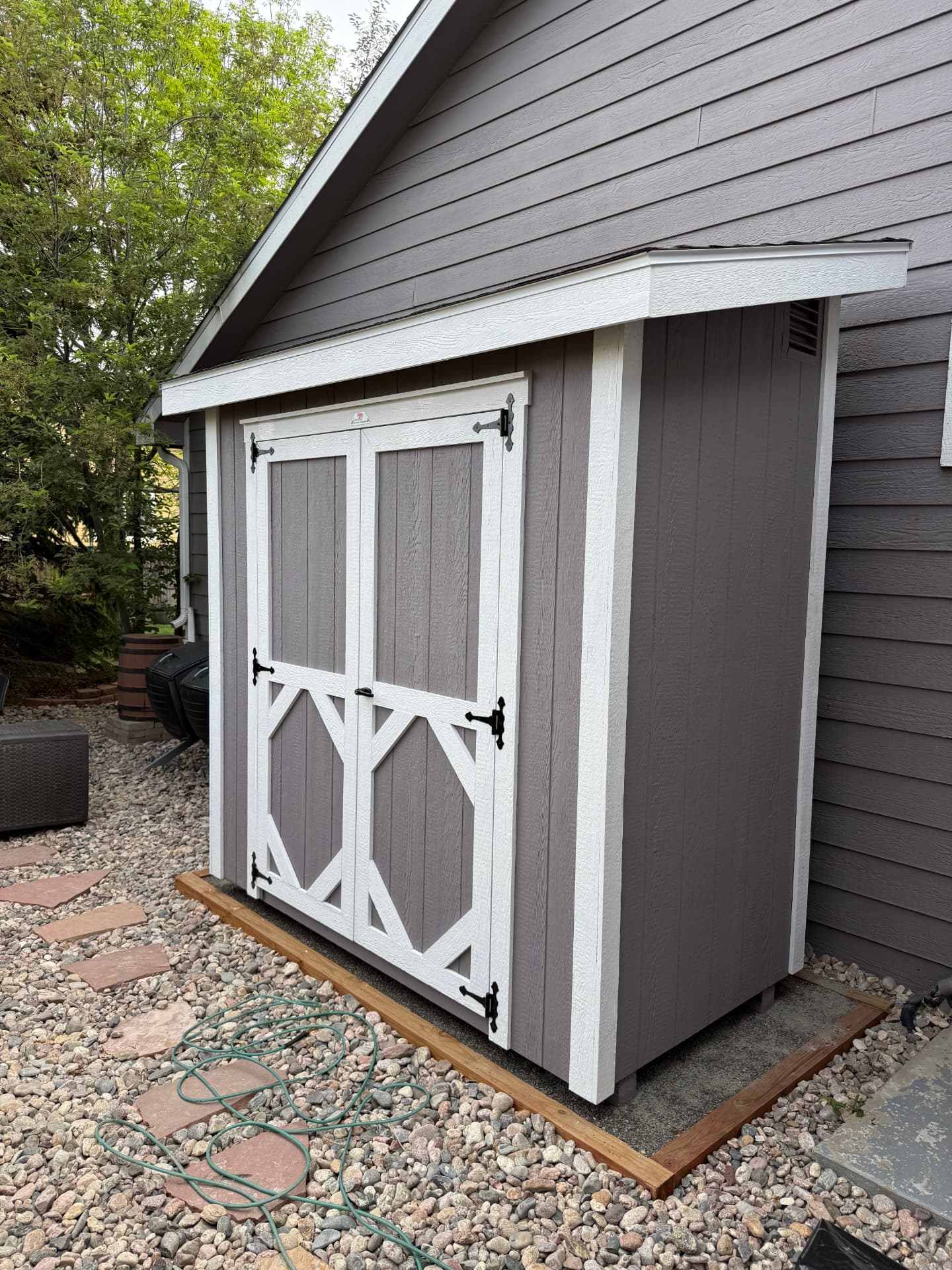
Not sure whether your backyard is a good fit for a shed?
Send us photos of the spot, approximate dimensions, gate and access measurements, and any known property restrictions. We'll help you figure out the practical next step before you order.
6. Can You Actually Get the Shed Into Your Backyard?
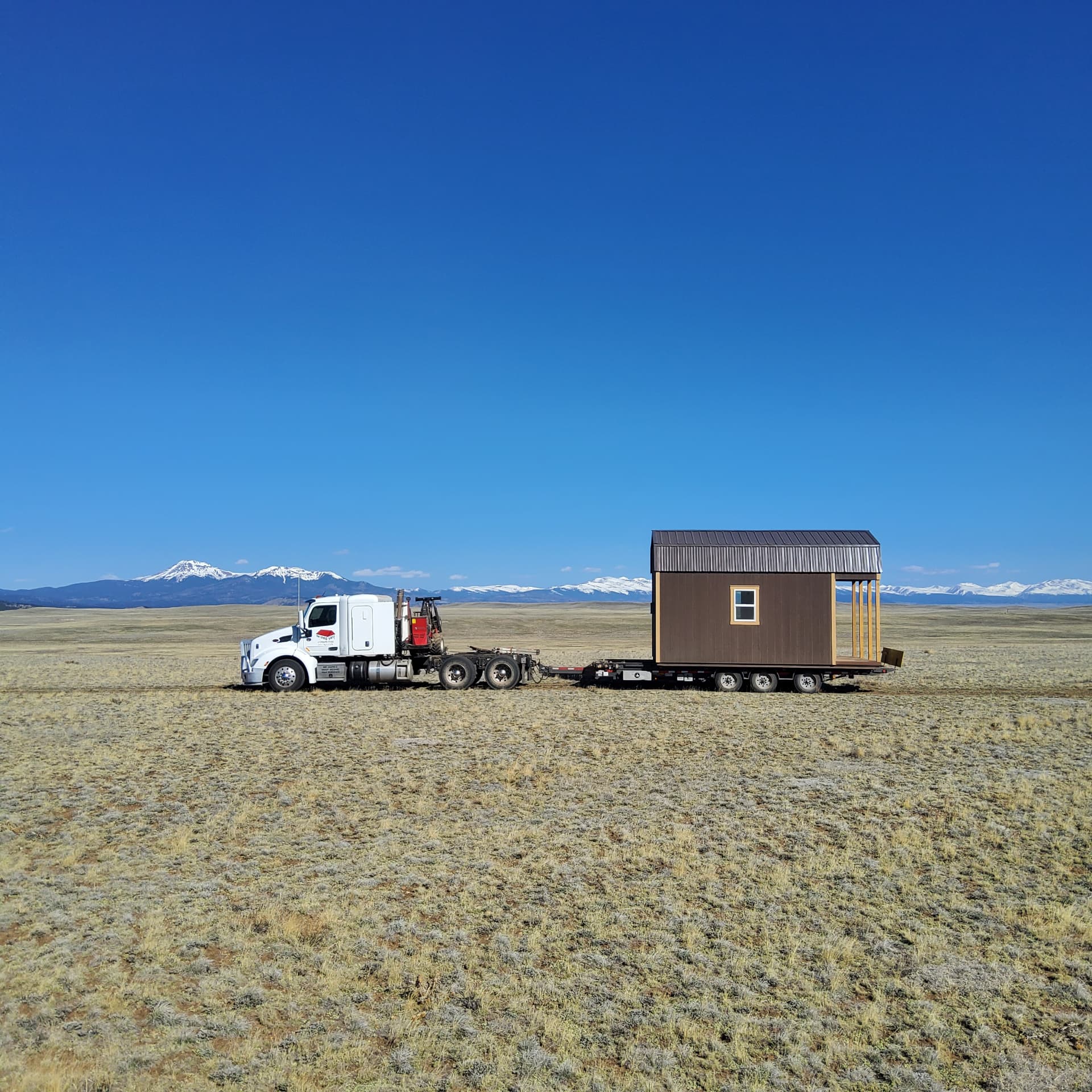
This is the test homeowners most often skip. We deliver fully assembled buildings on a semi or F-350 pulling a specialized trailer that extends from 28 to 42 feet with multiple articulation points and zero-turn capability, and a mule rides along for final placement when the trailer cannot back all the way in. That equipment reaches a lot of tight yards — but not every one.
Does my backyard need to be accessible for shed delivery?
For a fully assembled shed, yes. Plan on a path at least one foot wider than the building on a straight shot, plus roughly 16 feet of vertical clearance. Corners, slopes and soft ground change the math. See how much clearance you need for shed delivery and our Colorado shed delivery guide.
Delivery is free within 150 miles of our Penrose, Colorado location when the building can be delivered fully assembled. Outside that area, delivery is available for an additional fee — check the delivery map for the estimated cost.
7. Check Gates, Fences, Trees and Overhead Clearance
Walk the full route from the street to the spot and measure the narrowest point. Common obstacles include:
- Gates: measure the actual opening, not the fence section. See delivery through a narrow gate.
- Tight turns: a 90-degree turn between a house and fence needs more room than a straight path.
- Trees and branches: low limbs can block the roofline of the shed. See delivery under trees or power lines.
- Utility lines and eaves: overhead wires and roof overhangs reduce vertical clearance.
- Sprinklers, septic and soft ground: heavy equipment can damage them — see moving sprinkler lines before installation.
- Vehicles, toys and landscaping: clear the path before delivery day. Our delivery prep FAQ has the full list.
Can a fence be temporarily removed for shed delivery?
Often, yes. Removing a fence panel or section is one of the most common ways to open a delivery path. Arrange removal and reinstallation before delivery day, and if the fence is shared, talk with your neighbor first.
8. What If Your Shed Location Is on a Slope?
A sloped site can work with the right base. Depending on the grade, that may mean grading, a built-up gravel pad, a retaining wall or a pier-and-post foundation. The steeper the slope, the more site work it takes. Our sloped yard FAQ covers the options, and our site preparation services handle grading, retaining walls and foundations with one crew.
What happens if my property is too steep or difficult for normal shed delivery?
Steep driveways and rough terrain can limit what the trailer can safely reach. See delivery up a steep driveway and delivery to mountain or rural properties. When a fully assembled building cannot safely get there, an on-site build is usually the next option.
9. What If a Fully Assembled Shed Can't Reach the Location?
If your shed fits on the property but cannot get to the spot — because of size, distance or access — our crew can build it on site. On-site construction costs $6.50 per square foot with a $550 minimum. Current lead times run 4 to 6 weeks for fully assembled buildings and 5 to 8 weeks for on-site builds.
We can't promise every shed can reach every property, which is why we ask for photos and measurements first. An on-site build solves access problems; it does not change setback, easement, HOA or permit requirements.
10. Where Is the Best Place to Put a Shed?
The best spot is usually the one that passes all three tests with the fewest compromises:
- Outside every required setback and recorded easement.
- On high, naturally level ground where water drains away.
- Away from large tree roots and overhanging branches.
- Reachable by a clear, measured delivery path.
- Close to where you'll use it — a garden shed near the garden, a mower shed near the driveway.
- Oriented with doors facing where you need access and away from drifting snow when possible.
Choosing the size goes hand in hand with choosing the spot. See what size shed you need, popular shed sizes and how much a shed costs in Colorado, then browse our storage sheds.
Before You Order a Shed: Use This Colorado Shed Placement Checklist
- ☐ Property line checked (plat, survey or assessor map)
- ☐ Setback requirements checked with the city or county
- ☐ HOA requirements checked and approval requested if needed
- ☐ Easements checked
- ☐ Permit requirements checked
- ☐ Drainage considered
- ☐ Slope evaluated
- ☐ Foundation or site preparation planned
- ☐ Gate width measured
- ☐ Full delivery route measured
- ☐ Overhead obstacles checked (16 ft clearance)
- ☐ Trees and branches checked
- ☐ Fences and other obstacles checked
Ready to plan the purchase? Compare rent-to-own sheds and other payment options, or find your area on our service area pages.
Get a Second Set of Eyes on Your Shed Location
Send photos of the proposed location, approximate dimensions, gate and access measurements, and any known property restrictions. Our Colorado team will help you decide between fully assembled delivery, on-site construction and site prep before you order.

Written by the team at The Shed Yard — family owned, Colorado built. We handle the building, the site prep, and the permits, start to finish.