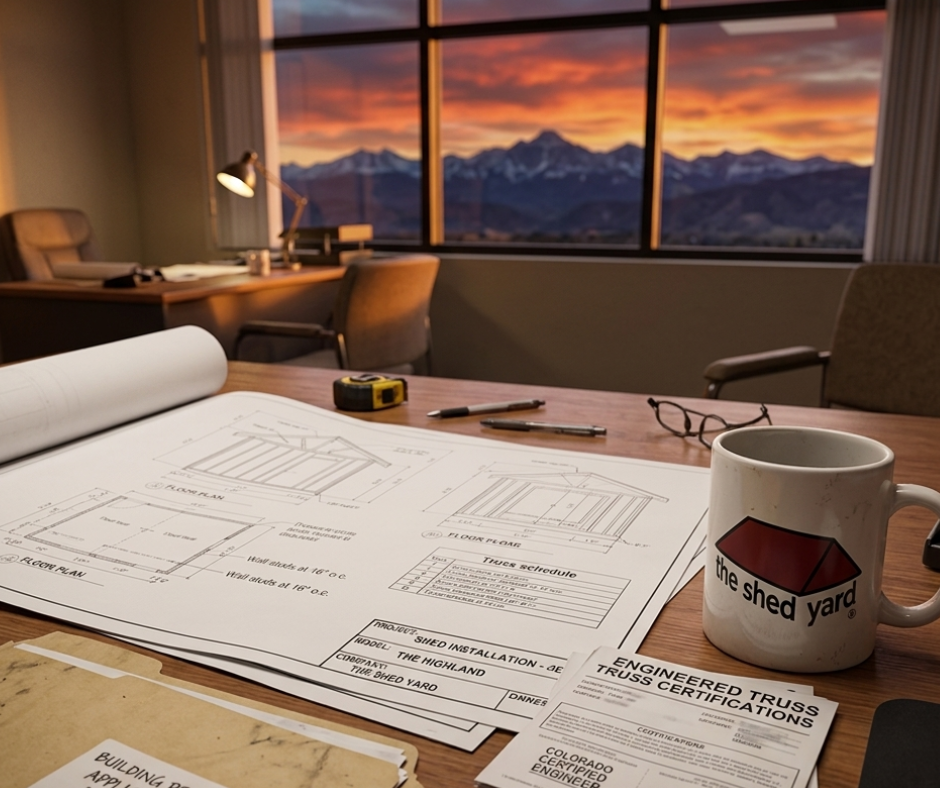
Colorado does not have one shed permit rule. It has dozens. Because cities and counties here enforce their own building and land-use codes, a 12x20 storage building that drops in without a permit in El Paso County can require engineered drawings and a zoning review in Park County or Jefferson County. That is the part that turns an exciting backyard project into a month of phone calls.
At The Shed Yard, our Turn-Key permit services cover the paperwork side for most of Colorado: county investigation, scale drawings, concrete foundations, and filing the permit for you. Below is a plain-English guide to how shed permitting works across our Colorado service areas, what the common exemption thresholds look like, and the details that trigger a permit no matter how small the building is.
Quick guide: do you need a building permit for a shed?
In most Colorado jurisdictions, a detached storage shed built on grade under roughly 120 to 200 square feet does not require a standard building permit. Two things apply regardless of size:
- Zoning setbacks — how close the building may sit to property lines, easements, septic fields, and other structures.
- Snow and wind loads — Colorado roof loads vary enormously between the plains and 9,000 feet, and a building that is exempt from a permit still has to survive the winter.
Thresholds and interpretations change, and every parcel is different. Treat the table below as a starting point, not a ruling — confirm with your local department, or ask us to run the investigation on your parcel.
Colorado shed permit thresholds by county
| County | Typical permit exemption | Key local rules & considerations |
|---|---|---|
| Adams County | Under 200 sq. ft. | Setback limits apply; electrical or plumbing additions trigger full permits. |
| Arapahoe County | Under 200 sq. ft. | HOA rules often stricter than county code; site plans should show lot coverage. |
| Chaffee County | Under 120–200 sq. ft. | High-elevation snow load requirements for mountain properties. |
| Custer County | Under 200 sq. ft. | Wind and snow ratings apply; setbacks depend on parcel acreage. |
| Douglas County | Under 200 sq. ft. | Zoning compliance is required even when the structure is exempt from building review. |
| Elbert County | Under 200 sq. ft. | Agricultural exemptions may apply to larger outbuildings on rural acreage. |
| El Paso County | Under 200 sq. ft. (PPRBD) | Administered by Pikes Peak Regional Building Department; larger accessory buildings in Colorado Springs commonly need zoning review. |
| Fremont County | Under 200 sq. ft. | Zoning site plan required; setback rules differ for rural vs. in-town parcels. |
| Huerfano County | Under 200 sq. ft. | Setbacks depend on zone district; wind load requirements apply. |
| Jefferson County | Under 200 sq. ft. | Cumulative square-footage limits can apply across all mini-storage structures on a property. |
| Park County | Under 120–200 sq. ft. | Severe mountain snow loads; engineered truss drawings typically required on larger builds. |
| Pueblo County | Under 200 sq. ft. | Regional building department governs setbacks, property lines, and anchoring. |
| Teller County | Under 200 sq. ft. (PPRBD) | Mountain snow load enforcement; also administered through PPRBD. |
What triggers a building permit anyway
Even under your county's square-footage threshold, expect to permit the project if it includes any of these:
- Electrical or plumbing — lights, outlets, a subpanel, or a water line usually pulls in electrical and mechanical permits. This is the most common surprise on studio sheds and finished offices.
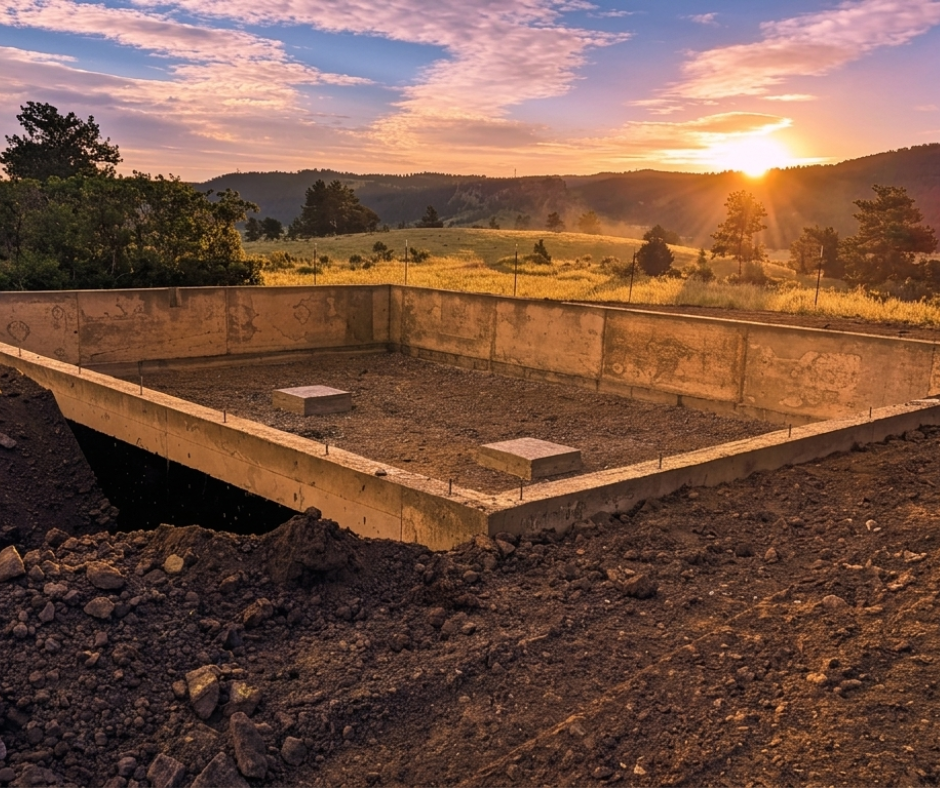
- A permanent concrete foundation — a poured slab or stem wall moves you into structural review. See our concrete and foundation work.
- Habitable space — any code-compliant home shell or living space is a full building permit, always.
- Height — many jurisdictions cap accessory wall and peak heights before a permit is required, which matters on hi-wall barns and lofted models.
- HOA or city zoning clearance — separate from the county, and often required before delivery even when no building permit is.
Get the Most Up-to-Date Pricing
Prices shown are current as of Sep 2026 and can change at any time. Options, site prep, permits, and delivery conditions all affect the final cost.
Snow load: why mountain counties are stricter
Design snow loads on the Front Range plains are a fraction of what Park, Teller, and Chaffee counties enforce at elevation. That is why a building that ships permit-free into Pueblo West may need stamped, engineered truss drawings for the same footprint outside Divide or Fairplay. Our buildings are specified for Colorado loads, and we supply the truss certifications building officials ask for. If you are still choosing a footprint, our shed cost guide covers how size and options move the number.
Setbacks, site plans, and lot coverage
Setbacks are where most projects actually get stalled. Before delivery day you want to know your distance requirements from property lines and easements, whether your parcel has coverage limits, and where the building can physically be set with clear delivery access. Our site preparation and permitting services cover the site plan and the pad, and our shed site prep guide walks through what a good base looks like.
How The Shed Yard's Turn-Key permit service works across Colorado
We help property owners with Turn-Key permitting in most Colorado counties. Every county sets its own review fees, timelines, and engineering requirements, so some projects cost more than others, but our in-house team and project manager guide the process end to end:
- County investigation — we verify zoning, setbacks, and permit thresholds for your exact parcel.
- Drawings and truss certifications — scale drawings and engineering local officials will accept.
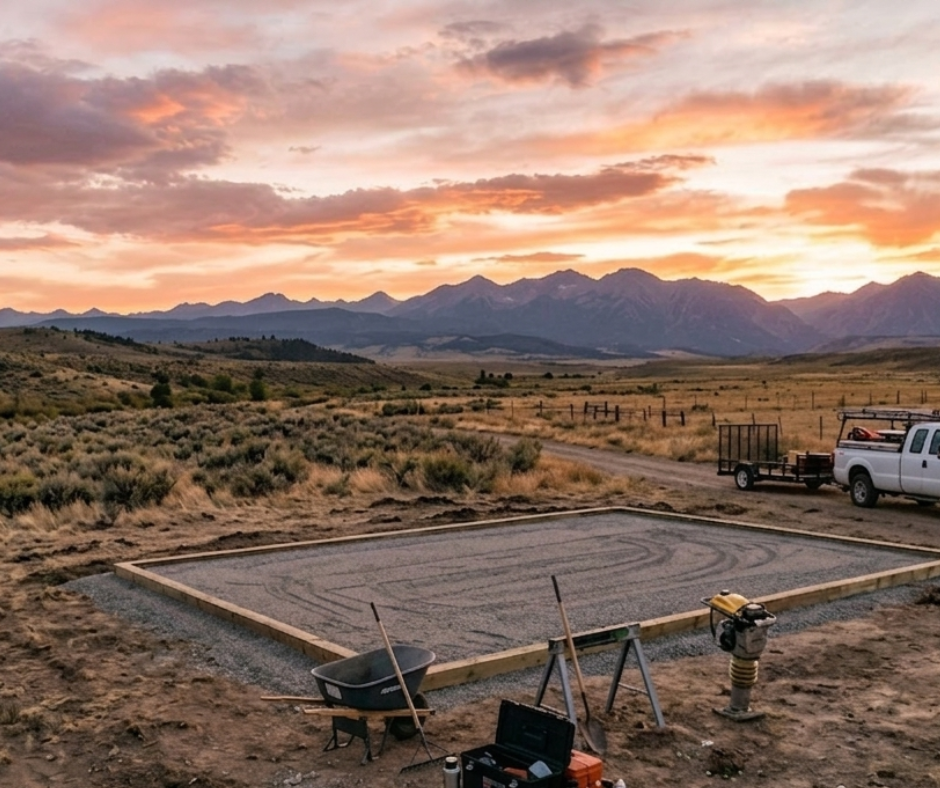
- Concrete and site prep — from a leveled gravel pad to a poured foundation.
- Permit filing and inspections — filed directly with PPRBD or the county, through final inspection.
For counties outside our standard Turn-Key zone, or where local rules require owner-submitted applications, we still provide the permit-ready drawings and truss certifications you need, then deliver and install once your permit is approved. More detail is in our original permitting overview.
Turn-Key permitting costs vary by county review fees, engineering requirements, and site complexity — some Colorado counties are simply more expensive than others. Contact our team for an exact breakdown for your address.
Ready to build without the paperwork headache
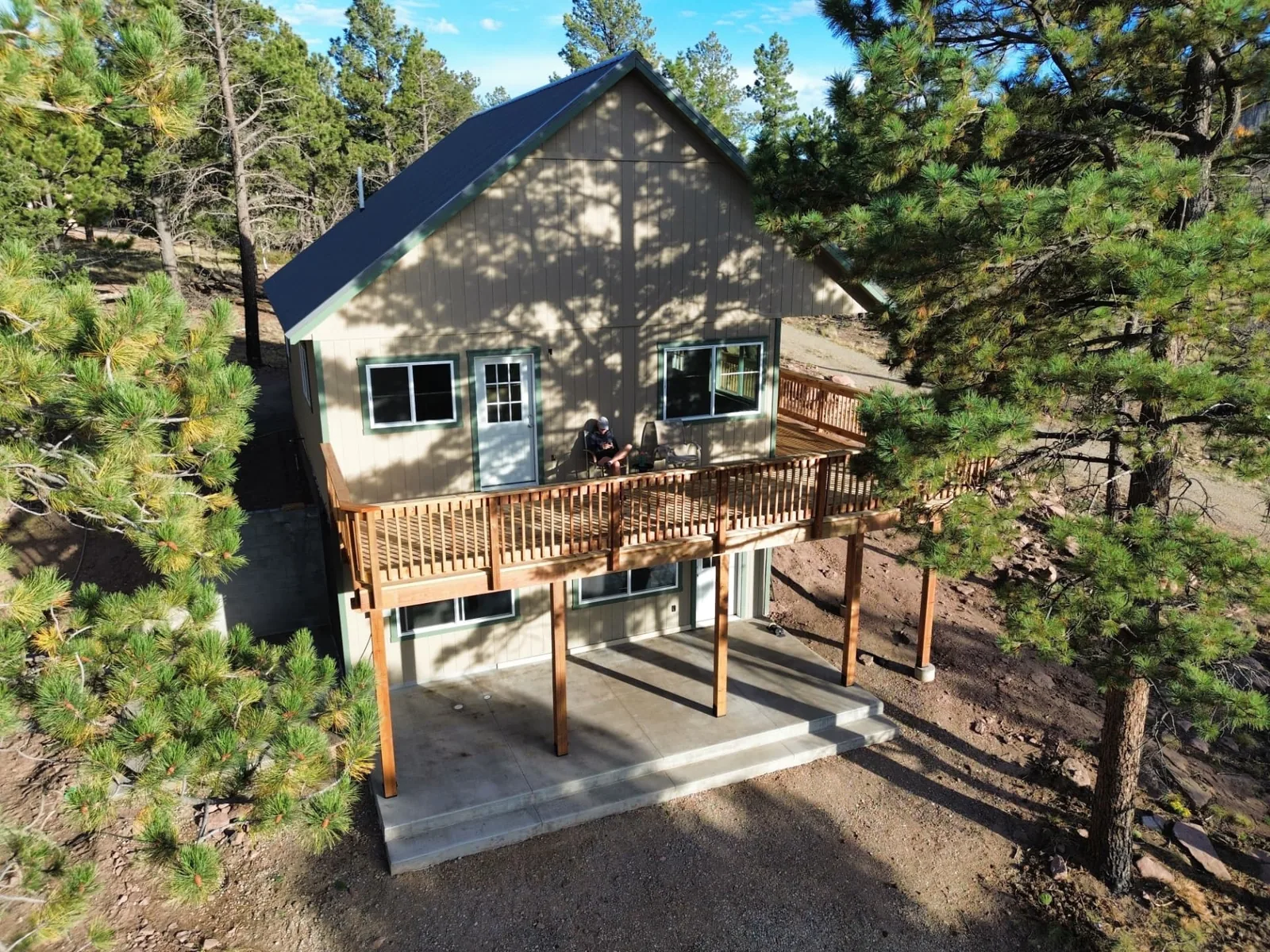
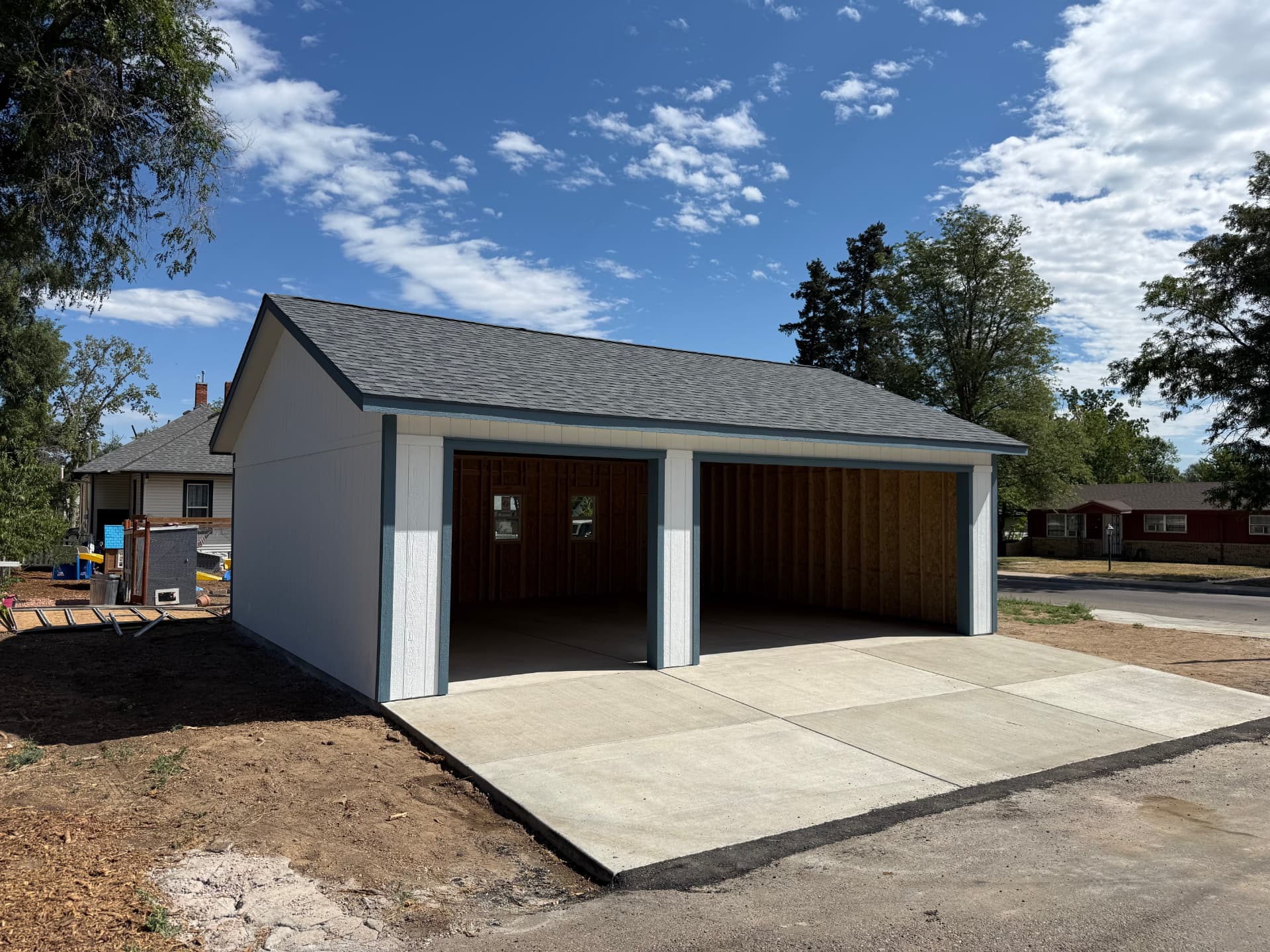
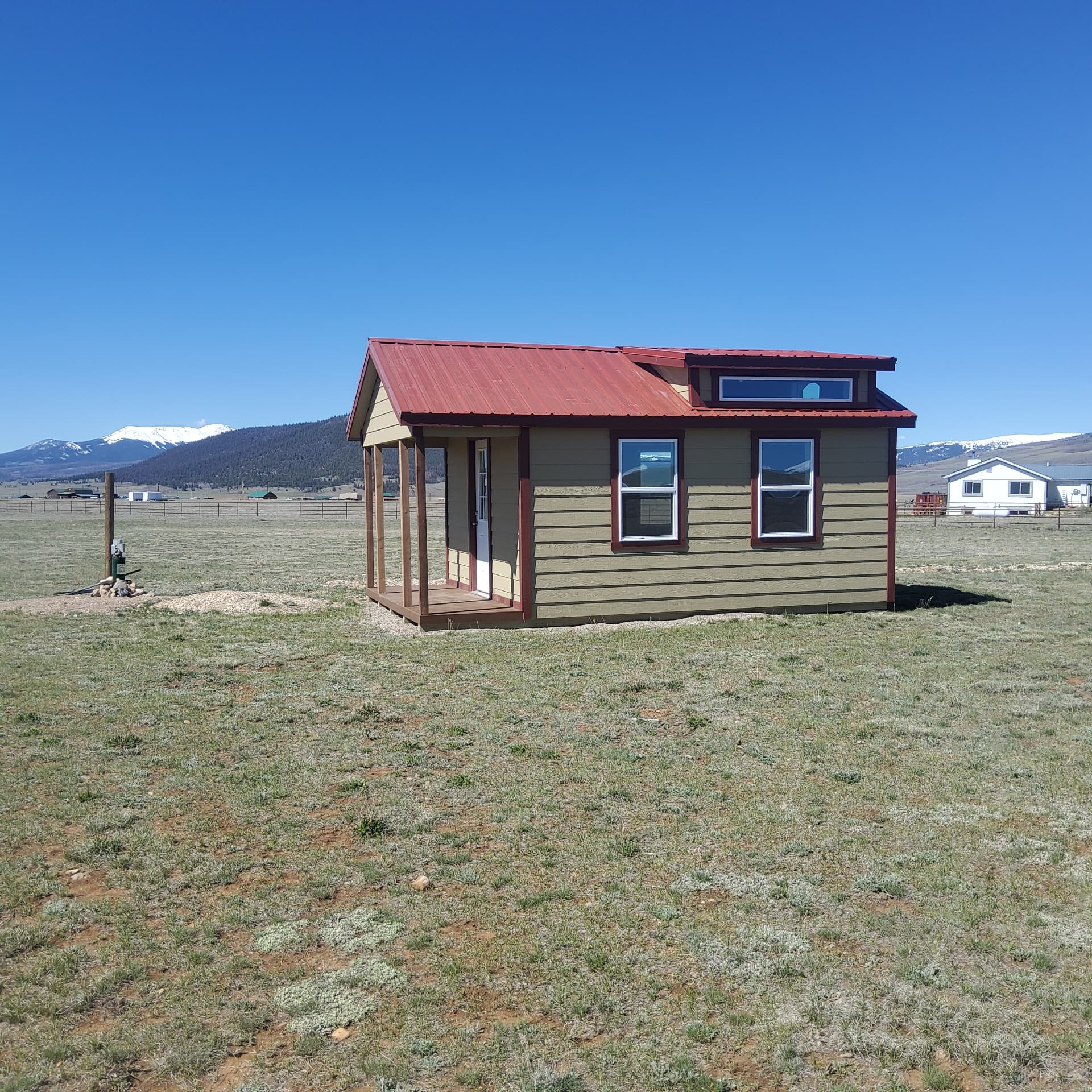
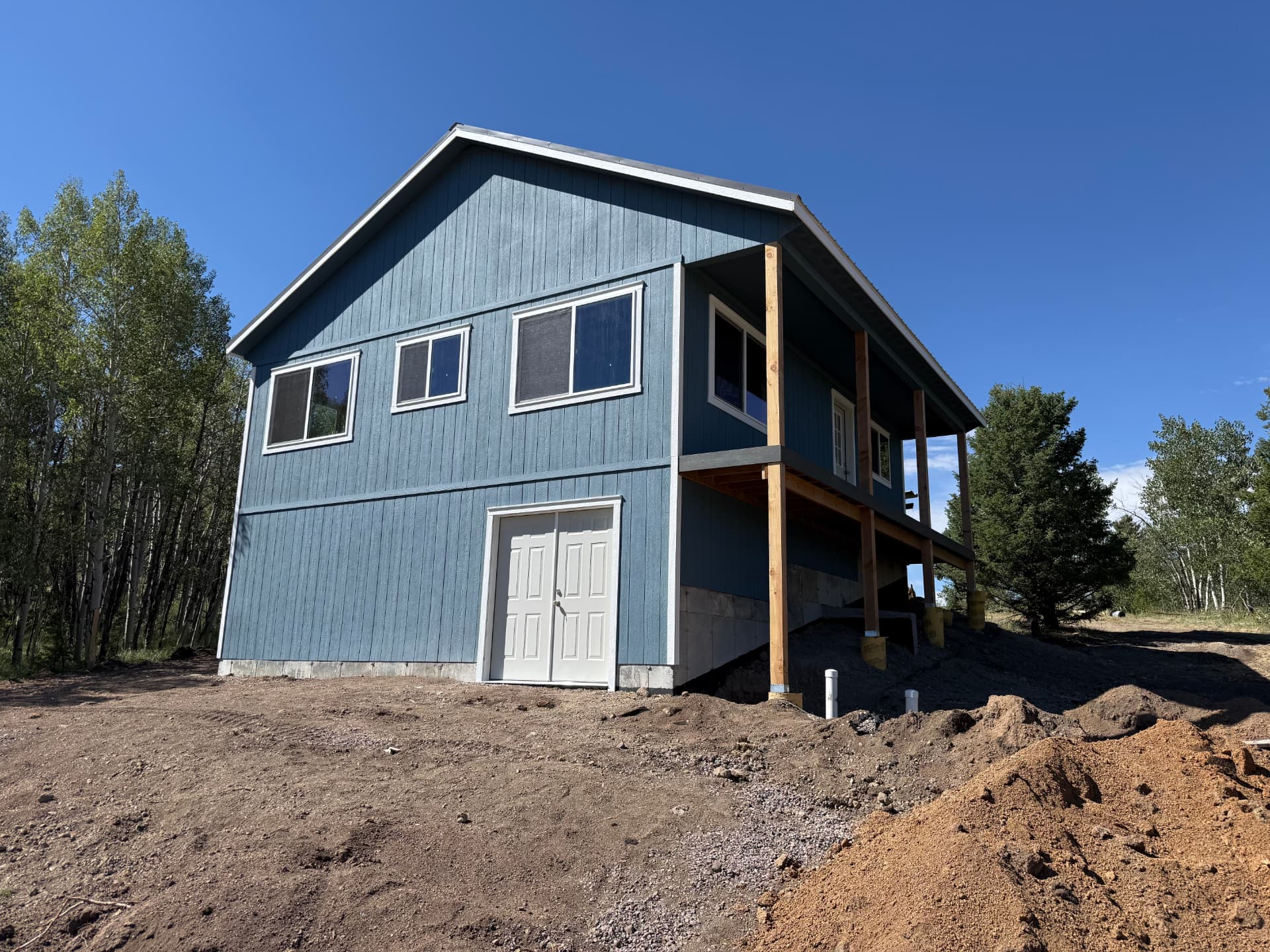
Whether you are adding a storage shed, a 2-car garage, a custom build, or a home shell, we will tell you up front what your jurisdiction requires. Design your building in our 3D customizer, browse common questions, or call 719-590-7433 to talk with our local team.

Written by the team at The Shed Yard — family owned, Colorado built. We handle the building, the site prep, and the permits, start to finish.