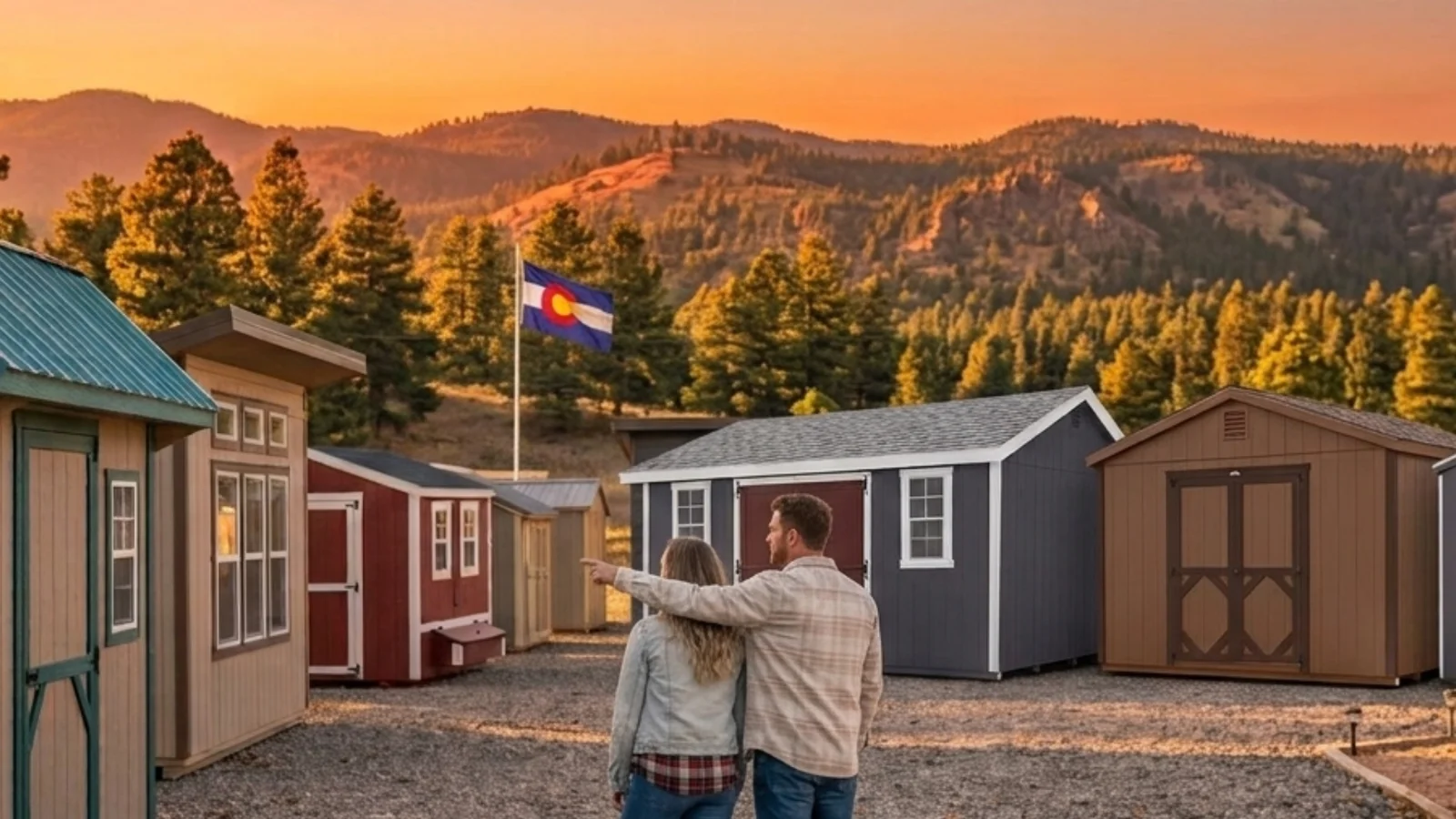
Short answer: most Colorado homeowners need more shed than they think. If you are storing hand tools and seasonal bins, 8x10 works. Add a push mower and you want 10x12. Add a riding mower, snow blower, and shelving and you are at 10x16 to 12x16. If you plan to work inside it — workshop, hobby space, home gym — start at 12x20.
The break point to know: many Colorado jurisdictions exempt a detached accessory building of 200 square feet or less sitting directly on grade from a building permit. A 10x20 is exactly 200 sq. ft. and a 12x16 is 192. A 12x20 is 240 and crosses the line. Thresholds vary — Boulder County uses 120 sq. ft. — so confirm your own address before ordering.
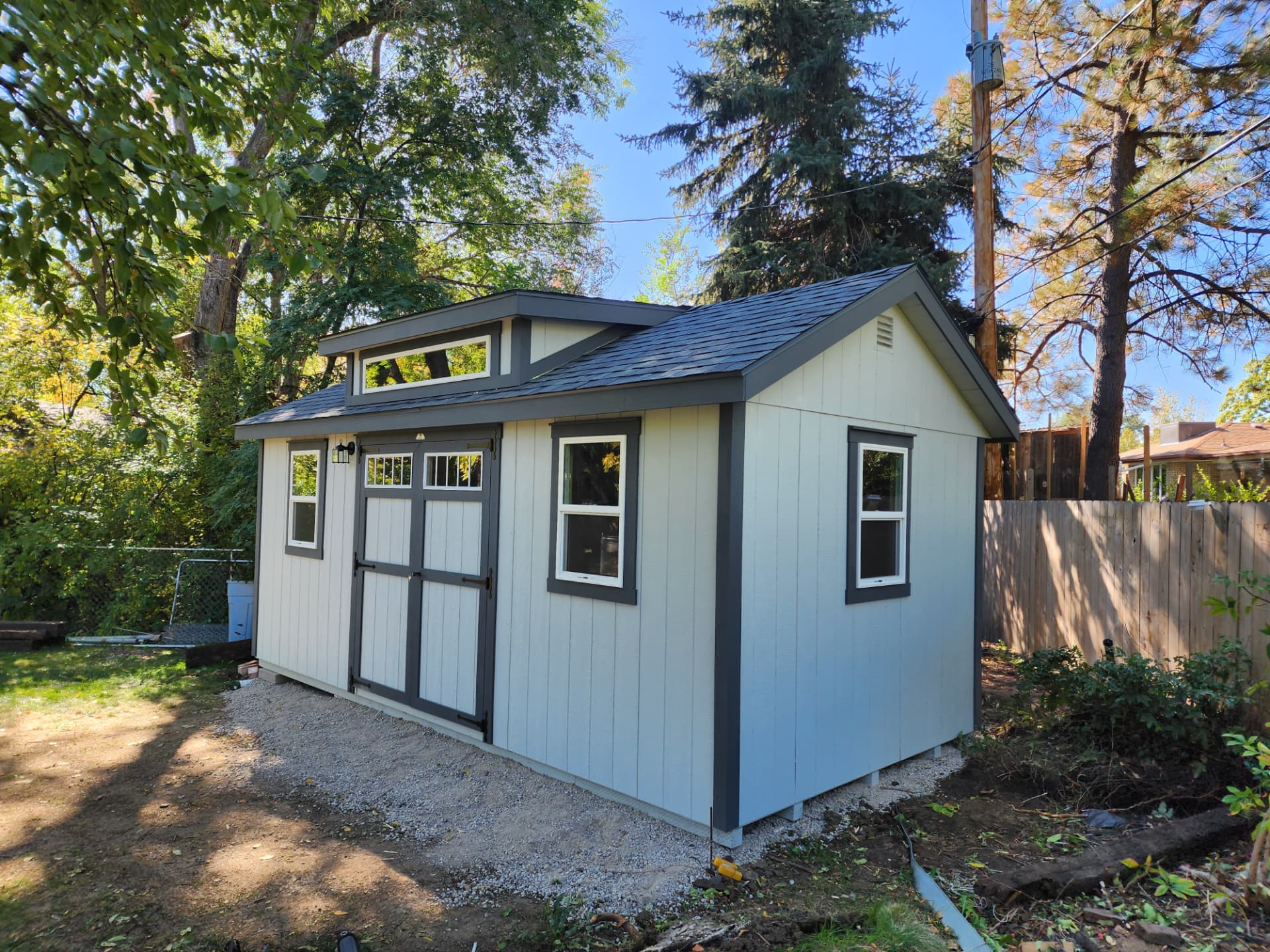
Common shed sizes and what fits inside each one
Most guides talk about "small, medium, and large." That is not useful when you are placing an order. Here are the actual dimensions, the square footage, and what each size realistically holds once you leave yourself room to walk.
| Size | Sq. ft. | What it realistically holds | Best for |
|---|---|---|---|
| 8x8 | 64 | Hand tools, bikes, a wheelbarrow, seasonal bins | Small lots, simple decluttering |
| 8x10 | 80 | Push mower, yard tools, bins, a narrow shelf run | Basic backyard storage |
| 8x12 | 96 | Push mower, tools, bikes, holiday storage | Getting the garage back |
| 10x12 | 120 | Riding mower or a mower plus shelving, not both comfortably | Entry-level equipment storage |
| 10x16 | 160 | Riding mower, trimmer, blower, fuel, wall shelving | Most Front Range yards |
| 12x16 | 192 | Mower, snow blower, shelving, small workbench | Best size under a 200 sq. ft. threshold |
| 10x20 | 200 | Long, narrow layout: equipment on one end, storage on the other | Sites where width is tight |
| 12x20 | 240 | Equipment plus a real work area with walking room | Workshops, hobby space, home gym |
| 12x24 | 288 | Mower plus a side-by-side or ATV, plus a bench | Rural property, toys and equipment |
| 14x28 to 14x40 | 392–560 | Multiple pieces of equipment, workshop zones, loft storage | Acreage, shops, small-business use |
Notice how much difference the width makes. At 8 and 10 feet wide you store along one wall and walk down the other side. At 12 feet wide you can store along both walls and still walk down the middle. That is why 12x16 and 12x20 are the two sizes we recommend most often — the jump from 10 to 12 feet of width changes how the building works, not just how much fits.
Step 1: Size to the largest thing going in, then add a size
Start with your biggest item, not your smallest. Measure it, add walking clearance, then add room for what you will own in three years. Sheds fill up faster than anyone plans for.
- Push mower: roughly 2x5 feet of floor, plus a path to the door.
- Riding mower or zero-turn: commonly 4 to 6 feet wide and 6 to 7 feet long — measure yours, and measure the deck at its widest.
- Snow blower: about 2 to 3 feet wide, and it needs to come out fast in February, so it belongs near the door.
- ATV or side-by-side: plan on 4 to 6 feet wide and 9 to 12 feet long, which pushes you to a 12x24 or a barn.
- Workbench: 2 feet deep plus 3 feet of standing room — 5 feet of your width gone before you store anything.
- Shelving: every wall run of shelves costs you 1 to 2 feet of usable floor width.
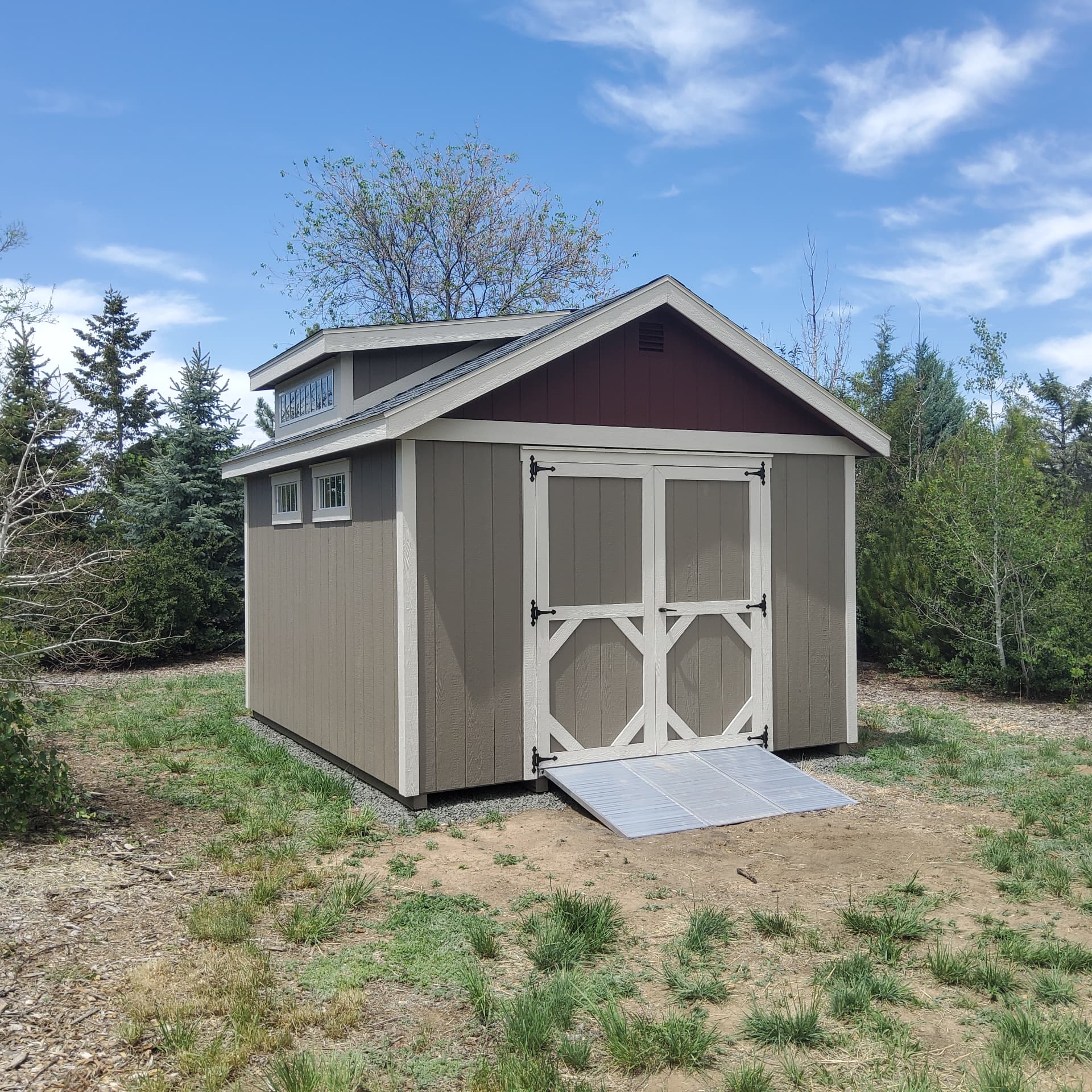
Step 2: Check the size against your Colorado permit threshold
This is the step generic size guides skip, and in Colorado it can decide your dimensions. Permit exemptions are usually written around a square footage cap, a single story, and no permanent foundation or utilities.
| Jurisdiction | Commonly cited exemption | Sizes that stay under it |
|---|---|---|
| Colorado Springs / El Paso County (Pikes Peak Regional Building Dept.) | 200 sq. ft., one story, supported directly on grade | 8x12, 10x16, 12x16, 10x20 |
| Unincorporated Boulder County | 120 sq. ft., 12 ft. tall, no utilities, with limits on how many per parcel | 8x12, 10x12 |
| City of Boulder | Under 80 sq. ft., under 10 ft. tall, no utilities | 8x8, 8x10 (As we measure out to out) |
| Everywhere else in Colorado | Varies by city and county — verify before you order | Confirm with your building department |
Three things a square-foot exemption never covers: setbacks and lot coverage from your zoning code, HOA covenant approval, and electrical. Lights and outlets require an electrical permit even on a permit-exempt building. For a deeper walkthrough, read our Colorado shed permit guide and the Colorado Springs permit guide.
Step 3: Size to your site and delivery path, not just your yard
We can build almost any size. Getting it to the spot you picked is the real constraint — especially on Colorado foothill and mountain lots.
- Gate and fence openings. A delivery route generally needs to be a few feet wider than the building itself. A 12-foot-wide shed does not fit through a 10-foot gate.
- Overhead clearance. Branches, power lines, and eaves stop more deliveries than narrow driveways do.
- Slope. The more a site falls across the footprint, the more leveling costs — and leveling cost grows with the size of the building.
- Ground conditions. Soft ground, irrigation, and septic fields can force a different placement, which can force a different size or orientation.
- Clearance around the building. Leave room to walk, mow, and maintain all four sides.
Get the Most Up-to-Date Pricing
Prices shown are current as of Sep 2026 and can change at any time. Options, site prep, permits, and delivery conditions all affect the final cost.
If access is genuinely tight, a narrower and longer size — a 10x20 instead of a 12x16 — often solves it with the same floor area. Our site preparation guide covers pads, grading, and access in detail.
Step 4: Decide whether you need height instead of length
Square footage is only one dimension. If you need overhead clearance, loft storage, or equipment-height doors, a taller building beats a longer one.
| Style | Typical sizes | Why you would choose it |
|---|---|---|
| Classic A-Frame Shed | 8x10 to 14x40 | Steep roof pitch that sheds snow, all-around overhang, widest size range |
| A-Frame Shed | 8x8 to 12x32 | Straightforward workhorse with wide doors and usable wall space |
| Quaker Shed | 8x10 to 14x36 | Offset roofline and covered entry for front-of-property placement |
| Economy Shed | 8x8 to 12x24 | Lowest price point with 6'2" walls — best value for plain storage |
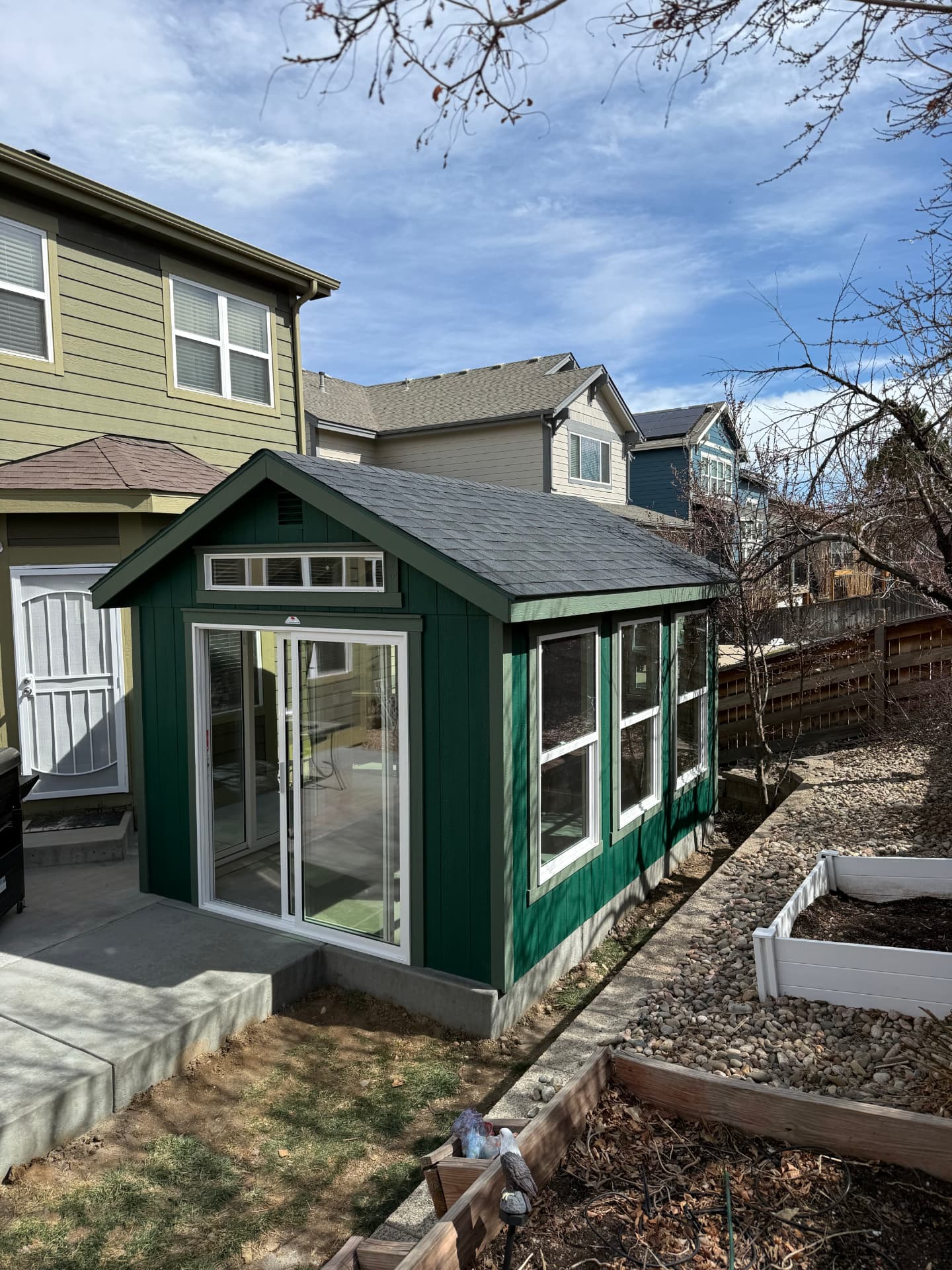
| Studio Shed | 10x12 to 14x28 | Taller walls and large windows for offices, studios, and gyms |
| Hi-Wall Barn | 10x12 to 14x40 | Tall sidewalls, real loft storage, equipment-height door openings |
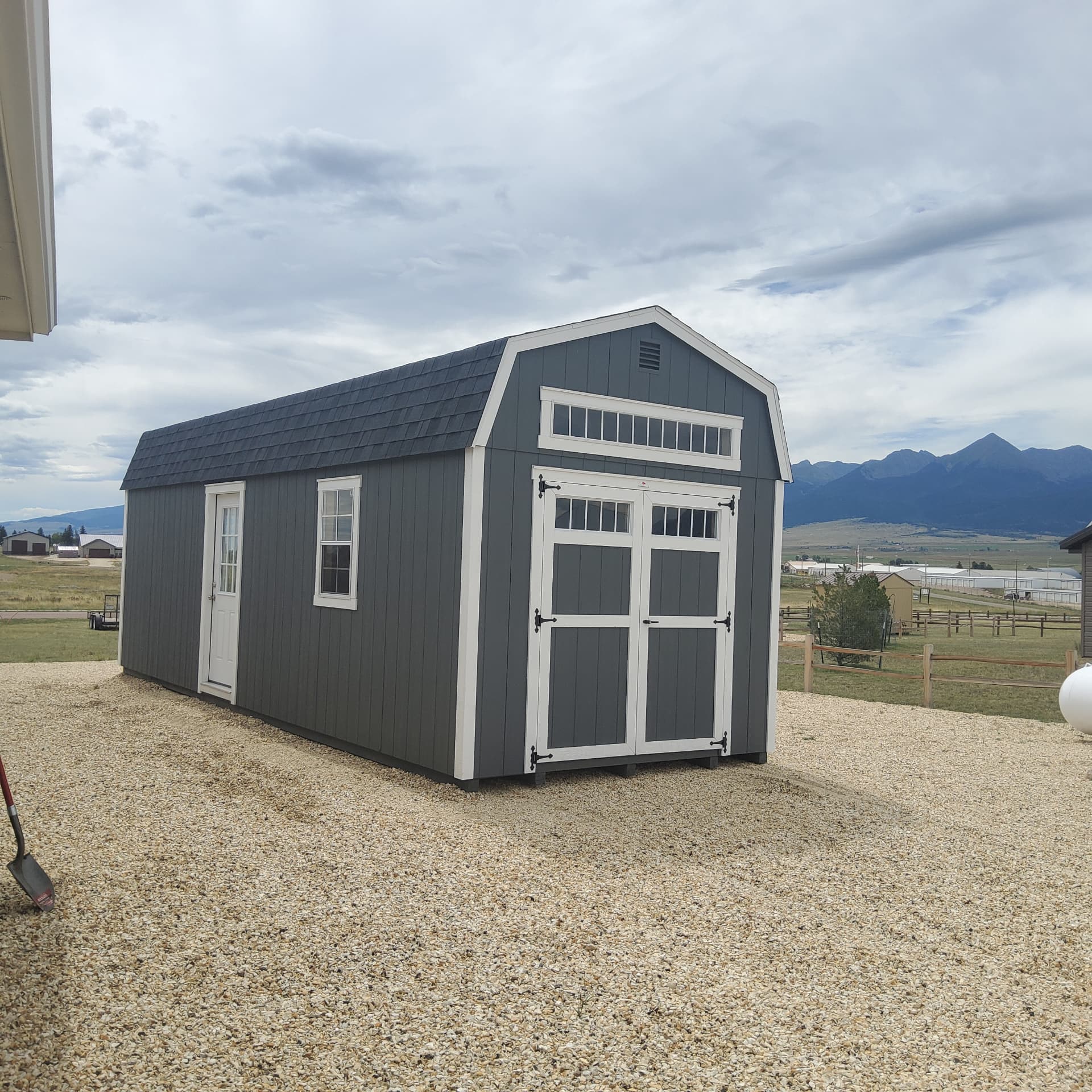
The mistake we see most: buying one size too small
Extra length is the cheapest square footage you will ever buy. You are already paying for the floor system, roof structure, doors, delivery, and site prep — stretching a 12x16 to a 12x20 adds material, not a whole second project. Replacing an undersized shed two years later means paying for delivery and site work all over again.
The one time smaller genuinely wins: when a larger size would cross your jurisdiction's permit threshold and you are not willing to permit, or when your delivery access truly caps the width. Those are real reasons. "It looks big enough" is not.
How size affects price
Cost scales with footprint, but not in a straight line — the roof, floor system, doors, and delivery are largely fixed, so the price per square foot generally drops as the building gets larger. Style, siding, wall height, snow-load rating, and site prep move the number as much as dimensions do. For current Colorado ranges by size and style, see our 2026 Colorado shed cost breakdown — and if budget is the deciding factor, our economy versus premium shed comparison shows what changes at a lower price point.
Quick size recommendations by use
| What you are doing | Recommended size | Do not go below |
|---|---|---|
| Decluttering the garage | 8x12 | 8x10 |
| Push mower and yard tools | 10x12 | 8x12 |
| Riding mower and equipment | 12x16 | 10x16 |
| Mower plus snow blower plus shelving | 12x20 | 12x16 |
| Workshop or hobby space | 12x20 | 12x16 |
| Home office or studio | 12x16 Studio | 10x12 |
| ATV, side-by-side, or tractor | 12x24 or hi-wall barn | 12x20 |
| Feed, tack, and loft storage | 12x24 hi-wall barn | 10x16 barn |
Build it in 3D before you commit to a size
The fastest way to settle a size question is to build both options and compare them with live pricing. Pick your dimensions, doors, windows, siding, and roof, and see the difference between a 12x16 and a 12x20 in dollars before you decide.
Not sure which size is right for your property?
Design your exact building in 3D with live pricing, or talk to a Colorado local who has placed thousands of these — including on tight, sloped, and mountain lots.
Frequently asked questions about shed sizes
Want the footprint-by-footprint breakdown with layouts and cost per square foot? See our guide to popular shed sizes in Colorado. Still weighing options? Browse all shed styles and sizes, compare barns if you need height and a loft, or see payment options including rent-to-own and financing.

Written by the team at The Shed Yard — family owned, Colorado built. We handle the building, the site prep, and the permits, start to finish.