Planning a shed in unincorporated Elbert County? Whether you need a permit depends on the shed's size, how it is built and used, and your property's zoning. A small storage shed can be exempt from a building permit and still have to meet zoning setbacks, height limits and any floodplain or easement restrictions.
This guide uses only official Elbert County sources, reviewed in October 2026. Each rule links to the county page or document it comes from.
Short answer: Elbert County's Building Department lists one-story detached accessory structures used as tool and storage sheds, playhouses and similar uses, with a floor area of 200 square feet or less, as exempt from building permits. A shed over 200 square feet needs a building permit. Exempt or not, the shed must meet the setbacks and height limit for your zone district (Elbert County FAQ; Zoning Regulations, Article VI).
Elbert County Shed Permit Requirements at a Glance
The county's FAQ lists two exemptions that can cover a shed. The first covers one-story detached accessory structures (non-commercial) up to 200 square feet that do not have any utilities. The second covers one-story detached accessory structures used as tool and storage sheds, playhouses and similar uses, up to 200 square feet. Both require one story, a detached building and no more than 200 square feet of floor area.
A building-permit exemption is not permission to put a shed anywhere on your property. Zoning, setbacks, height, floodplain and recorded restrictions are separate questions, reviewed by Community & Development Services (CDS).
When Does a Shed Require a Permit in Elbert County?
| Shed or project condition | Building permit | Other requirements | Official source |
|---|---|---|---|
| One-story, detached tool or storage shed, 200 sq. ft. or less (for example a 10x20) | Listed as exempt | Zoning setbacks and height limits still apply | County FAQ |
| Shed over 200 sq. ft. (for example a 12x24 Studio Shed) | Required | Accessory Structure Checklist; CDS site plan and setback review | Accessory Structure Checklist |
| Shed with electricity, plumbing or other utilities | Confirm with the Building Department | The non-commercial exemption excludes structures with utilities; septic ties need Public Health approval | County FAQ |
| Shed with a second story, or commercial use | Not covered by the listed exemptions; confirm | Zoning use review | County FAQ |
| Over 1,280 sq. ft., monolithic slab over 750 sq. ft., steel frame, or 14 ft. or taller | Required, with engineer-stamped plans | Engineering per checklist | Accessory Structure Checklist |
| Shed in a mapped floodplain | Depends on the shed | A Floodplain Development Permit from CDS may apply | CDS Permit Applications |
Who Has Jurisdiction Over Your Property?
The Elbert County Building Department issues building permits for unincorporated Elbert County (Building Permits). If your parcel is inside an incorporated town, that town's rules may apply instead. Properties near Elbert County's borders can also fall in a neighboring county; for example, PPRBD handles El Paso County and Douglas County has its own process. Confirm your parcel's jurisdiction before applying anything in this guide.
Zoning, Setbacks, and Property Restrictions
Elbert County's Zoning Regulations say that any accessory building or structure must meet the setback and height requirements of its zone district. Setbacks are measured from the foundation or wall; eaves and roof overhangs may extend up to 24 inches into a setback (Article VI).
| Zone district | Accessory max height | Front setback | Side and rear setback |
|---|---|---|---|
| A | 35 ft. | 150 ft. | 60 ft. |
| A-2 | 35 ft. | 100 ft. | 50 ft. |
| AR | 35 ft. | 100 ft. | 50 ft. |
| RA | 35 ft. | 100 ft. | 50 ft. |
| RA-1 | 35 ft. | 100 ft. | 25 ft. |
| RA-2 | 35 ft. | 50 ft. | 25 ft. |
| R-1 | 20 ft. | 50 ft. | 15 ft. |
| R-2 | 20 ft. | 25 ft. | 15 ft. |
| MH | 20 ft. | 25 ft. | 15 ft. |
Front setbacks are measured from the road centerline in the A district, and from the property line, road right-of-way, easement or point of minimum lot width (whichever is greater) elsewhere. Corner lots must meet the front setback on each side that borders a road. Find your district on the official zoning map.
- Planned Unit Developments (PUD): a PUD sets its own standards, so the table above may not apply.
- Easements and covenants: recorded easements, plat notes and HOA covenants can restrict placement beyond county zoning. Check your title documents.
- Floodplain: Article XV covers flood damage prevention; CDS issues Floodplain Development Permits.
- Shipping containers: storage containers are regulated separately as accessory enclosures; those 200 sq. ft. or larger must be registered with CDS.
For practical placement advice, see can I put a shed anywhere in my backyard?
Utilities, Foundations, Plans, and Design Criteria
Get the Most Up-to-Date Pricing
Prices shown are current as of Sep 2026 and can change at any time. Options, site prep, permits, and delivery conditions all affect the final cost.
All Elbert County building permits must be designed to the 2018 I-Codes and the county's design criteria table, which lists a 115 mph ultimate design wind speed and a 36-inch frost depth. Ground snow load is set by address using the ASCE hazard tool (how to obtain your snow load). The county says it does not allow reductions to its design criteria. Learn more in our Colorado shed snow load guide.
For a permitted accessory structure, the Accessory Structure Checklist asks for:
- A site plan
- A contractor disclosure, if you use a contractor
- Public Health approval or permit if tying into a septic system
- An ASCE/SEI 7-22 Hazard Tool printout
- A floor plan of all floors, including lofts, with total square footage
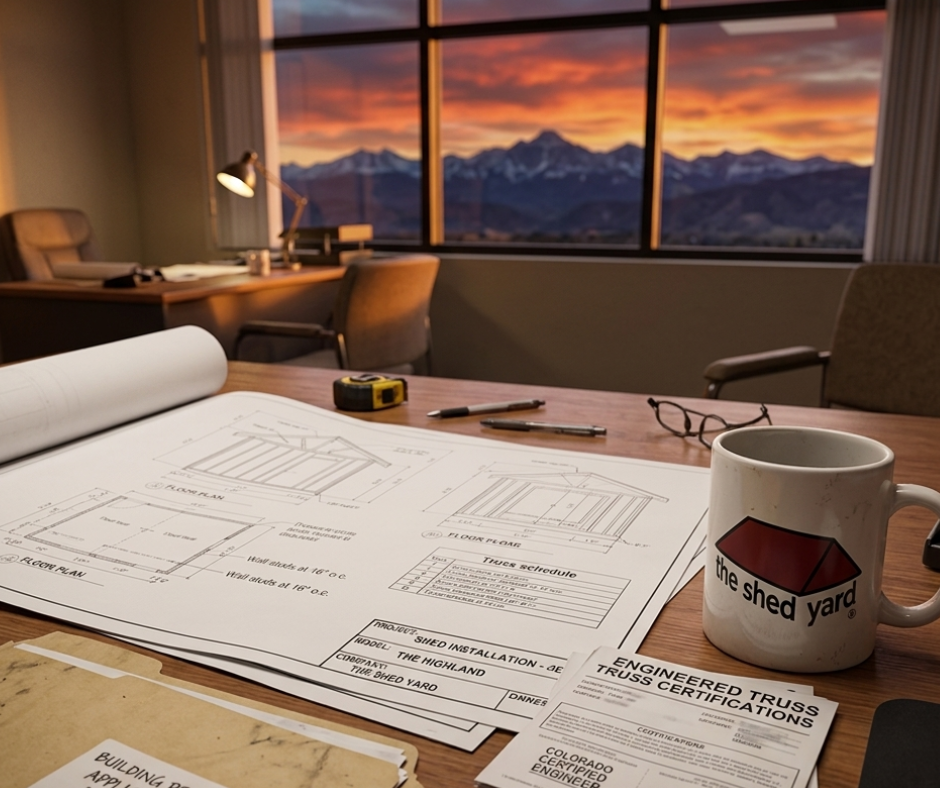
- Engineer-stamped truss designs and a truss layout, or rafter information (wood type, spacing)
- Structural engineering and an engineered foundation, when required
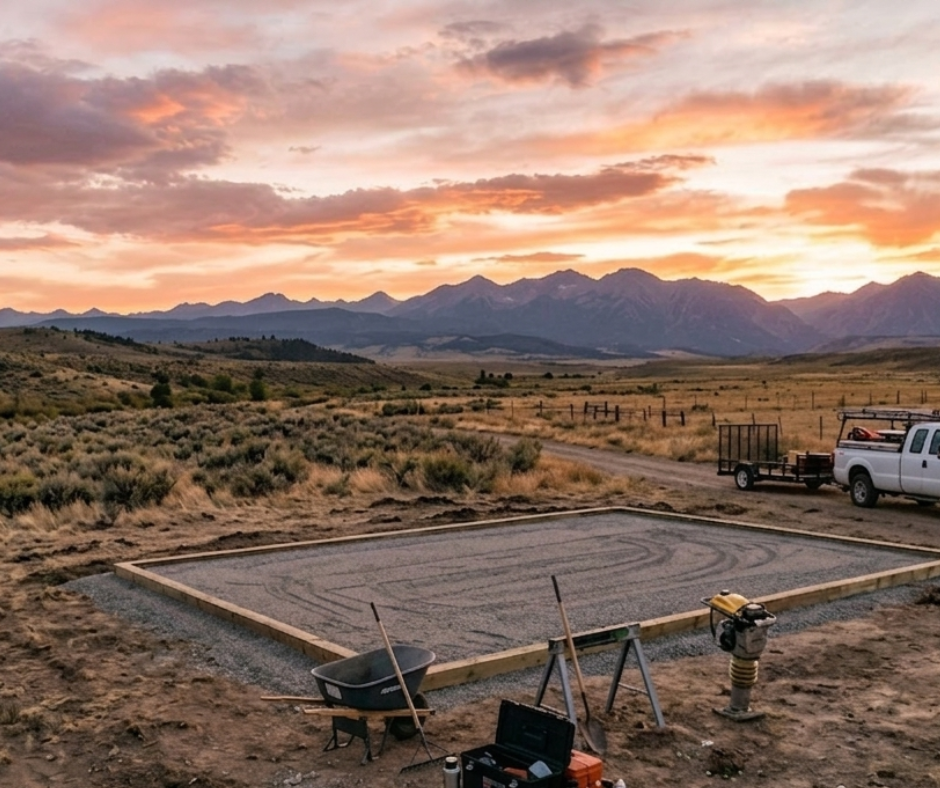
The checklist does not set one foundation type for every shed, so ask the Building Department what it will accept for your size and site. Compare options in our shed foundation guide and site preparation services.
How to Apply for a Shed Permit in Elbert County
- 1. Confirm jurisdiction. Make sure your parcel is in unincorporated Elbert County.
- 2. Define the shed. Size, height, stories, intended use and any utilities.
- 3. Check the exemption. Compare your shed with the county's published exemptions.
- 4. Check zoning. Look up your district on the zoning map and review setbacks, height and recorded restrictions.
- 5. Decide which application you need. A building permit for non-exempt sheds; a CDS planning application for items such as floodplain development.
- 6. Gather documents. Use the Accessory Structure Checklist.
- 7. Submit online. Apply through CommunityCore; the county's permit process flow chart shows the steps, including CDS site plan and setback review.
- 8. Follow review and inspections. Pay fees through the portal and request inspections there. The county says permits are valid for 180 days from issuance or the last inspection.
Fees follow the county's adopted fee schedule. The county says turnaround varies by project and applications are processed in the order received.
Elbert County Contacts
- Building Department (building permits, codes, plans, inspections): buildingdepartment@elbertcounty-co.gov, 720-595-3619
- Community & Development Services (zoning, setbacks, allowed uses): cds@elbertcounty-co.gov, 303-621-3136
- Public Health (septic): 720-595-3620
How The Shed Yard Can Help
Once you know your size limit and setbacks, choose a shed that fits. The Shed Yard builds customizable sheds, including the Economy Shed, A Frame Shed and Studio Shed. Ask us about engineered drawings and truss documentation for your build; Elbert County makes all permit decisions. Monthly payments are available through rent-to-own and traditional financing.
Planning a Shed in Elbert County? Let's Talk.
Tell us your property, shed size and plans, and we'll help you choose a building that fits.
Elbert County Shed Permit FAQs
Official Sources
- Elbert County — Frequently Asked Questions (permit exemptions, contacts)
- Elbert County — Building Permits
- Elbert County — Building Department
- Elbert County — Accessory Structure Checklist
- Elbert County — Design Criteria table
- Elbert County — Permit process flow chart
- Elbert County — Zoning Regulations, Article VI Dimensional Standards
- Elbert County — Current Regulations
- Elbert County — Zoning Map
- Elbert County CDS — Permit Applications
Permit requirements can change. Requirements depend on your property, zoning, structure and the regulations in effect. Elbert County is the final authority. This guide reflects official material reviewed in October 2026 and is general planning information, not a ruling for your property. The Shed Yard cannot guarantee permit approval.
Building elsewhere? See our Colorado shed permit requirements by county, the El Paso County shed permit guide, or the Douglas County shed permit guide.

Written by the team at The Shed Yard — family owned, Colorado built. We handle the building, the site prep, and the permits, start to finish.