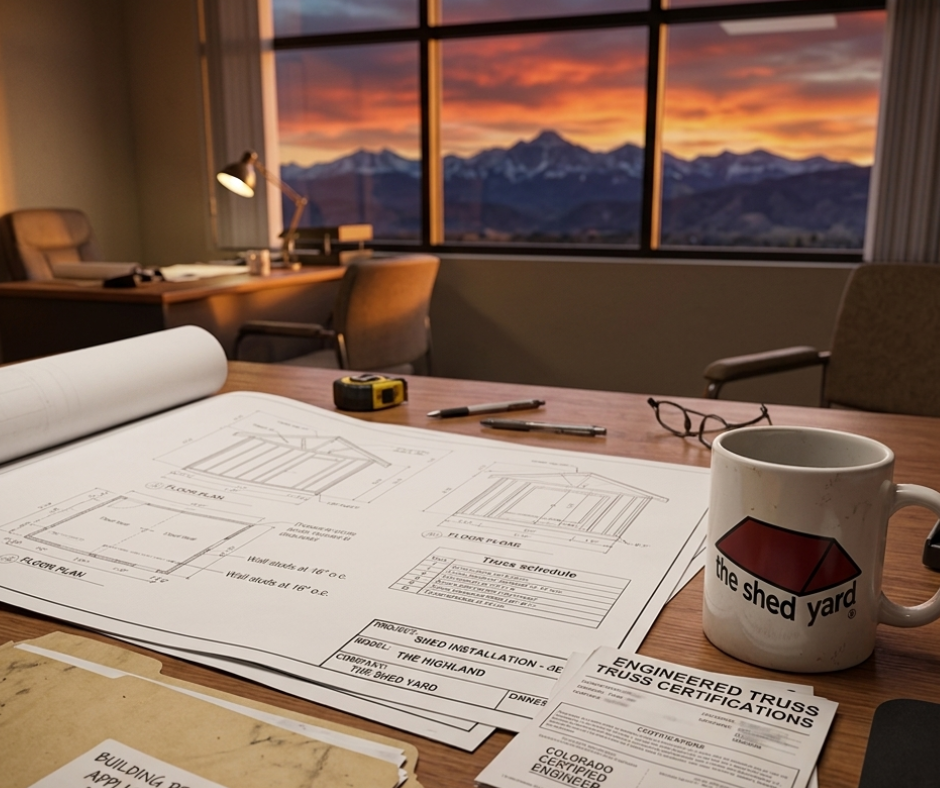
Planning a shed in Park County? Whether you need a permit depends on the shed's size and use, your parcel's zoning and acreage, and which jurisdiction actually covers your property. Park County is mountain country — high snow loads, a 110 mph wind zone, and frost that can run ten feet deep — so the county's rules go further than a simple size threshold.
This guide uses only official Park County sources, reviewed in October 2026. Every rule links to the county page it comes from, and where a question can only be answered for a specific parcel, we say so and point you to the right department.
Short answer: Park County lists one-story detached accessory structures used as tool and storage sheds, up to 200 square feet, as not requiring a building permit — but they must still conform to land use regulations, and most properties require a dwelling before any accessory structure. Sheds need a permanent foundation: up to 200 sq. ft. can use minimum 8-inch caissons 24 inches below undisturbed soil, and larger sheds need a monolithic slab, spread footing and stem wall, or engineered piers. Permitted plans must carry a Colorado Registered Structural Engineer's stamp (Park County Building FAQ).
Park County Shed Permit Requirements
The Park County Building Department issues building permits for all of Park County except the Town of Fairplay and the Town of Alma, which run their own building departments. The office is in Fairplay, open Monday through Thursday, 7 a.m. to 4 p.m., reachable at 719-836-4255 or county.building@parkcountyco.gov. Applications and inspections run through the county's CloudPermit portal.
Zoning, setbacks, and land-use questions are a separate department: Planning and Zoning, at 719-836-4292 or planner@parkco.us. The two departments do not share paperwork, so expect to work with both. You can look up a property's zoning on the county's map viewer at maps.parkco.us.
One caution before anything else: a Park County mailing address does not establish jurisdiction. Parcels inside Fairplay or Alma follow town rules, and properties near the county line can fall under a neighboring county — Teller County is handled by PPRBD, for example. Confirm which authority covers your parcel before applying anything in this guide.
When Does a Shed Require a Permit in Park County?
The county's Building FAQ lists the following as not requiring a building permit: one-story detached accessory structures used as tool and storage sheds that do not exceed 200 sq. ft. The same answer carries two important conditions: the structure must still conform to land use regulations, and most properties require a dwelling prior to any accessory structure.
Read that carefully. The exemption is from the building permit — it is not permission to place a shed anywhere on any parcel. Setbacks, zoning, and the dwelling-first rule are separate questions that apply at any size.
| Shed dimensions | Footprint |
|---|---|
| 8 × 12 feet | 96 sq. ft. |
| 10 × 16 feet | 160 sq. ft. |
| 10 × 20 feet | 200 sq. ft. |
| 12 × 20 feet | 240 sq. ft. |
| 12 × 24 feet | 288 sq. ft. |
A few things that take a shed out of the simple-exemption conversation: a footprint over 200 sq. ft., a second story, utilities, or any use beyond tool and storage. And note that the county requires a permit to re-roof any house, garage, barn, or shed — $200 for a complete re-roof, $100 for a repair of up to half the roof — even on a building that was exempt when it went up.
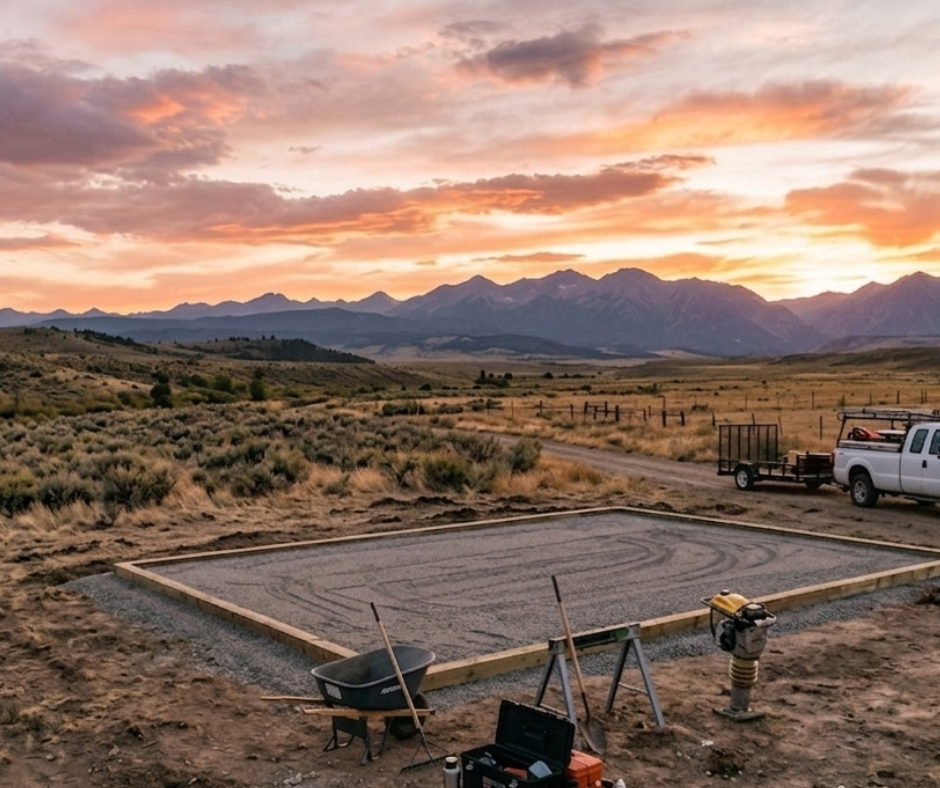
Can You Put a Shed on Vacant Land in Park County?
This is where Park County differs from most Front Range counties, and the county publishes a clear answer in its Planning and Zoning FAQ:
- 35 acres or larger: you may place a storage shed (accessory structure) on vacant land.
- Under 35 acres: you may not, until you have a primary residence on the property or hold a building permit for one.
- Any parcel: an accessory structure may never be occupied as a dwelling, and it must meet the current setbacks for its zone district and the current building code — whether or not it needs a building permit.
The Building FAQ states the same principle from the other side: if your property is zoned Residential, the first structure on your property must be a dwelling. So the 35-acre provision is an exception to a default rule, not a loophole, and lot size alone doesn't settle the question — zoning district and intended use still matter. If you're weighing a shed before a home, confirm your parcel with Planning and Zoning at 719-836-4292 before you order a building.
Park County Shed Setbacks and Placement Requirements
Park County does not publish one setback distance that applies everywhere. The Planning and Zoning FAQ directs property owners to call 719-836-4292 for setback requirements, and notes that some Planned Unit Developments (PUDs) carry their own specific setback standards. Your zone district, recorded plat notes, easements, and any HOA or property-association covenants can all restrict placement beyond the county baseline.
The practical sequence: look up your zoning on the county's map viewer, call Planning and Zoning with your parcel's schedule number, and check your title documents for recorded easements and covenants. Remember the core distinction — not needing a building permit does not make a proposed location legal. For general placement strategy, see can I put a shed anywhere in my backyard?
Park County Shed Foundation Requirements
Yes, sheds in Park County require a permanent foundation — the county's FAQ says so directly, and gives the reason: Park County is in a 110 mph wind zone. The published standards:
- Sheds up to 200 sq. ft.: can be attached to minimum 8-inch caissons extending 24 inches below undisturbed soil.
- Sheds over 200 sq. ft.: must be on a permanent foundation — a monolithic slab, a spread footing with a stem wall, or engineered piers.
- Frost depth: the county's prescriptive minimum footer depth is 24 inches below finished grade on undisturbed soil, and the FAQ notes frost depth in Park County can run as deep as ten feet.
Two implications worth planning around. First, a shed resting on blocks or skids — common in milder parts of Colorado — does not meet Park County's published expectation, even under 200 sq. ft. Second, soil and frost conditions vary across the county, so confirm what the Building Department will accept for your specific shed and site before you order. Our shed foundation guide compares the common options, and our site preparation services cover excavation through finished pads and slabs.
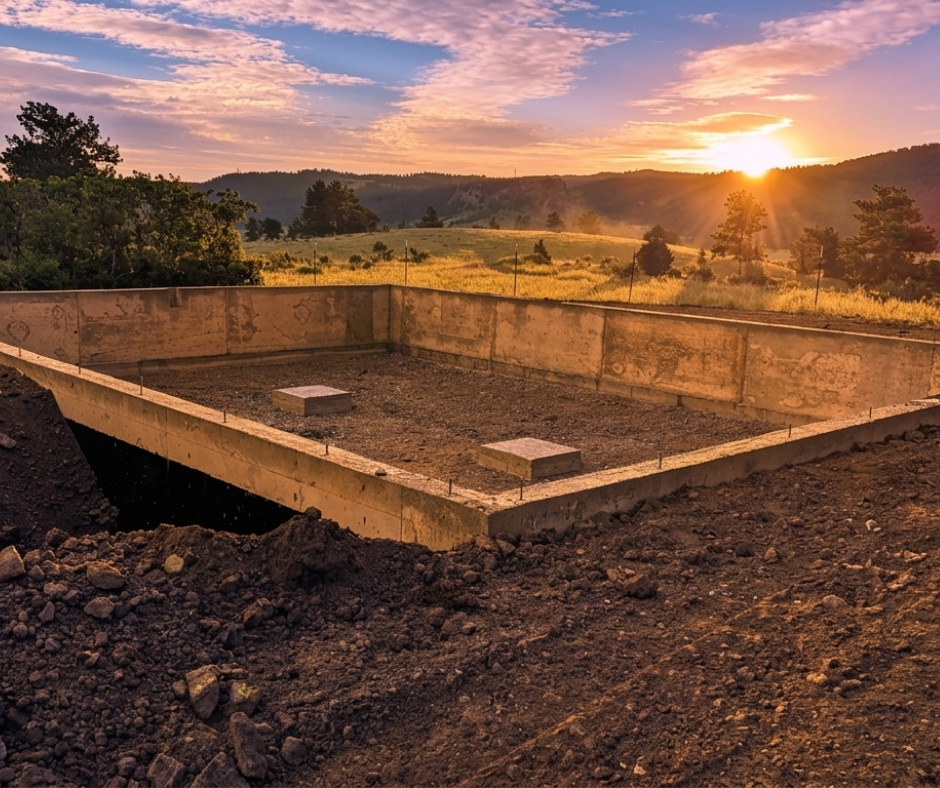
Snow Loads, Wind Loads, and Engineering Requirements
Park County is explicit that it sits in a special wind load and special snow load area, and its FAQ states that plans must carry the stamp of a Colorado Registered Structural Engineer. The county has adopted the 2018 International Residential, Building, Mechanical, and Fuel Gas codes.
There is no single county-wide snow-load number. The county publishes a snow load map — a digitized form of the SEAC 2022 ground snow loads — that you search by the property's schedule number, and the ground snow load is converted to a roof snow load using the adjustment factors in ASCE 7. The plan content requirements also list a 110 mph, 3-second gust wind load. In practice, the rating your shed needs follows your address and elevation, and a manufacturer's standard design may not satisfy every site.
Get the Most Up-to-Date Pricing
Prices shown are current as of Sep 2026 and can change at any time. Options, site prep, permits, and delivery conditions all affect the final cost.
This is the step most shed buyers skip, and it's the one mountain counties enforce hardest. Our Colorado shed snow load guide explains how ground snow load becomes a roof load, what documentation to ask any builder for, and when engineering is required.
How to Apply for a Park County Shed Permit
For a shed that needs a building permit, the county's published requirements shape a clear process:
- 1. Confirm jurisdiction. Verify your parcel is in unincorporated Park County and not inside the Town of Fairplay or the Town of Alma.
- 2. Check zoning and land use. Look up your zone district on the county map viewer, then confirm setbacks and the dwelling-first rule with Planning and Zoning (719-836-4292).
- 3. Define the shed. Size, height, intended use, foundation type, and any utilities.
- 4. Gather the submittal documents. For accessory structures the county lists: the warranty deed, the approved Planning and Zoning sheet and approved plot plan, septic (ISDS) approval where applicable, a driveway permit if the property has no existing structure, any required fire-district forms, the homeowner statement of responsibility for owner-builders, and PDF construction drawings. Partial submittals are not accepted.
- 5. Have plans engineered. Park County requires a Colorado Registered Structural Engineer's stamp on plans because of its wind and snow load area.
- 6. Apply through CloudPermit. The county's online portal handles applications and inspection scheduling.
- 7. Follow review and inspections. Inspections must be scheduled by 5 p.m. the business day before. Permits are valid for one year; work must commence within 180 days, and a one-year renewal is available for $100.
Plumbing and electrical permits are handled by the State of Colorado (303-894-7800), not the county. If you hire a contractor, note that Park County licenses and registers general contractors.
Park County Shed Permit Costs and Timelines
The county's Permit Applications & Fees page bases most permit fees on square footage — garages and storage buildings fall under Group U on the square-foot construction table, so the permit fee scales with the building's size. Verified figures from the county's FAQ: a complete re-roof permit is $200 ($100 for a repair of up to half the roof), a demolition permit is $100, a mechanical permit is $200, plan revisions run $50 per hour with a two-hour minimum, and a permit renewal is $100.
The county does not publish a guaranteed review timeline, so don't build one into your schedule — ask the Building Department for current turnaround when you apply. And keep the categories separate in your budget: county permit and review fees are one line, and engineering, foundation work, site preparation, and delivery are others. The first goes to the county; the rest depend on your site and your builder.
From Our General Contractor: What Park County Has Told Us
Field notes, not county policy: the points below come straight from The Shed Yard's General Contractor, based on direct communications with Park County while permitting projects. They reflect our recent experience — Park County makes the final call on every application, so confirm current requirements for your parcel before you apply.
Permits and foundations for portable sheds
- Over 200 sq. ft. needs a permit — this applies across Park County, including the Hartsel area.
- Portable sheds can be permitted when the application includes a shed-to-ground attachment drawing stamped by an engineer. That stamped drawing runs about $1,500, and in most cases the attachment will be concrete piers.
- Engineered pier systems are accepted for both sheds and dwelling units.
- Monolithic slabs are limited to 10-foot walls. If wall height exceeds 10 feet, the county requires a stem-wall foundation and an upgrade to 2x6 walls.
- Wind and snow loads for all new applications must meet the values listed in the ASCE Hazard Tool for Risk Category II.
Property requirements that catch people off guard
- The lot must have an address. Many Park County lots don't have one yet, and that needs to be resolved before a permit can move forward.
- A driveway permit is required.
- The first permitted structure must be a dwelling unless the lot is over 35 acres — and an accessory structure can never be occupied as a dwelling.
- Fire mitigation: in the Hartsel area, a fire mitigation permit from the Hartsel Fire Protection District is part of the application.
Cost and timeline we're seeing
- Permit cost: approximately $3.25 per square foot of building. Check the county's Permit Applications & Fees page and Building Valuation Data for current figures.
- Approval timeline: roughly 6–8 weeks from a complete submittal.
Our application checklist
- Application signed by The Shed Yard and the homeowner (the homeowner's signature page must be notarized)
- Completed building drawings, including a truss layout
- Engineered drawings (foundation and building)
- Truss certifications
- Warranty deed
- Plot plan showing setbacks
- Fire mitigation permit, where required
- Driveway permit
Planning a shed over 200 sq. ft. in Park County? We prepare the drawings, truss certifications, and engineering paperwork and manage the application as part of our Turn-Key services — contact us to talk through your parcel.
Park County Shed Permit FAQs
Official Sources
- Park County — Building Department FAQ (exemptions, foundations, engineering, fees, contacts)
- Park County — Building Department (jurisdiction, hours, inspections)
- Park County — Planning & Zoning FAQ (vacant land, 35-acre provision, setbacks, zoning map)
- Park County — Permit Applications & Fees (square-foot fee basis, Group U)
- Park County — Plan Content Requirements (wind load, loads, plan details)
- Park County — Design Loads for Structures (snow load map)
Permit requirements can change and vary by parcel. Park County, the Town of Fairplay, or the Town of Alma — whichever covers your property — is the final authority on every application. This guide reflects official county material reviewed in October 2026 and is general planning information, not a ruling for your property. The Shed Yard cannot guarantee permit approval.
Plan Your Park County Shed Project
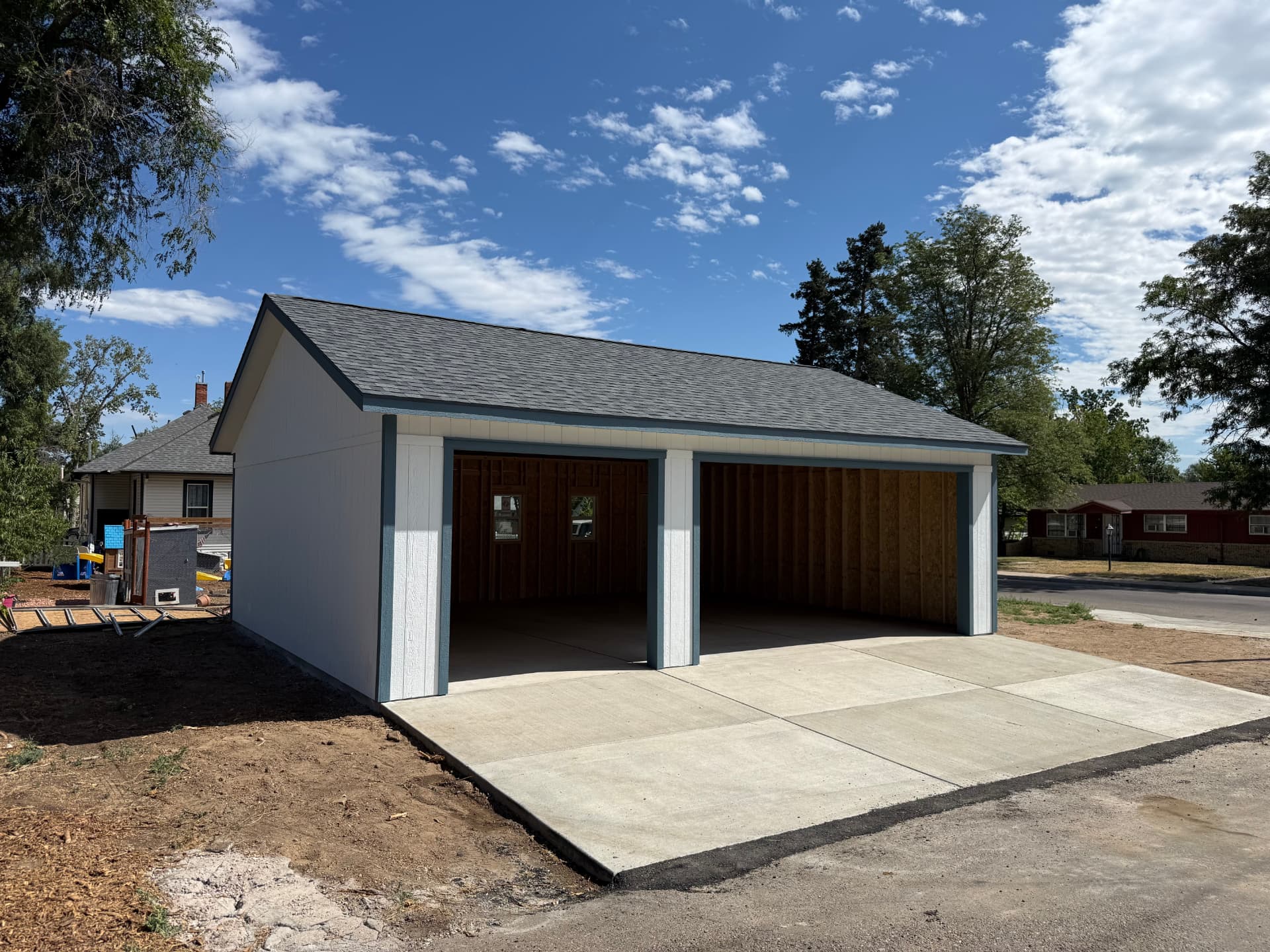
Once you know your size limit, setbacks, and foundation requirements, choose a shed that fits all three. The Shed Yard builds customizable sheds — including the Economy Shed, A Frame Shed, and Studio Shed — and we prepare engineered drawings and truss documentation for permit applications. See how this comes together on a real build in our 16×20 garage project in Jefferson, a Park County community, or read the true cost of installing a shed in Colorado for a full project budget breakdown.
Planning a shed in Park County? Let's talk.
Tell us your property, shed size, and plans, and we'll help you choose a building and foundation that fit the county's requirements.
Building elsewhere? See our Colorado shed permit requirements by county, the Elbert County shed permit guide, or the Jefferson County shed permit guide — a different jurisdiction from Jefferson, the Park County community.

Written by the team at The Shed Yard — family owned, Colorado built. We handle the building, the site prep, and the permits, start to finish.