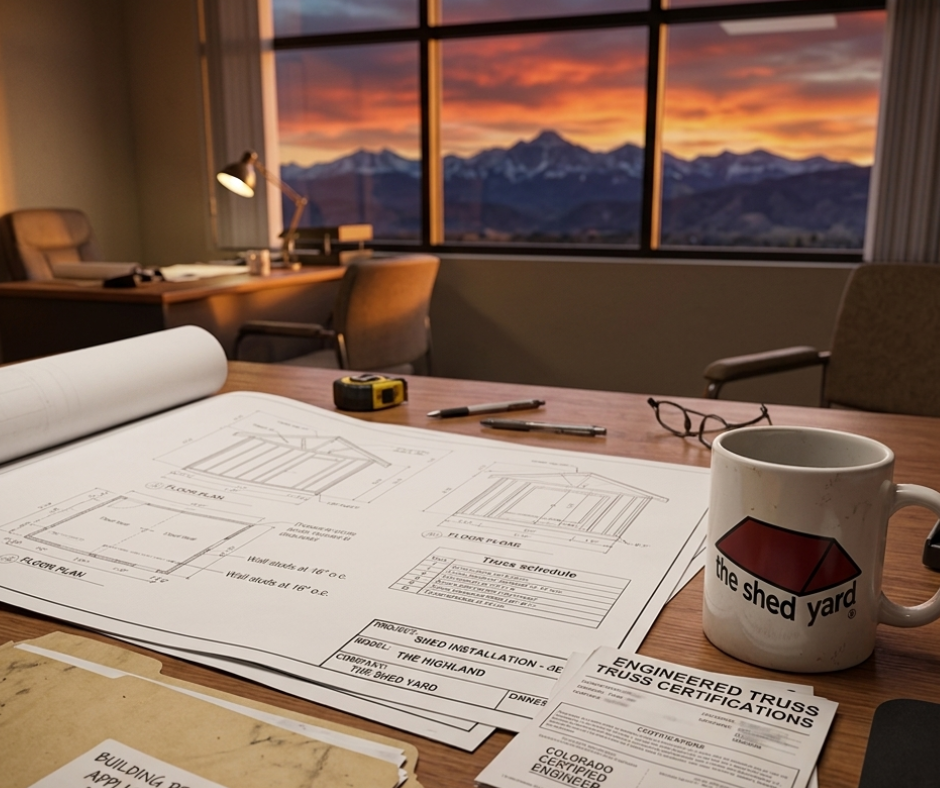
Planning a shed in Arapahoe County? Whether you need a permit depends on the shed's size, height, and use — and on which jurisdiction actually covers your property. Arapahoe County stretches from Denver's southern suburbs to the eastern plains, and most of its population lives in incorporated cities that run their own permitting. The county's rules in this guide apply only to unincorporated parcels.
This guide uses only official Arapahoe County and municipal sources, reviewed in November 2026. Every rule links to the government page or document it comes from, and where a question can only be answered for a specific parcel, we say so and point you to the right department.
Short answer: in unincorporated Arapahoe County, a one-story detached accessory storage shed of 120 square feet or less — not used to store vehicles — is exempt from a building permit under the county's amended code (Adopted Building Codes and Amendments). The exemption does not remove zoning, setback, or placement requirements, and it does not apply inside Aurora, Centennial, Littleton, or any other incorporated city — those properties follow city rules.
First Step: County or City Jurisdiction?
The Arapahoe County Building Division serves unincorporated Arapahoe County only. If your property sits inside an incorporated city or town, that municipality's building department — not the county — issues your permit and enforces its own codes, thresholds, and setbacks.
This trips people up constantly, because a mailing address does not establish jurisdiction. A property with a Centennial, Littleton, or Aurora mailing address can sit in unincorporated county territory, and the reverse is also true. Aurora's city limits even cross county lines into Adams and Douglas counties, so two Aurora addresses can answer to different counties for some purposes while both follow City of Aurora building rules.
The county publishes an official way to check: the Address/Parcel Info application, linked from the county's Mapping page. Search your exact property address or parcel number and read the jurisdiction field. Do this before applying anything else in this guide.
If your parcel turns out to be inside a city, start with that city's official permit page instead:
- City of Aurora — Building Division permits
- City of Centennial — Apply for a building permit
- City of Littleton — Permits, review guides, and requirements
- City of Englewood — Building Division
- Greenwood Village — Building permits and inspections
- Cherry Hills Village — Building permits
- Town of Foxfield — Building permits (issued through SAFEbuilt; the town notes its regulations differ from the county's)
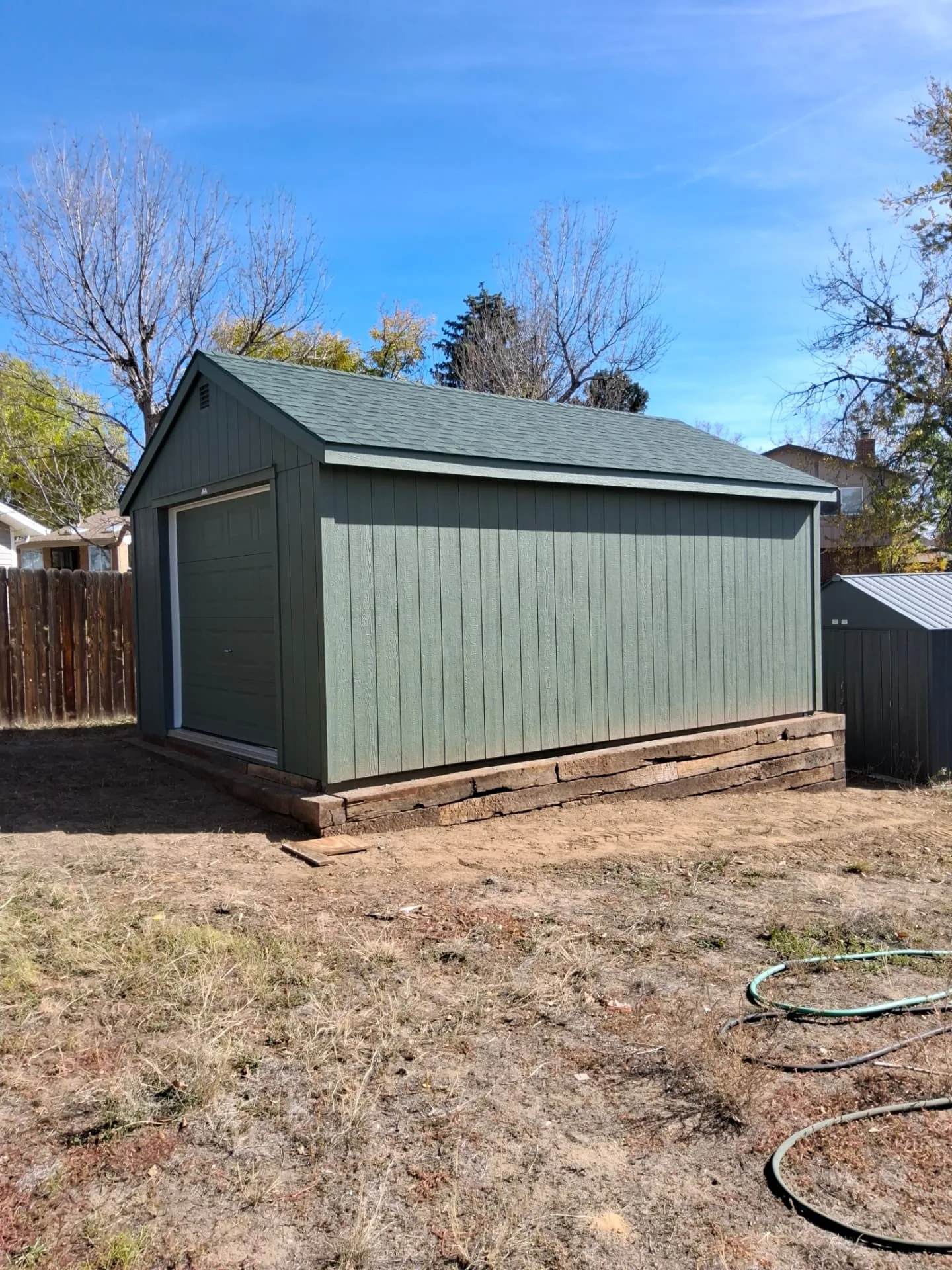
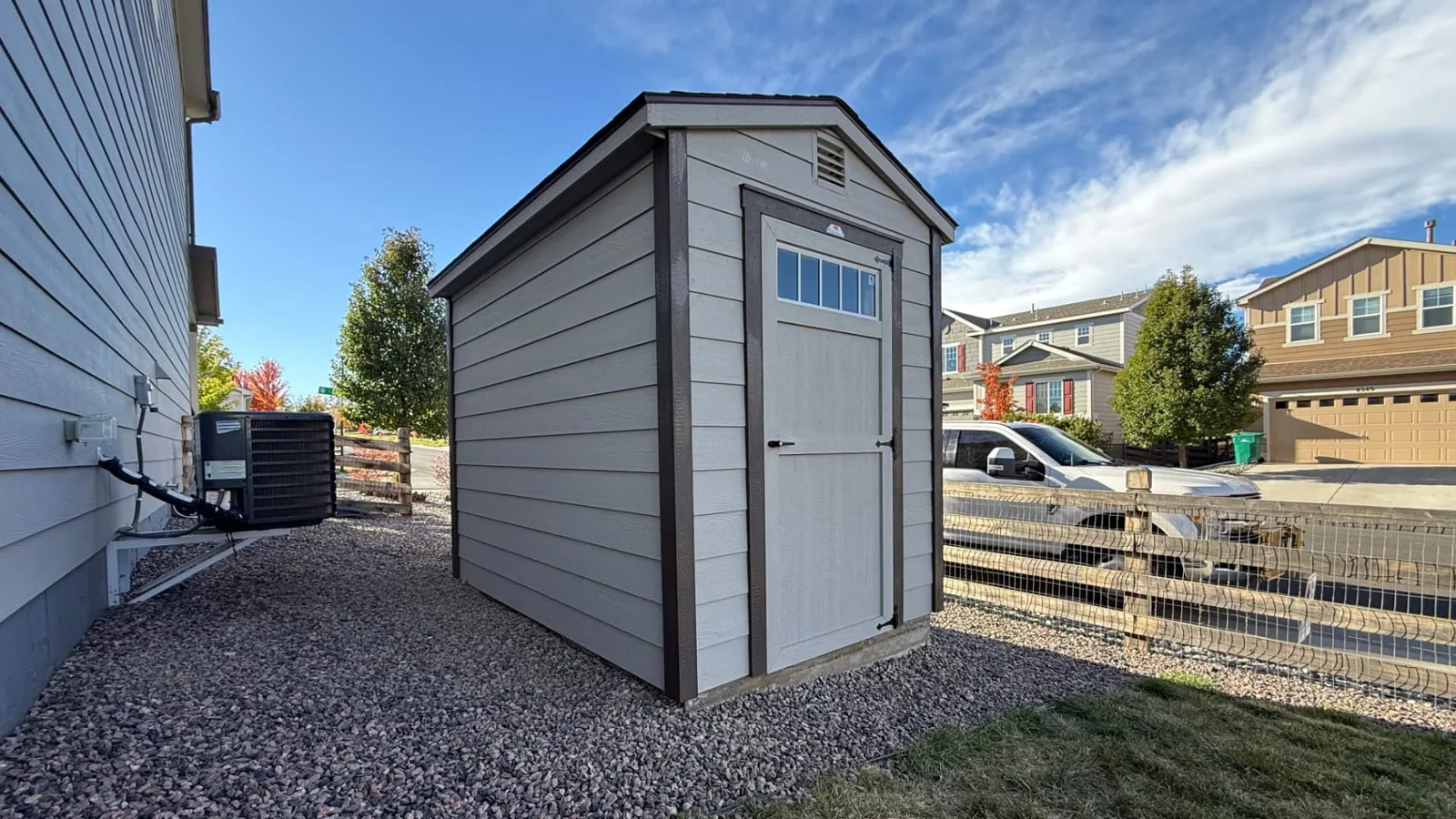
We've seen the jurisdiction question up close: our 13×20 garage project in Aurora was permitted through Arapahoe County because of where the parcel sat, while our 6×10 A-frame shed project and this 8×10 she shed — also with Aurora addresses — followed City of Aurora rules. Same city name on the address, different permitting authority.
When Does a Shed Require a Permit in Arapahoe County?
The county's adopted code amendments (amended IRC §R105.2) exempt the following from a building permit: one-story detached accessory storage sheds, playhouses, shade structures, and similar uses, provided the floor area is not greater than 120 square feet and the structure is not used for the storage of vehicles.
Read the conditions carefully — all of them must hold:
- One story and detached from the house.
- Storage, playhouse, or shade use — not a workshop with utilities, a home office, or any occupied space.
- 120 square feet or less of floor area.
- No vehicle storage — a shed you park a car or truck in needs a permit at any size.
| Shed dimensions | Footprint | Building permit (unincorporated county) |
|---|---|---|
| 8 × 10 feet | 80 sq. ft. | Exempt if conditions are met |
| 10 × 10 feet | 100 sq. ft. | Exempt if conditions are met |
| 10 × 12 feet | 120 sq. ft. | Exempt if conditions are met |
| 10 × 16 feet | 160 sq. ft. | Permit required |
| 12 × 16 feet | 192 sq. ft. | Permit required |
| 12 × 20 feet | 240 sq. ft. | Permit required |
Two more things the exemption does not cover. First, zoning and land-use rules still apply — the county's amendments state expressly that an exemption does not remove required Planning and Zoning approvals. Second, trade permits are separate: electrical, plumbing, and mechanical work can require their own permits even on an otherwise exempt shed. If you're sizing up options, our Colorado shed size guide helps you pick a footprint, and popular shed sizes in Colorado shows what actually fits in each.
For anything over 120 square feet, the county publishes a dedicated checklist for detached garages and storage buildings over 120 sq. ft. — that's the document your application will be reviewed against.
Arapahoe County Shed Size, Height, and Placement Requirements
Arapahoe County's Land Development Code (current update dated May 12, 2026) sets the zoning rules for accessory buildings in §7-2:
- The principal use must be established first — in practice, a house before an accessory structure on a residential parcel.
- Accessory buildings greater than 120 square feet and/or 10 feet in height must observe all yard (setback) and height requirements.
- Except for agricultural uses and qualifying accessory dwelling units, accessory structures may not exceed 10% of the lot area or 1,000 square feet, with a 15-foot maximum building height.
- Accessory structures cannot be used as dwellings, except as otherwise allowed by the code.
Setbacks themselves are specific to your zoning district. The code's Table 4-1.1 lists accessory-structure setbacks district by district:
| Zoning district | Front | Side | Rear |
|---|---|---|---|
| AE | 100 ft. | 100 ft. | 100 ft. |
| A-1 | 100 ft. | 25 ft. | 25 ft. |
| RR-A | 100 ft. | 25 ft. | 25 ft. |
| RR-B | House's front building line | 15 ft. | 10 ft. |
| RR-C | House's front building line | 5 ft. | 10 ft. |
| R-1-A / R-1-B | House's front building line | 10 ft. | 10 ft. |
| R-1-C | 20 ft. | 10 ft. | 20 ft. |
| R-1-D / R-2-A / R-2-B | 20 ft. | 5 ft. | 10 ft. (0 for garages) |
| R-M | Front building line | 5 ft. | 5 ft. |
| PUD | Approved development plan | Approved development plan | Approved development plan |
One honest caveat: the code does not clearly state what setbacks apply to a shed that is at or under both 120 square feet and 10 feet tall — the §7-2 wording and the general dimensional rules need reconciliation, and the county's five-foot figure you'll find in its zoning FAQ belongs to temporary storage pods, not sheds. Don't assume a small shed can go anywhere. Confirm placement with the county's Planning division for your parcel, and check your title documents for recorded easements and covenants. Our guide to whether you can put a shed anywhere in your backyard covers the general placement checklist.
Shed Foundation and Installation Requirements
Get the Most Up-to-Date Pricing
Prices shown are current as of Sep 2026 and can change at any time. Options, site prep, permits, and delivery conditions all affect the final cost.
The county's detached accessory structure checklist publishes the design criteria your shed must meet:
- Roof snow load: 30 psf, non-reducible
- Ultimate design wind speed: 115 mph
- Seismic design category: B
- Frost depth: 36 inches
For wood-framed, single-story detached garages and storage buildings of 1,000 square feet or less, the county accepts an approved footing and foundation design — including its mono-slab detail — or another method meeting minimum IRC requirements. Buildings over 1,000 square feet, with sidewalls over 10 feet, over one story, or using masonry need a foundation designed by a Colorado registered design professional, with a signed and sealed geotechnical report.
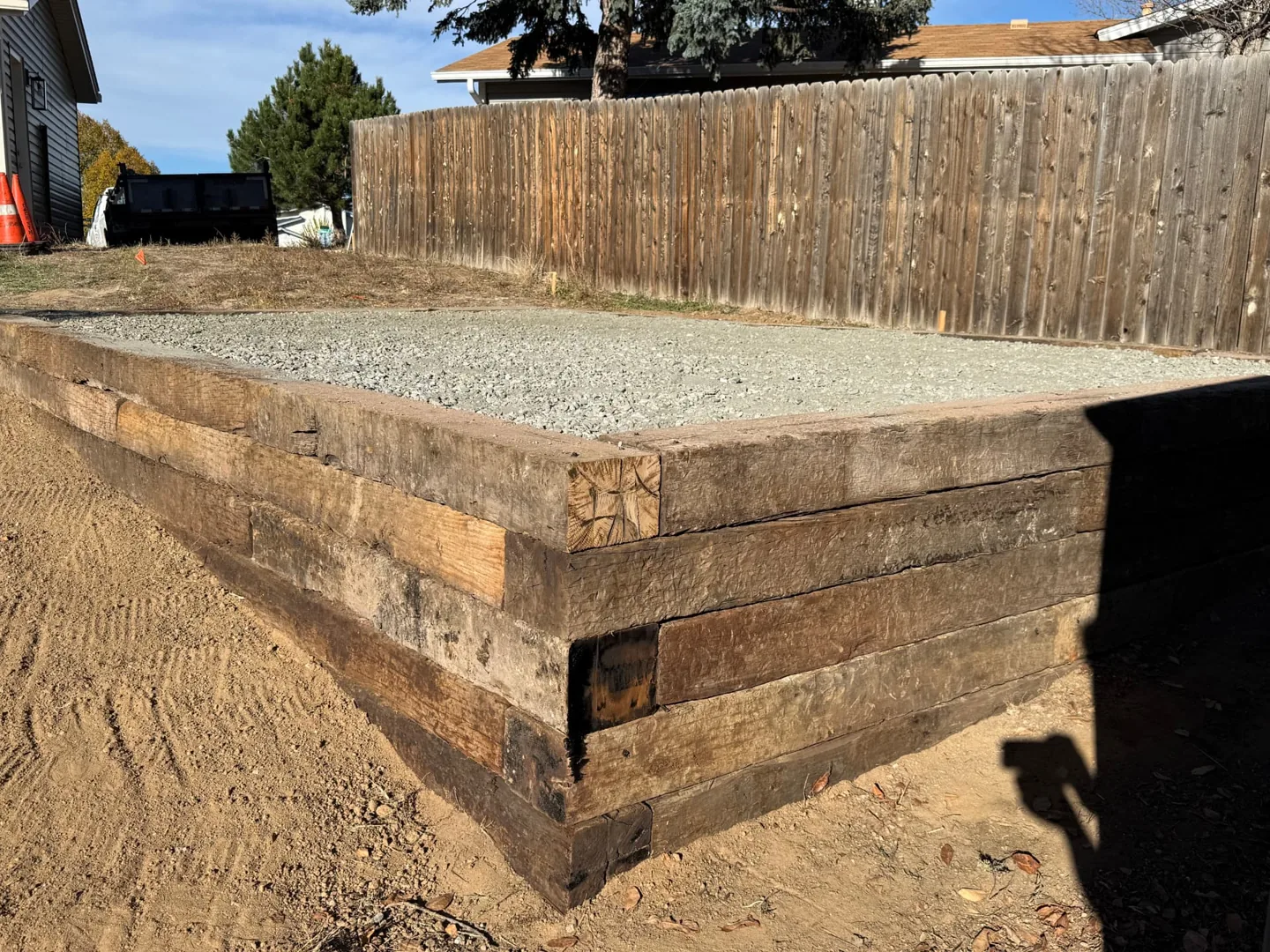
What the county does not publish: a statement that gravel pads, skids, or blocks are universally acceptable foundations, or a universal anchoring schedule for small sheds. The checklist requires your submittal to show connection details, fastener sizes, hardware locations, and wind bracing — so the foundation and anchoring for a permitted shed are established through the plans you submit, not assumed. Our shed foundation guide compares gravel pads, concrete slabs, and blocks, and our site preparation services cover everything from grading to finished pads. For the snow-load side, our Colorado shed snow load guide explains how to verify the rating your roof needs.
How to Apply for a Shed Permit in Arapahoe County
For a shed that needs a building permit, the county's published requirements shape a clear process:
- 1. Confirm jurisdiction. Use the county's Address/Parcel Info tool to verify your parcel is in unincorporated Arapahoe County, not inside a city.
- 2. Check zoning. Identify your zoning district and confirm setbacks, the 10%/1,000 sq. ft. size cap, and the 15-foot height limit with the county's Planning division.
- 3. Define the shed. Size, height, intended use, foundation type, and any electrical or other trade work.
- 4. Gather the submittal documents. The county's checklist requires a site plan showing the shed relative to property lines, existing structures, and utilities; foundation plans; scaled construction plans with framing, connections, and wind bracing; signed and sealed roof-truss calculations; and ICC-ES reports for exterior finish materials where applicable.
- 5. Apply online. Applications go through the county's Accela Customer Access portal, linked from the Building Division's application page. Documents are submitted as PDFs with the site address and owner's name on them.
- 6. Schedule inspections. Inspections are scheduled through the same portal. The county requires all components to be inspected before they're concealed, and a printed color copy of the final stamped permit documents must be on site for the inspector.
If you're doing the work yourself rather than hiring a contractor, the county requires a signed certificate for owner-generated permits — use the current form linked from the county's residential permit application requirements page.
On fees: the county's published fee information online is not cleanly current — an older fee table and a proposed increase both circulate on the county site — so we won't quote dollar amounts here. Ask the Building Division for the current permit, plan-review, and transaction charges when you apply. And keep the categories separate in your budget: county fees are one line, and the shed, foundation, site preparation, and delivery are others. Our true cost of installing a shed breakdown shows how a real project's budget comes together.
Let The Shed Yard Handle Your Shed Permitting
Our Turn-Key permitting service can handle the parcel investigation, drawings and truss documentation, permit filing, and coordination through final inspection. Tell us your address and shed plans so we can confirm the scope and quote your project. Your county or city makes the final approval decision.
Other Considerations Before Installing a Shed
- HOA and metro district rules. Many Arapahoe County neighborhoods have their own approval processes, style requirements, and placement rules. These are private covenants, not county regulations — and you need both approvals where both apply.
- Easements and utilities. Check your title documents for recorded easements, and call 811 before any digging for foundations or anchors.
- Drainage and snowmelt. A shed changes how water moves across your yard; plan the pad and grade so runoff doesn't flow toward your house or a neighbor's.
- Delivery access. Measure gates, fences, and overhead clearance before you order. Our shed delivery guide covers clearance, costs, and how to prepare your yard.
- Snow and wind. The county's 30 psf snow load and 115 mph wind speed are minimums for permitted structures — worth meeting even on an exempt shed, since Colorado weather doesn't check permits.
Where to Get Help
For unincorporated parcels, the Arapahoe County Building Division is at Lima Plaza, 6924 S. Lima St., Centennial, CO 80112 — phone 720-874-6600, email pwdbuildingsupport@arapahoegov.com, open Monday through Friday, 8 a.m. to 4:30 p.m. The county asks visitors to call for an appointment before visiting. Zoning and setback questions go to the county's Planning division through the same Public Works and Development department.
For properties inside a city, contact that city's building department using the official links in the jurisdiction section above. When you're not sure which authority covers you, the county's Address/Parcel Info tool settles it in a minute.
Arapahoe County Shed Permit FAQs
Official Sources
- Arapahoe County — Adopted Building Codes and Amendments (120 sq. ft. exemption, trade permits)
- Arapahoe County — Land Development Code, May 12, 2026 update (accessory structure rules, setback table)
- Arapahoe County — Detached Garages & Storage Buildings over 120 sq. ft. checklist (design criteria, submittal documents)
- Arapahoe County — Building Division (jurisdiction, contacts, hours)
- Arapahoe County — Building permit application and fees
- Arapahoe County — Code Central (adopted code editions)
- Arapahoe County — Address/Parcel Info application (jurisdiction lookup)
- Arapahoe County — Mapping page (jurisdiction instructions)
Permit requirements can change and vary by parcel. Arapahoe County — or your city, if your property is incorporated — is the final authority on every application. This guide reflects official county material reviewed in November 2026 and is general planning information, not a ruling for your property. The Shed Yard cannot guarantee permit approval.
Plan Your Arapahoe County Shed Project
Once you know your jurisdiction, size limit, and setbacks, choose a shed that fits all three. The Shed Yard builds customizable sheds — including the Economy Shed, A Frame Shed, and Quaker Shed — and we prepare drawings and truss documentation for permit applications as part of our Turn-Key services. See how the process comes together on a real build in our Aurora 13×20 garage project, permitted through Arapahoe County, or our 6×10 A-frame shed in Aurora.
Planning a shed in Arapahoe County? Let's talk.
Tell us your property, shed size, and plans, and we'll help you choose a building and foundation that fit the requirements.
Building elsewhere? See our Colorado shed permit requirements by county, or the guides for neighboring Douglas County, Jefferson County, Elbert County, and El Paso County.

Written by the team at The Shed Yard — family owned, Colorado built. We handle the building, the site prep, and the permits, start to finish.