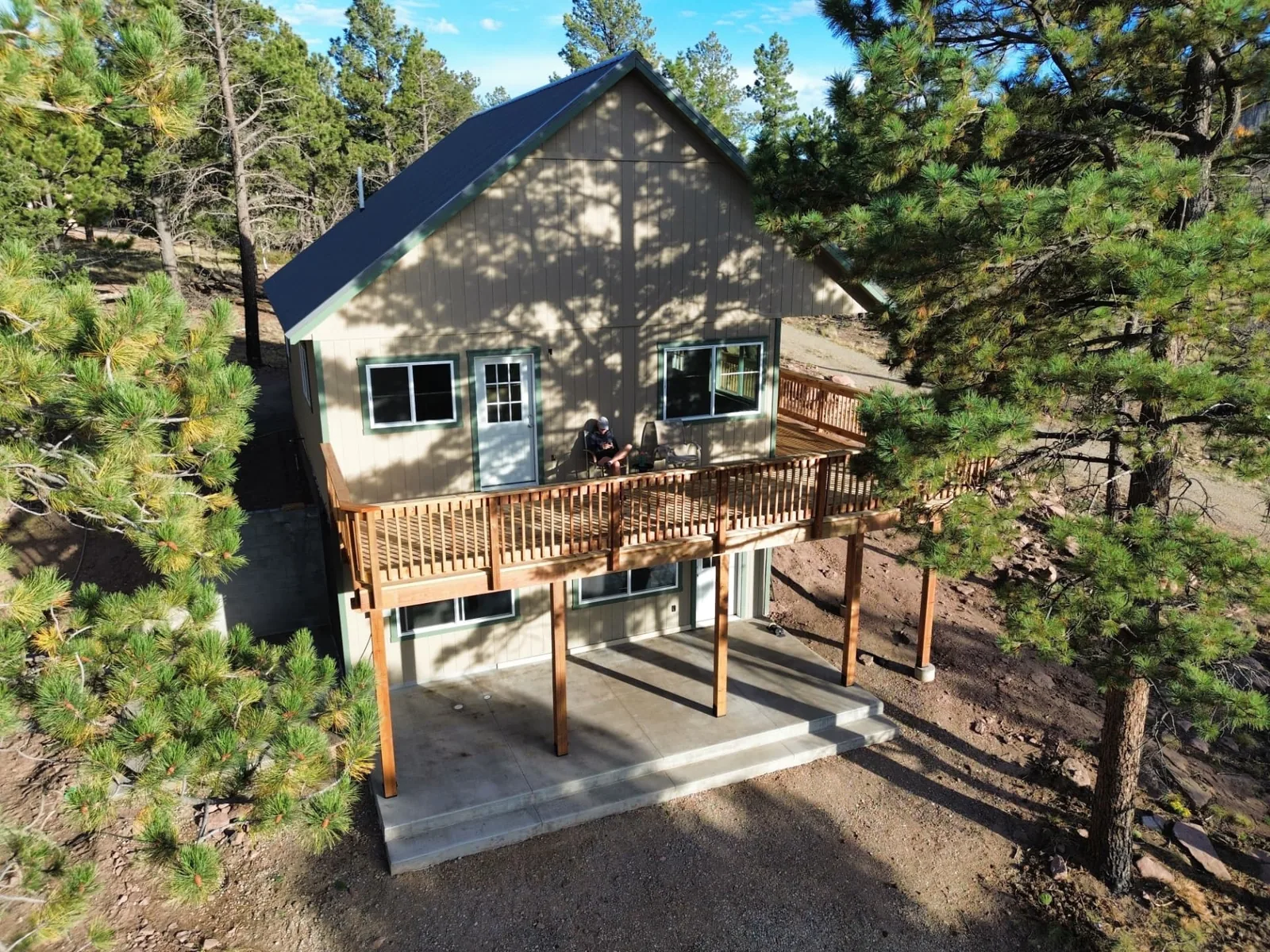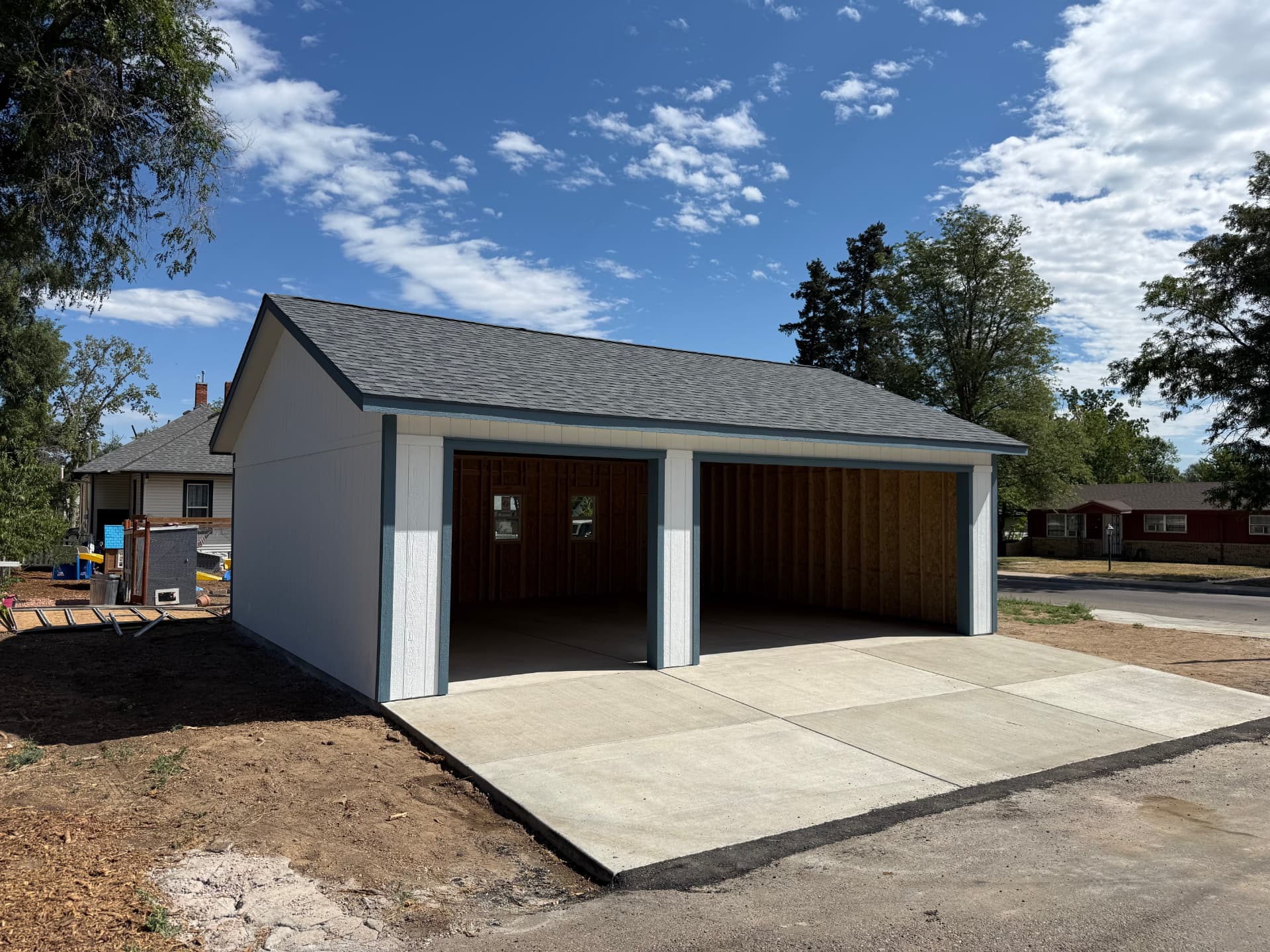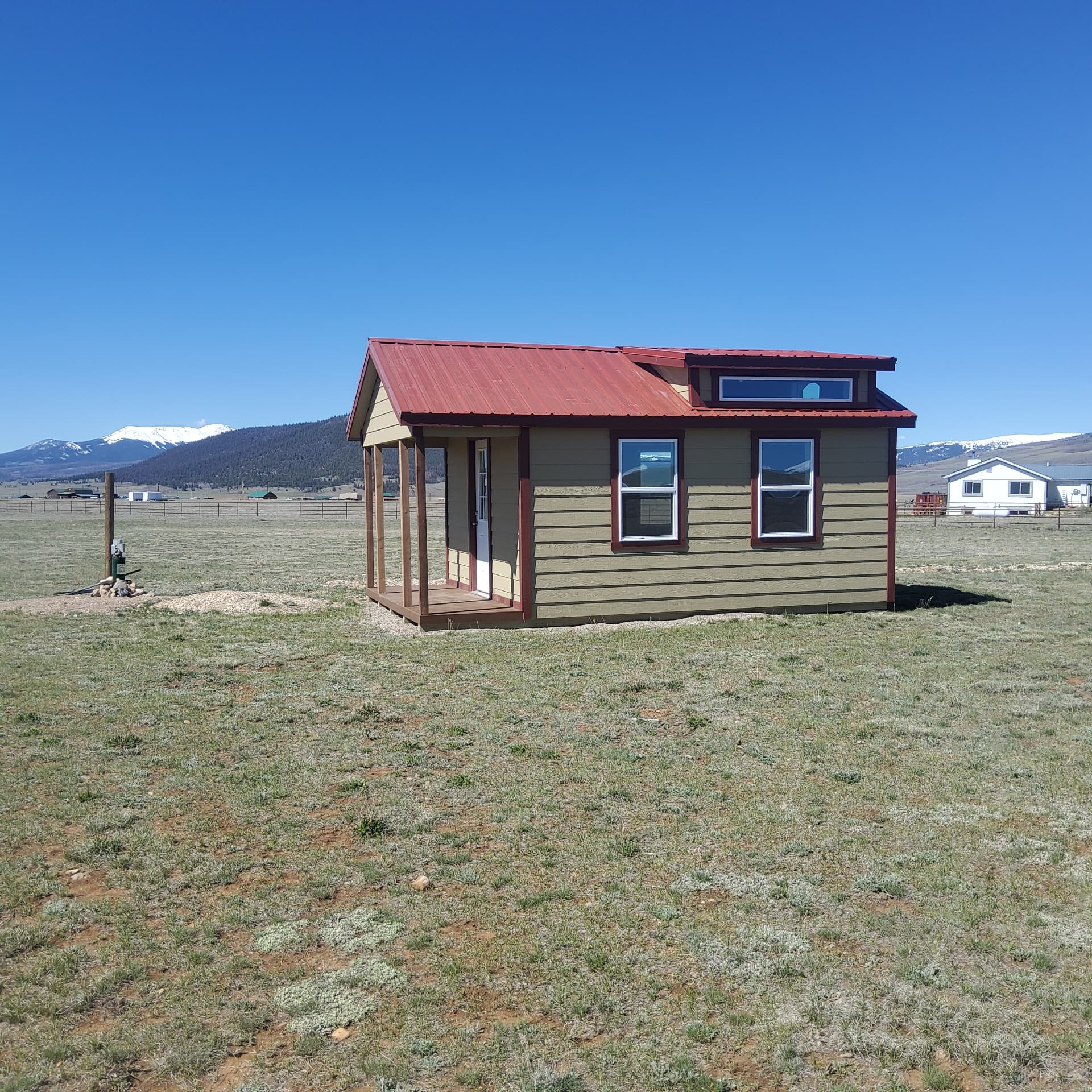
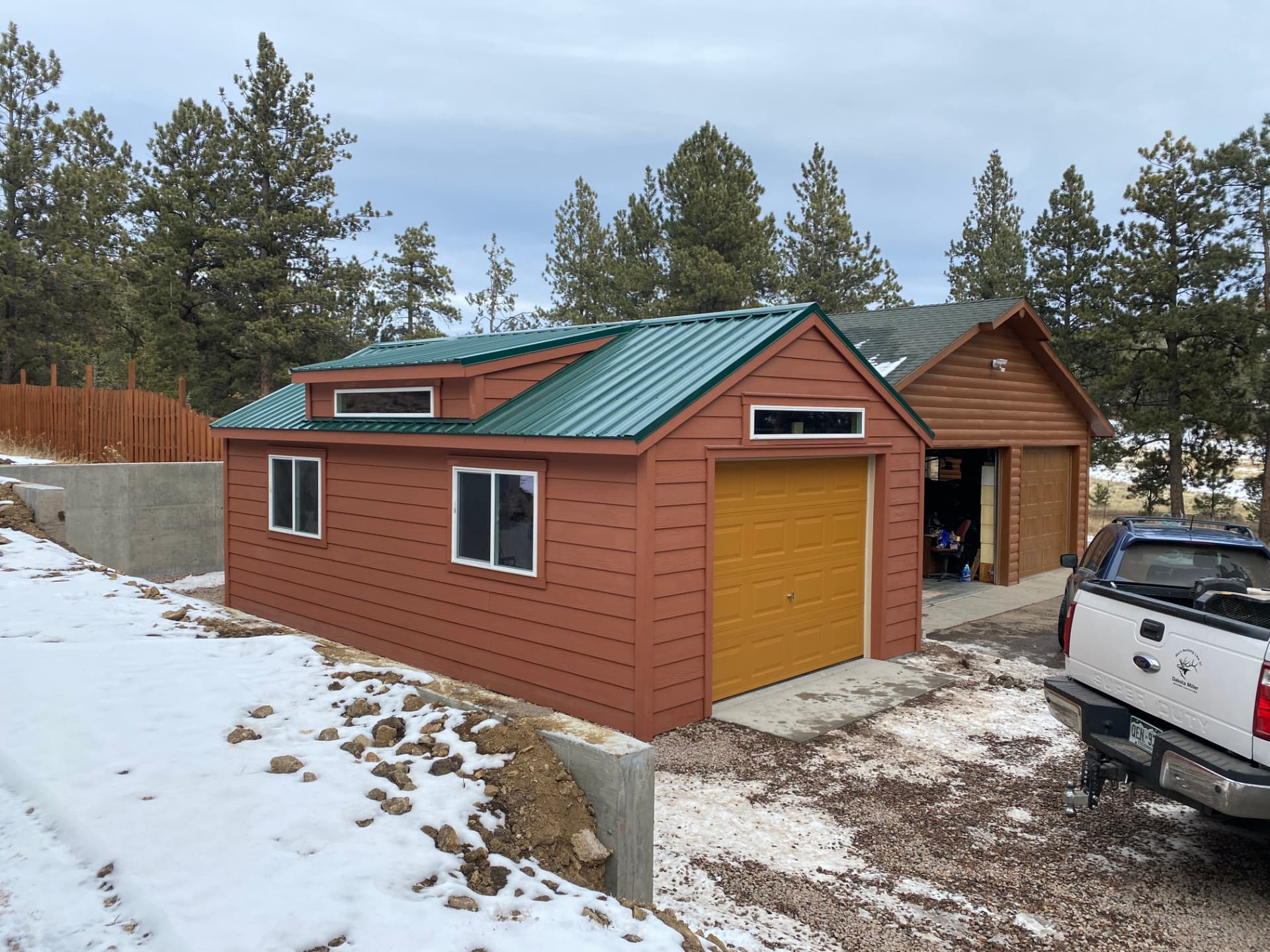
A practical 1-car garage is usually large enough for one vehicle plus the clearance you need to open doors, walk around the vehicle, and store the items that always seem to end up in the garage. For The Shed Yard customers, the 12x16 is usually the starting size for a smaller vehicle, the 12x20 is one of the most popular sizes for most passenger vehicles, and the 12x24 is a common step up for pickup-truck owners.
The right size depends on what you want the garage to do. A garage used only for parking can be smaller than a garage that also needs shelving, lawn equipment, bikes, tools, tires, a freezer, a workbench, or hobby space. If you are ready to compare models after reading, the commercial details belong on our 1-Car Garage product page.
Quick answer: Do not choose a one-car garage by vehicle length alone. Measure the actual vehicle, then add room for doors, mirrors, walking space, storage, the garage-door opening, and the foundation or delivery path. The Shed Yard offers 12-foot and 14-foot wide Single Car Garage footprints in multiple lengths.
What Is the Standard Size of a 1-Car Garage?
There is not one universal standard for a 1-car garage. Many homeowners picture a garage somewhere around 12 feet wide and 20 feet long, but that can feel tight once you add modern vehicle width, mirrors, a trash can, a mower, shelving, or a workbench. A better way to think about the size is by use: basic parking, parking plus storage, or parking plus workspace.
The Shed Yard's current Single Car Garage lineup includes 12-foot-wide and 14-foot-wide buildings in a range of lengths. The 12x14 is the smallest listed footprint, but the 12x16 is usually the better starting point for a smaller vehicle. The 12x20 is popular for everyday vehicle storage, while 12x24 and larger sizes give pickup owners and storage-heavy customers more usable depth.
| The Shed Yard size | Square footage | Practical planning use |
|---|---|---|
| 12x14 | 168 sq. ft. | Smallest listed footprint; better for compact storage, motorcycles, ATVs, or toys than daily vehicle parking |
| 12x16 | 192 sq. ft. | Practical starting size for a smaller car or compact vehicle with limited storage |
| 12x18 | 216 sq. ft. | Extra depth for a small vehicle plus a little more front or rear clearance |
| 12x20 | 240 sq. ft. | Popular single-car size for many passenger vehicles and basic storage |
| 12x24 | 288 sq. ft. | Common pickup-truck step-up or vehicle plus meaningful storage |
| 12x28 | 336 sq. ft. | Vehicle plus deeper shelving, tires, tools, or recreational gear |
| 12x32 | 384 sq. ft. | Long storage wall, hobby layout, or equipment behind the vehicle |
| 12x36 | 432 sq. ft. | Vehicle plus a dedicated workbench or larger seasonal-storage zone |
| 12x40 | 480 sq. ft. | Long, narrow garage for storage-heavy properties where width is limited |
| 12x44 | 528 sq. ft. | One vehicle plus substantial storage or equipment staging |
| 12x48 | 576 sq. ft. | Maximum 12-foot-wide single-car footprint in the current guide |
| 14x18 | 252 sq. ft. | More side room than a 12-foot width with moderate depth |
| 14x20 | 280 sq. ft. | Easier door opening and wall storage for many daily-driver layouts |
| 14x24 | 336 sq. ft. | Comfortable one-car footprint with better side clearance and storage |
| 14x28 | 392 sq. ft. | Vehicle plus workbench, wall storage, bikes, or lawn equipment |
| 14x32 | 448 sq. ft. | Garage-workshop layout with more breathing room along the sides |
| 14x36 | 504 sq. ft. | Vehicle, tools, storage, and longer equipment in one bay |
| 14x40 | 560 sq. ft. | Large one-bay garage for storage-heavy rural or mountain properties |
| 14x44 | 616 sq. ft. | Long one-car structure with extensive storage or hobby space |
| 14x48 | 672 sq. ft. | Largest listed 14-foot-wide Single Car Garage footprint |
1-Car Garage Dimensions Explained
Garage width
Width controls how comfortable the garage feels when the vehicle is inside. A 12-foot width can be enough for basic parking, but it leaves less room for shelves, trash cans, wall hooks, and door swing. A 14-foot width is often easier to live with if the garage will be used every day or if you want storage along the side wall.
Garage length
Length controls what happens in front of and behind the vehicle. Extra depth is useful for a workbench, snow tires, camping gear, bicycles, a mower, tool cabinets, or seasonal bins. If you drive a pickup or SUV, length is usually the first dimension to check before you choose the building.
Interior clearance
Interior clearance is not always the same as the outside footprint. Wall framing, sheathing, trim, door hardware, shelves, and interior finish materials can reduce the usable space. Treat the listed size as the footprint, then confirm the usable interior dimensions for the exact build you are ordering.
Vehicle clearance and walking space
A garage that technically holds the vehicle can still be frustrating if you cannot open the doors or walk around it. Measure the vehicle with mirrors, open the driver's door as far as you normally need, and leave a walkway where you will actually move through the building.
Storage space
Storage consumes garage space quickly. Shelving, bins, garden tools, bikes, ladders, tires, a snow blower, or a mower can turn a basic parking bay into a crowded room. If storage is part of the plan, choose the garage size after you list those items, not before.
Door clearance
The garage-door opening, entry door, barn-door option, and any ramps or thresholds all affect how the building functions. Think about the largest item that will pass through the opening, how often you will move it, and whether you need daily vehicle convenience or occasional equipment access.
Ceiling height
Ceiling height matters for overhead storage, lighting, garage-door hardware, tall vehicles, and future shop use. If you plan to add an automatic opener, overhead racks, interior finish, or taller equipment, discuss wall height and roofline while the garage is being designed instead of after it is built.
How Many Square Feet Is a 1-Car Garage?
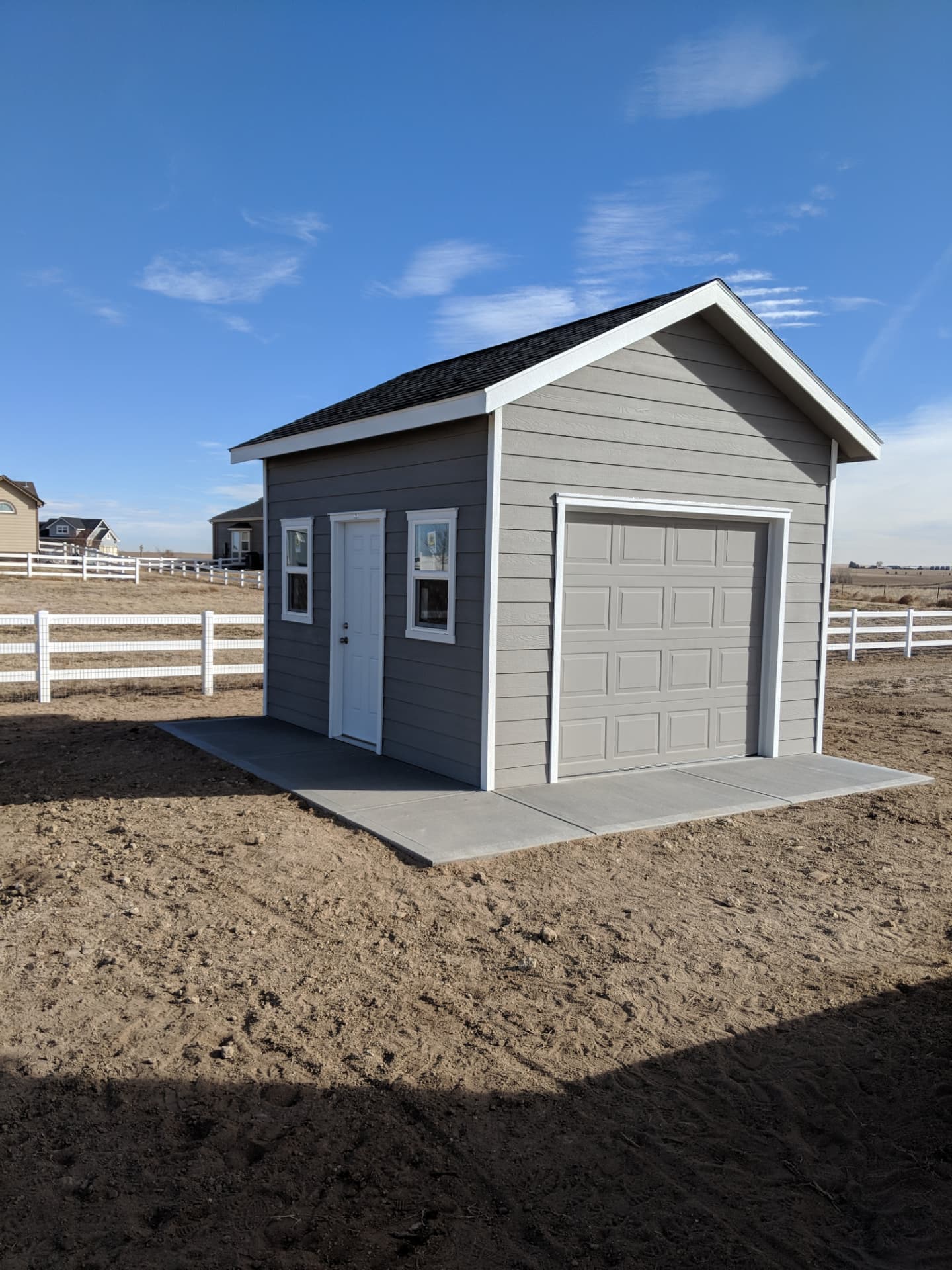
To calculate 1-car garage square footage, multiply the outside width by the outside length. For example, 12 × 20 = 240 square feet. That number is useful for comparing footprints, permit thresholds, foundation planning, and budget conversations, but it does not tell you exactly how comfortable the garage will feel.
| Example dimension | Square footage | What the number means |
|---|---|---|
| 12x16 | 192 sq. ft. | Compact footprint; often chosen for smaller vehicles or toys |
| 12x20 | 240 sq. ft. | Common practical size for one vehicle with limited extra storage |
| 12x24 | 288 sq. ft. | More depth for pickups, tools, tires, or lawn equipment |
| 14x24 | 336 sq. ft. | Same length as 12x24 with better side-to-side usability |
| 14x32 | 448 sq. ft. | A one-bay garage that starts to function like a garage-workshop |
If your local rules use a square-foot threshold for permits or reviews, do not rely on a general article. Confirm whether the number is based on floor area, exterior footprint, roof projection, foundation type, use, or another local definition. The Shed Yard can help with parcel-specific permit questions, and our Colorado shed permit guide explains why the rules change by jurisdiction.
What Fits Inside a 1-Car Garage?
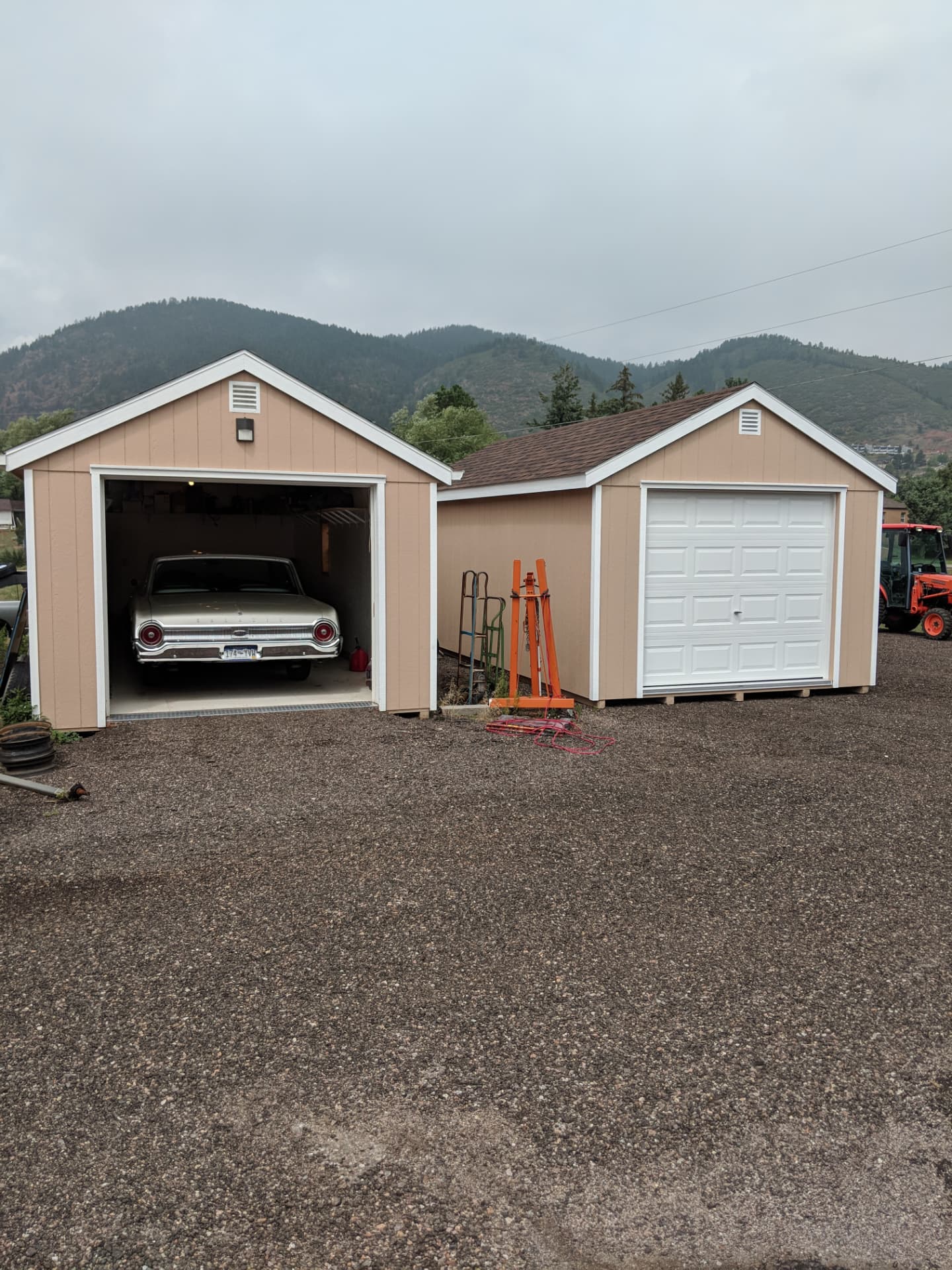
A one-car garage can store one vehicle, but the remaining space depends on the vehicle and the footprint. A compact car leaves more usable space than a full-size SUV or pickup. A daily driver needs room for doors and walking; a stored classic car may need room for a battery tender, cover, tire storage, and maintenance access.
- One car only: choose enough width and length to park, open the driver's door, and walk safely to the entry door.
- SUV or truck: measure the full vehicle length, mirror width, hitch, tailgate space, and roof accessories before picking a size.
- Vehicle plus storage: allow room for wall shelves, totes, snow tires, camping gear, bikes, and garden tools.
- Vehicle plus lawn equipment: plan for a mower, snow blower, trimmer, fuel cans, ramps, and a clear path to move equipment out without moving the vehicle first.
- Tools or workbench: choose extra length or a 14-foot width so the bench does not steal the door-opening space.
- Seasonal and recreational storage: skis, kayaks, holiday bins, fishing gear, hunting gear, ATVs, motorcycles, and side-by-side accessories all need measured space.
What Size 1-Car Garage Do You Need?
The best garage size is the smallest footprint that still works after the vehicle, door swing, walking path, storage, and future uses are drawn into the plan. If the garage will only shelter a compact vehicle, a smaller footprint may be enough. If it will become a daily parking bay plus storage room, the extra square footage is usually worth considering.
| Your main use | Sizes to compare first | Why |
|---|---|---|
| Small car or toys | 12x16 or 12x18 | A compact start without overbuilding the footprint |
| Most passenger vehicles | 12x20 | One of the most popular balances of size and cost |
| Pickup truck | 12x24 or longer | Extra depth helps with truck length, hitch space and storage |
| Vehicle plus storage | 12x24, 12x28 or 14x24 | More depth or width keeps shelves from crowding the vehicle |
| Vehicle plus workbench | 14x24 or 14x28 | Wider footprints are easier to work in without blocking door swing |
| Garage-workshop | 14x32 or larger | More room for tools, circulation and staged projects |
If you are already thinking about two vehicles, a side-by-side shop bay, or a large work area, compare the 2-Car Garage before stretching a one-car layout too far. A long single bay can be perfect for one vehicle plus equipment; it is not a substitute for two parking bays.
1-Car Garage Size Considerations in Colorado
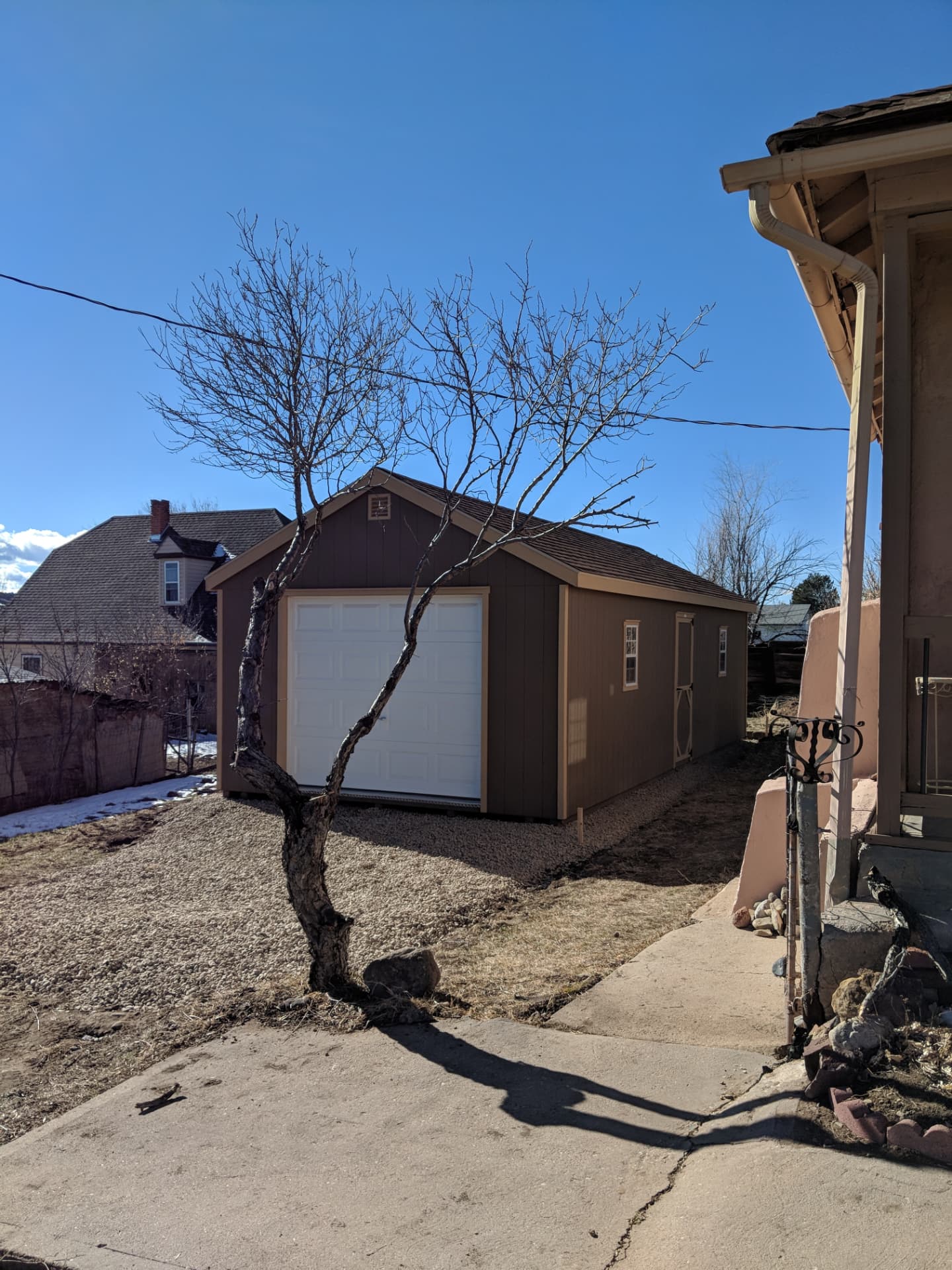
Colorado adds planning questions that a generic garage-size chart will not answer. A size that looks simple on paper still has to fit the property, meet local placement rules, and be deliverable or buildable at the site.
- Property size and setbacks: Cities, counties, metro districts and HOAs can all affect where the garage sits. Do not assume a statewide setback rule.
- Delivery clearance: Fully assembled delivery depends on the route, width, turns, slope, ground conditions and overhead obstacles. Read how shed delivery works in Colorado before finalizing the footprint.
- Foundation and drainage: A compacted gravel road-base pad is often the recommended starting point unless the county requires a foundation. Concrete, drainage, grading and anchoring depend on the site and permit path; compare options in our Colorado shed foundation guide.
- Permitting: Requirements vary by city, county, size, use, foundation, utilities and zoning. Our 1-car garage permit requirements guide and Colorado permit requirements guide are starting points, but the final answer belongs to the local jurisdiction for the actual address.
- Terrain: Sloped, rocky, muddy, snowy, or rural properties may change the delivery plan or push the project toward an on-site build.
- HOA approval: HOA rules can be stricter than city or county code, especially on roof color, siding color, placement, height and visibility.
How to Measure Your Property for a 1-Car Garage
Before you request a quote, walk the property with a tape measure and photos. The goal is to measure both the place where the garage will sit and the route we would use to get it there.
- Measure the available width of the placement area, then leave room for required setbacks, roof overhangs, drainage, maintenance and walking access.
- Measure the available length, including space in front of the garage door for approach, turning, ramps, snow removal and daily use.
- Measure your vehicle length, mirror width, roof rack height, hitch, tailgate swing and door-opening needs.
- Identify the delivery route from road to placement area: driveway, gate, fence opening, side yard, turns, trees, eaves, utility lines and slopes.
- Check overhead clearance. For fully assembled delivery, The Shed Yard generally plans around roughly 16 feet of vertical clearance, though the exact route determines what is possible.
- Mark the proposed foundation or pad area, including any extra gravel or concrete around the building.
- Confirm local setbacks, easements, lot coverage, drainage restrictions and HOA rules before site work starts.
- Send photos of the access path and build site so the team can flag delivery issues early.
When a Bigger 1-Car Garage Is Worth It
A larger 1-car garage is usually worth considering when the garage will serve more than one role. If you plan to park daily, store snow tires, keep bikes along the wall, hang tools, run a workbench, store a mower, or add a garage-door opener later, a slightly larger footprint may prevent years of frustration.
The most common mistake is sizing the garage around today's vehicle only. Families change vehicles, hobbies expand, and Colorado properties accumulate winter gear, yard tools, outdoor equipment and seasonal storage. Choose the size around the space you want to use, not only the vehicle you own today.
When to Choose a 2-Car Garage Instead
A one-car garage makes sense when one enclosed bay plus storage solves the problem. Step up to a 2-car garage when you need two true vehicle bays, a broad shop layout, more wall separation, or a layout that will be permitted and valued as a larger detached garage. Our garage lineup and 2-Car Garage page show where the options separate.
Next Step: Choose the Size, Then Price the Build
Use this guide to narrow the footprint. Then review the 1-Car Garage product page for photos, construction details and quote options. If budget is the bigger question, read How Much Does a 1-Car Garage Cost in Colorado? for current starting prices, project-cost ranges, delivery timing, permit notes and budgeting mistakes.

Written by the team at The Shed Yard — family owned, Colorado built. We handle the building, the site prep, and the permits, start to finish.