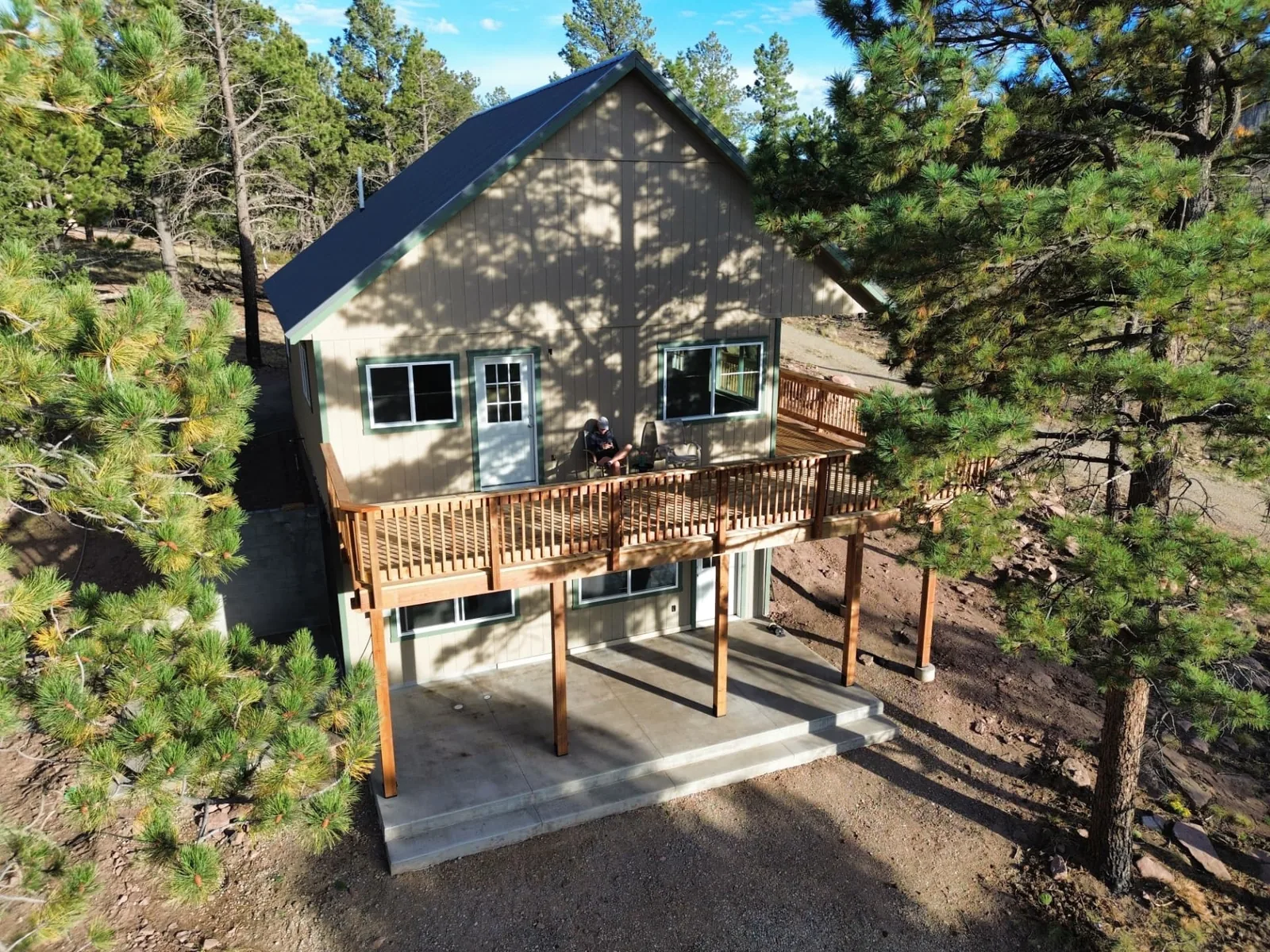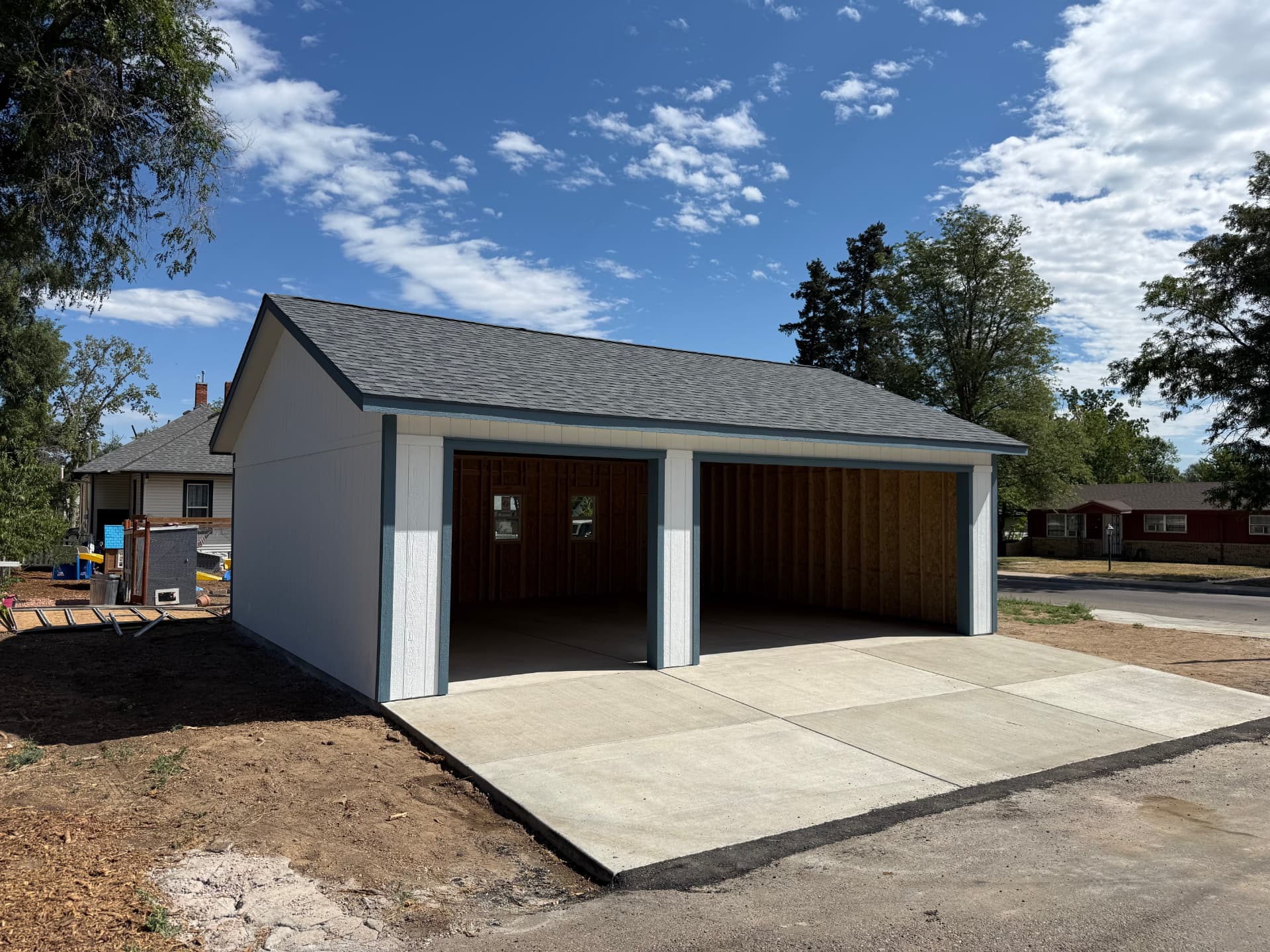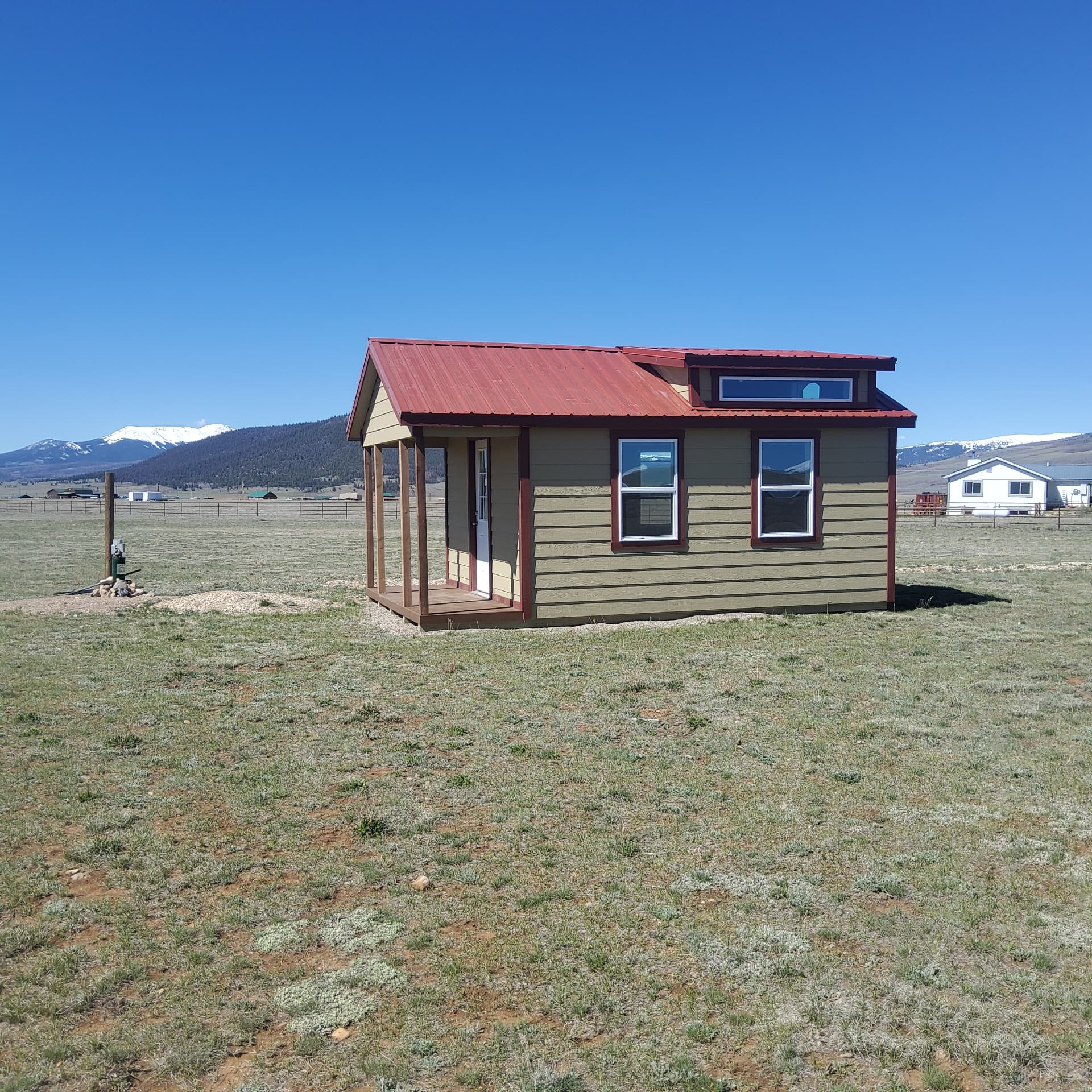
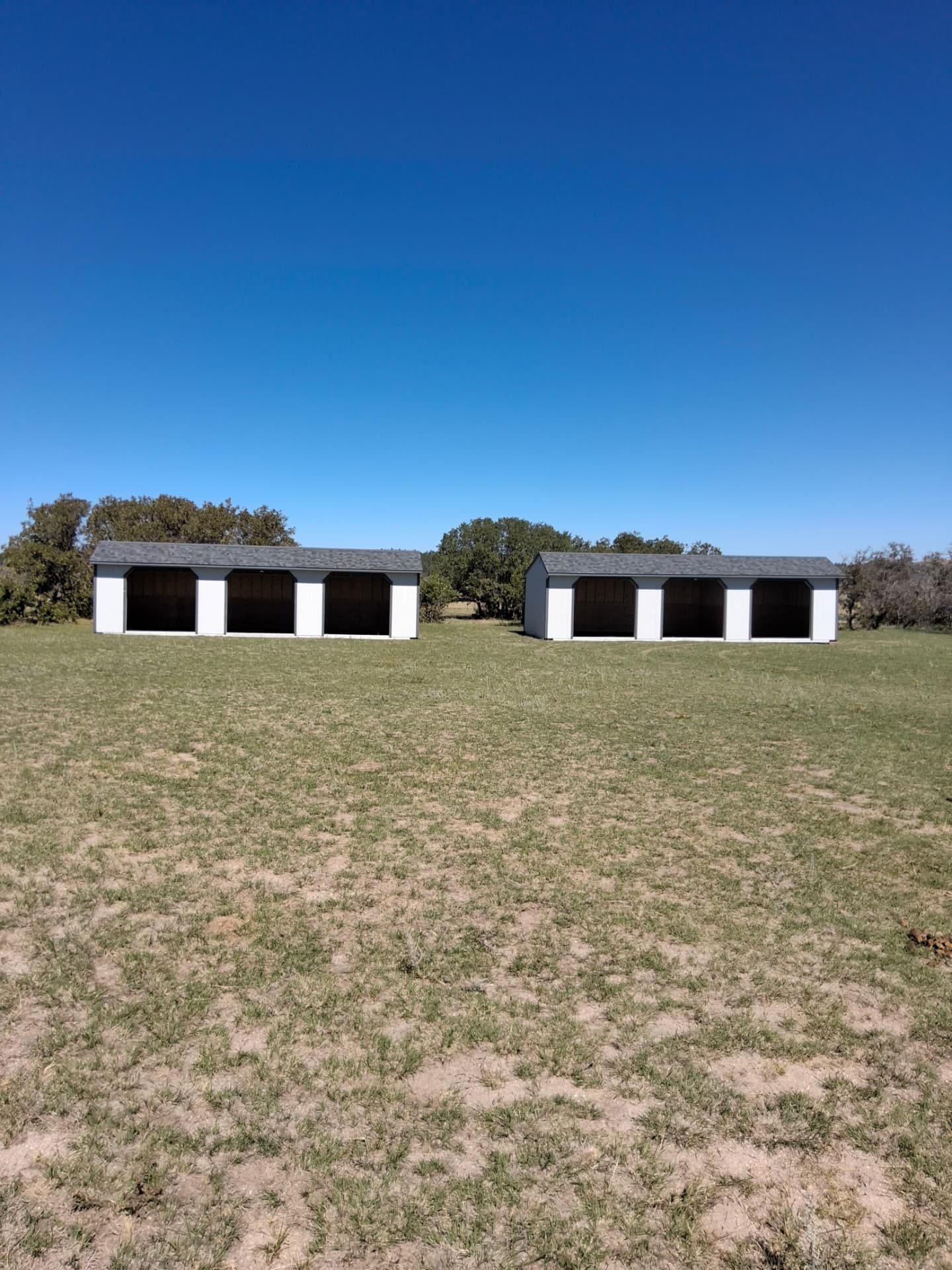
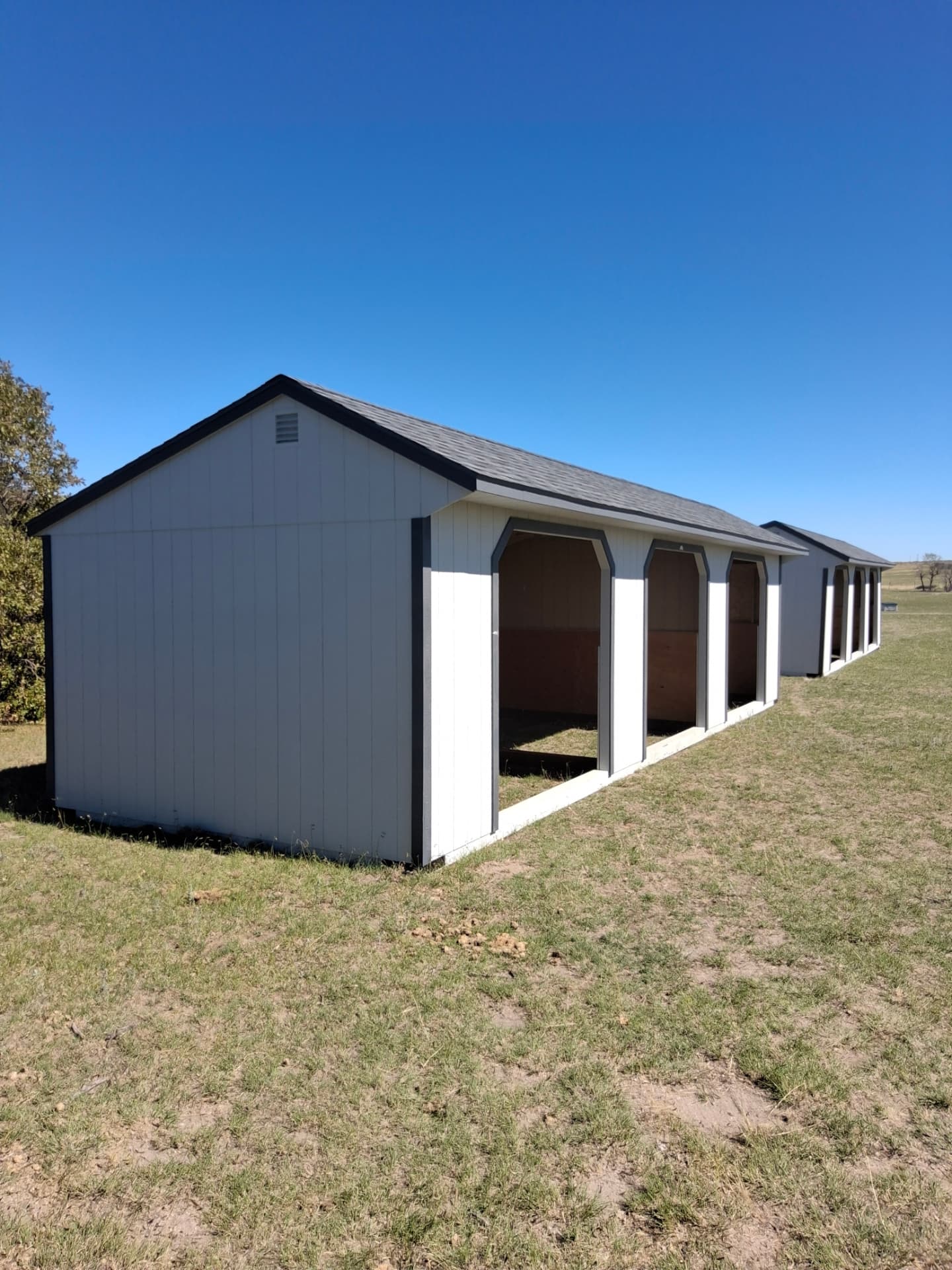
This Franktown, Colorado delivery included two 12x38 loafing sheds and one 12x12 animal shelter. Together, the structures provide multiple open-front shelter bays across a Douglas County horse property while preserving flexible pasture access.
When people search for run-in sheds in Franktown, they are often planning for more than one horse, more than one pasture, or changing Colorado weather. This project shows a practical multi-structure answer: two long shelters positioned apart from one another, plus a compact animal shelter for a separate paddock or smaller livestock area.
The Franktown Horse-Shelter Project at a Glance
| Structure | Configuration | Practical role |
|---|---|---|
| Loafing shed 1 | 12x38 with multiple open-front bays | Weather shelter and free pasture access |
| Loafing shed 2 | 12x38 with multiple open-front bays | A second shelter zone for flexible herd management |
| Loafing shed 3 | 12x12 open-front shelter | A compact protected area for a separate paddock or smaller animals |
The two long buildings use open fronts divided into bays. That layout gives livestock broad visibility and avoids a single narrow doorway. Placing separate shelters on the property can also help an owner distribute animals, reduce competition for one protected spot, and respond to pasture rotation or changing wind direction.
Why Portable Loafing Sheds Fit Douglas County Horse Properties
A portable loafing shed is built on a 6x6 pressrure treated perimeter with tow hooks. This preserves flexibility as fencing, grazing areas, and animal groups change. It does not mean zoning and permit rules disappear: the proposed location may still need setback, drainage, floodplain, utility, and covenant review.
- Open access: Horses can seek shade or protection without waiting for someone to open a stall.
- Multiple bays: A long shelter can provide more than one entry point and reduce pressure around a single opening.
- Property flexibility: Skid-mounted structures may be repositioned when site conditions and local approvals allow.
- Colorado-ready options: Buyers can discuss interior kickboards, bite guards, anchoring, roof materials, and site-specific wind and snow requirements.
- Coordinated appearance: Matching siding, trim, and roofing helps several farm structures read as one planned group.
The 12x12 Animal Shelter
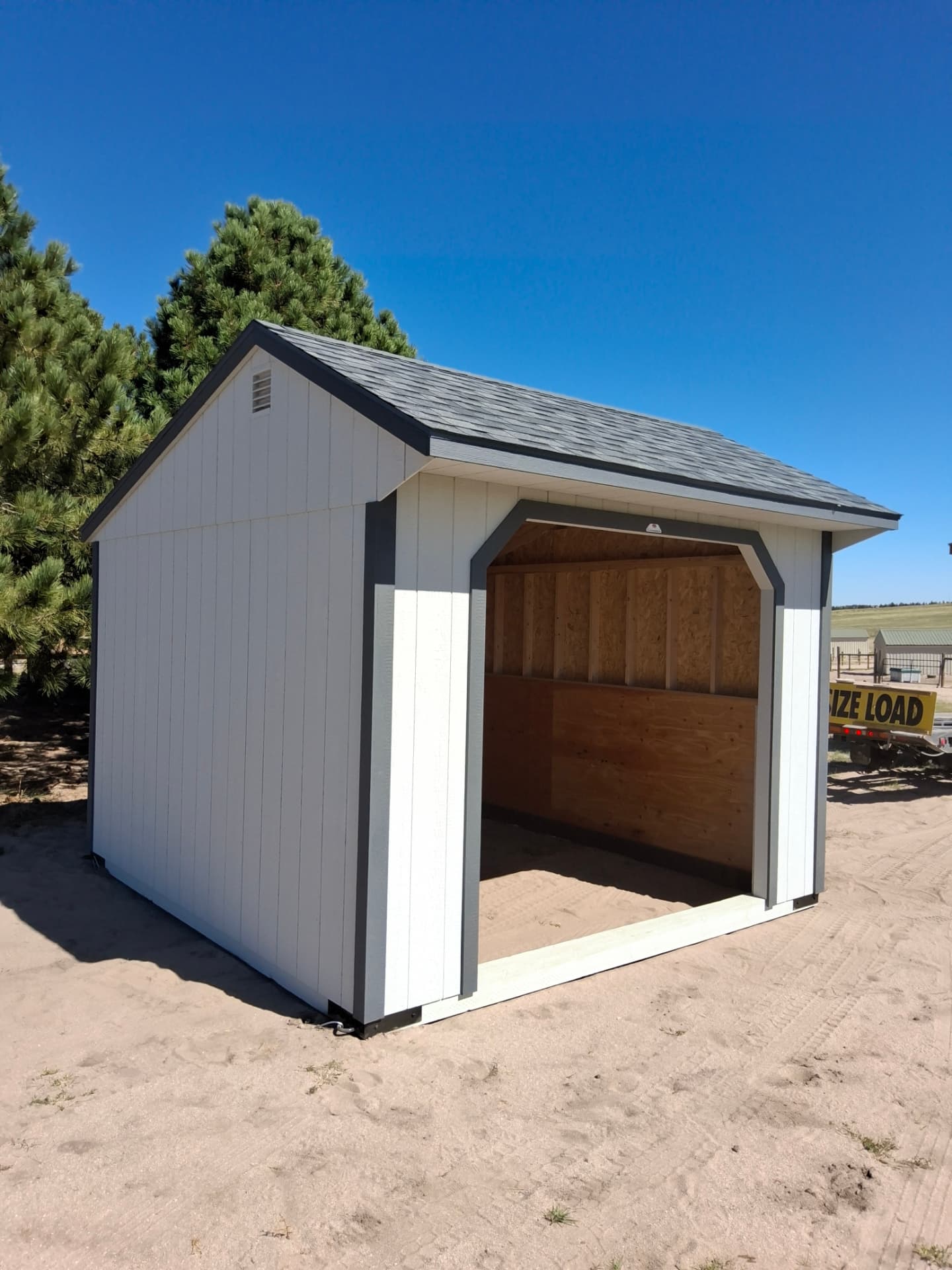
The smaller 12x12 building carries the same white-and-dark-trim appearance in a compact footprint. Its open front and interior kickboard area make it useful where a full 38-foot run is unnecessary. The right animal, capacity, and paddock use should always be matched to safe husbandry practices and local animal rules.
Get the Most Up-to-Date Pricing
Prices shown are current as of Sep 2026 and can change at any time. Options, site prep, permits, and delivery conditions all affect the final cost.
Loafing Shed With Tack Room and Metal-Roof Options
This delivery focused on open animal shelter, but the same planning process can include a loafing shed with tack room. One end can be enclosed for saddles, feed, tools, or supplies while the remaining bays stay open. Doors, windows, divider walls, kickboard height, bite guards, siding, colors, and roof choices can be tailored to the property.
Buyers searching for metal loafing sheds should clarify what they mean. Some shelters use an all-metal structural frame; others, including wood-framed models, may offer durable metal roofing or siding. Compare framing, interior animal-contact surfaces, condensation control, corrosion resistance, anchoring, and repairability—not just the exterior material name.
Loafing Sheds Near Parker, Castle Rock, and Sedalia
This delivery took place in Franktown, but we also deliver loafing sheds in Parker, CO, loafing sheds in Castle Rock, and horse shelters in Sedalia, CO. These communities share Douglas County's ranching landscape, but they do not necessarily share one permitting authority. A Parker or Castle Rock mailing address may be inside town limits or on unincorporated county land, while Sedalia has a county zoning district with its own provisions.
Start with the address, not the mailing city. Confirm whether Douglas County, the Town of Parker, the Town of Castle Rock, or another authority governs the parcel before choosing placement or assuming a building-permit exemption.
Douglas County Permit and Placement Checklist
- Confirm the parcel's jurisdiction and zoning district with the applicable planning department.
- Review the current Douglas County Barns, Garages and Sheds guidance before assuming a permit is or is not required.
- Ask Planning to verify setbacks for the parcel size, zone district, roads, lot lines, and livestock use.
- Check easements, drainageways, and mapped floodplain conditions; Douglas County has a separate Floodplain Overlay District and review process.
- Discuss electrical work separately. The county publishes an electrical permit process that includes barn and shed projects.
- For Sedalia properties, review the county's Sedalia Community District rather than applying a general county setback.
- For addresses inside town limits, use the Town of Parker permit guidance or Castle Rock residential permit guidance.
- Confirm HOA or private covenant approval independently from government permits.
Codes and interpretations can change, and the authority having jurisdiction makes the final decision. The Shed Yard can help coordinate structure details, delivery access, site preparation, and permit services for the selected project.
Plan Your Douglas County Loafing Shed
Choose the size, bays, tack-room layout, colors, and animal-protection options for your Franktown-area property.
Frequently Asked Questions
For broader sizing, weather, kickboard, and layout guidance, read our Colorado Loafing Shed Buying Guide.

Written by the team at The Shed Yard — family owned, Colorado built. We handle the building, the site prep, and the permits, start to finish.