James Hardie Siding for Sheds & Garages in Colorado: Colors, Styles & the 2025 Wildfire Code
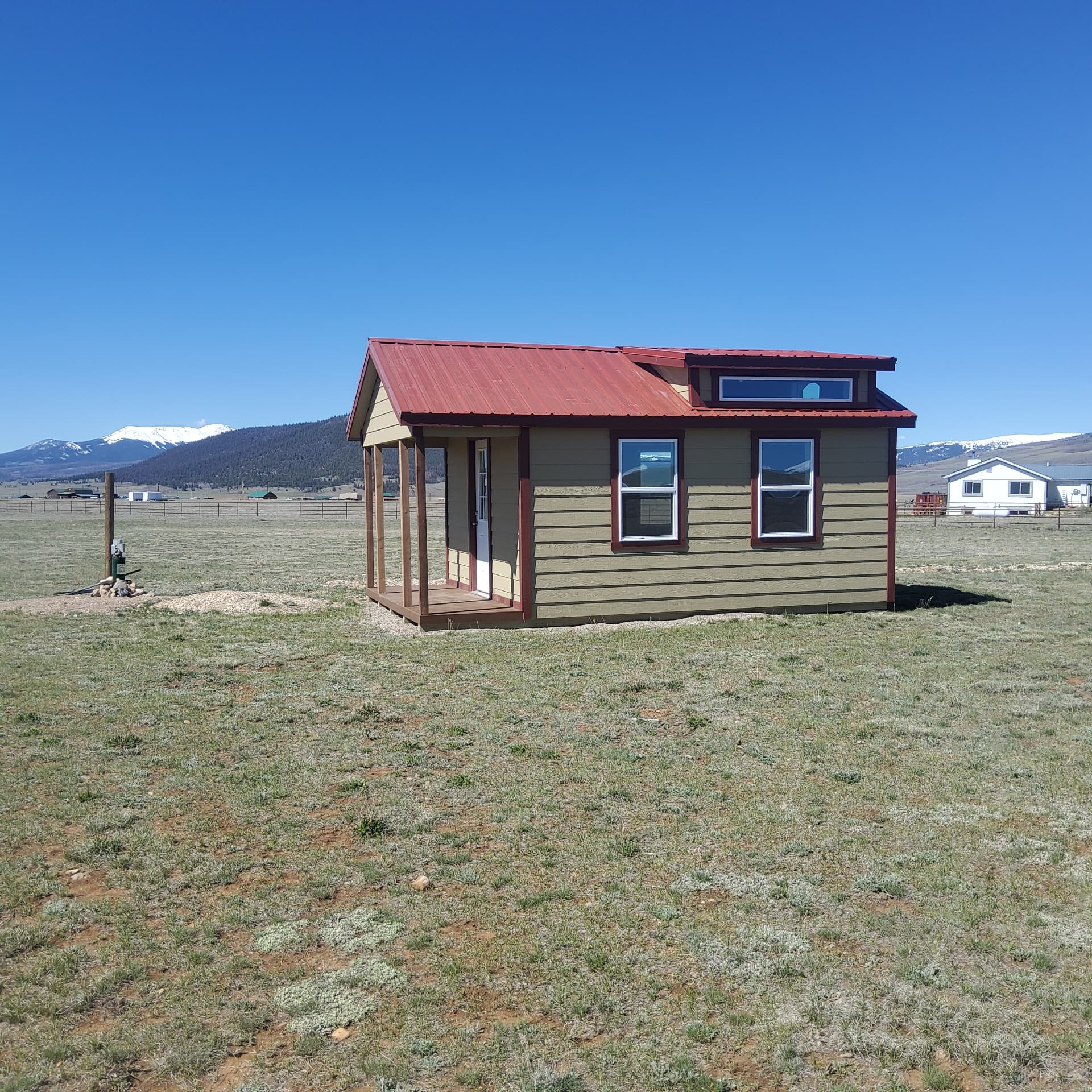
Siding is the part of your shed, garage, or home shell you look at every day — and in much of Colorado, it is also part of how your building handles wildfire embers. This guide covers both: first, what the 2025 Colorado Wildfire Resiliency Code (CWRC) means for an outbuilding, then how to choose James Hardie® fiber cement siding, its styles and colors, and what the upgrade costs on a 10x20 shed from The Shed Yard.
How to read this guide: Wildfire code statements link to the Colorado Division of Fire Prevention and Control (DFPC). Siding specs and warranties link to James Hardie. Prices are The Shed Yard's own starting prices. Only your local code official can decide how the code applies to your property. Sources reviewed October 2026.
Part 1: The 2025 Colorado Wildfire Resiliency Code — What Shed and Garage Buyers Should Know
The CWRC is a statewide minimum code for new construction and significant exterior alterations and additions in Colorado's Wildland-Urban Interface (WUI). DFPC states plainly that it is not a retrofit code (DFPC). Local jurisdictions adopt it and may meet or exceed the state model or receive a modification, so DFPC advises checking with the local code official for every project (DFPC).
Permitted vs. Unpermitted Structures: Does the Code Apply to My Shed?
The code is enforced mainly through permits and inspections, but "no building permit" does not automatically mean "no wildfire rules." Three things are worth knowing:
- The structure-hardening exceptions are narrow. The state code exempts one-story detached, nonhabitable sheds and playhouses only when the floor area is 120 square feet or less and the shed sits at least 10 feet from the nearest occupiable structure. It also exempts Group U accessory buildings of any size located at least 50 feet from a structure containing occupiable or habitable space (2025 CWRC, Section 401.1). A 10x20 (200 sq. ft.) shed placed near your house does not fit the first exception.
- Defensible space still involves your shed. The code's site requirements include Structure Ignition Zone 1 — the first 0 to 5 feet around a structure (DFPC). A shed placed close to your home sits inside the zones you are trying to keep clear, which affects where it should go.
- Zoning and insurance are separate. Setbacks are set by local zoning, and DFPC notes the code is intended in part to help communities maintain insurability of homes (DFPC). Ask your insurer how outbuildings near your home are evaluated.
For permit basics by area, see our Colorado shed permit requirements guide.
How to Find Your Property's Fire Intensity Rating
- Step 1: Open the official 2025 Colorado Wildfire Resiliency Code Map linked from DFPC's code resources page and search your address.
- Step 2: Note the color. Yellow is Low Fire Intensity (Class 1). Orange and red are Moderate to High Fire Intensity (Class 2) (DFPC).
- Step 3: Ask which map your jurisdiction uses. Local governments may adopt the state map or develop their own (DFPC), and the code includes a ground-truthing process (Section 304) for verifying conditions on the ground.
- Step 4: For broader wildfire risk context, the Colorado State Forest Service's Colorado Wildfire Risk Assessment Portal (CO-WRAP) offers risk maps and planning information. Use the official CWRC map, not CO-WRAP, to determine code class.
- Step 5: Call your local building department or fire marshal to confirm the class that applies to your parcel before you order.
Class 1 vs. Class 2: What Changes
| Class 1 (Low — Yellow) | Class 2 (Moderate to High — Orange/Red) | |
|---|---|---|
| Requirement level | Baseline minimum for new construction and significant additions/alterations in the WUI | Cumulative: all Class 1 requirements plus more for higher fire intensity |
| Structure items named by DFPC | Roofing, roof valley flashings, gutters and downspouts, vents | Class 1 items plus additional hardening (DFPC lists exterior walls and decking among hardening categories) |
| Site items named by DFPC | Structure Ignition Zone 1 (0–5 ft), site signage, retaining walls, fencing | Class 1 items plus additional site and defensible-space requirements |
What this means for siding: in Class 2 areas, exterior walls become part of the hardening conversation. James Hardie states its siding complies with ASTM E136 as a noncombustible material (James Hardie catalog). Whether a specific wall assembly satisfies your local code is a decision for your code official — bring the product information to that conversation.
Part 2: The Shed Yard's Guide to Hardie Siding and Colors
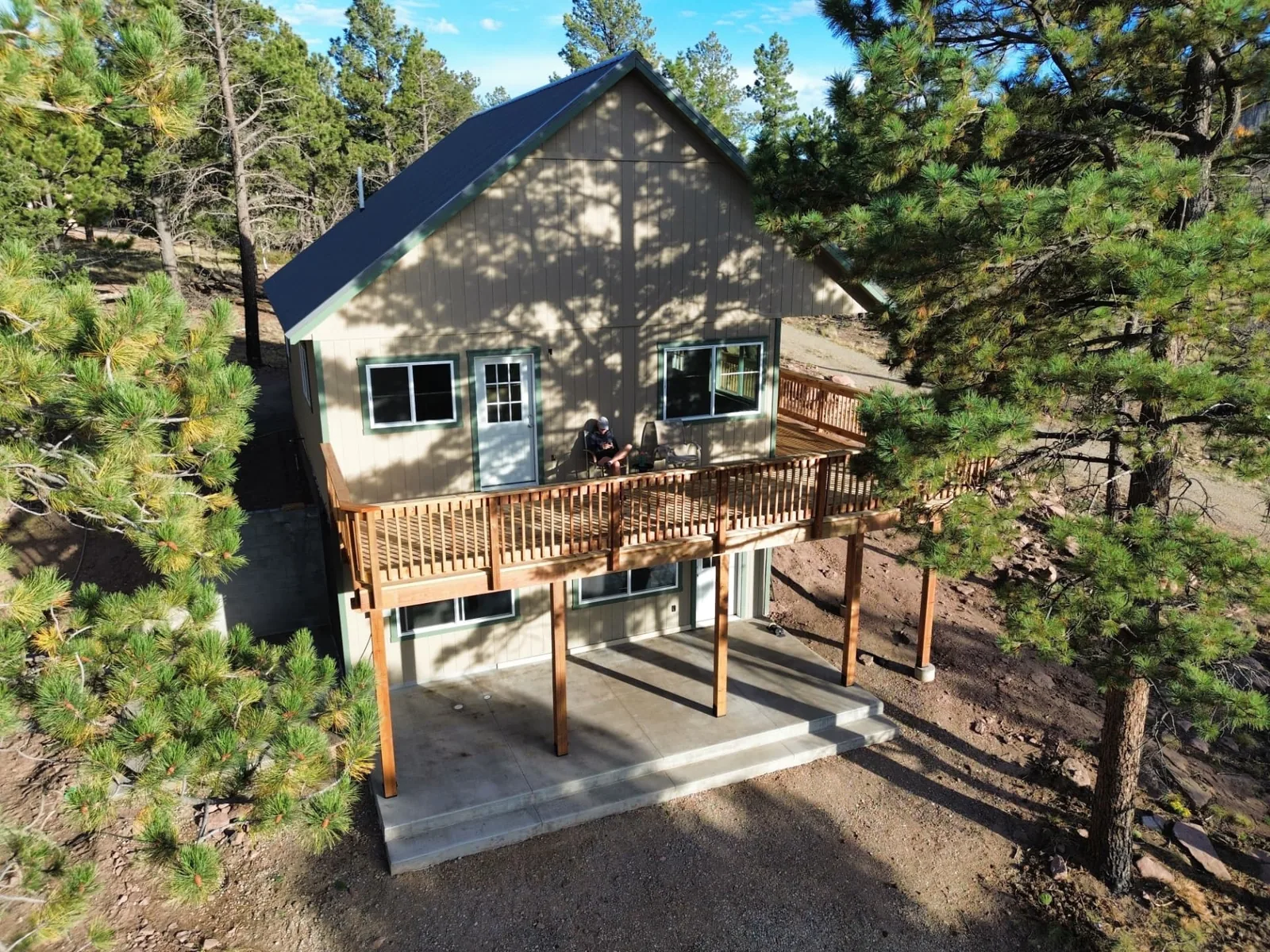
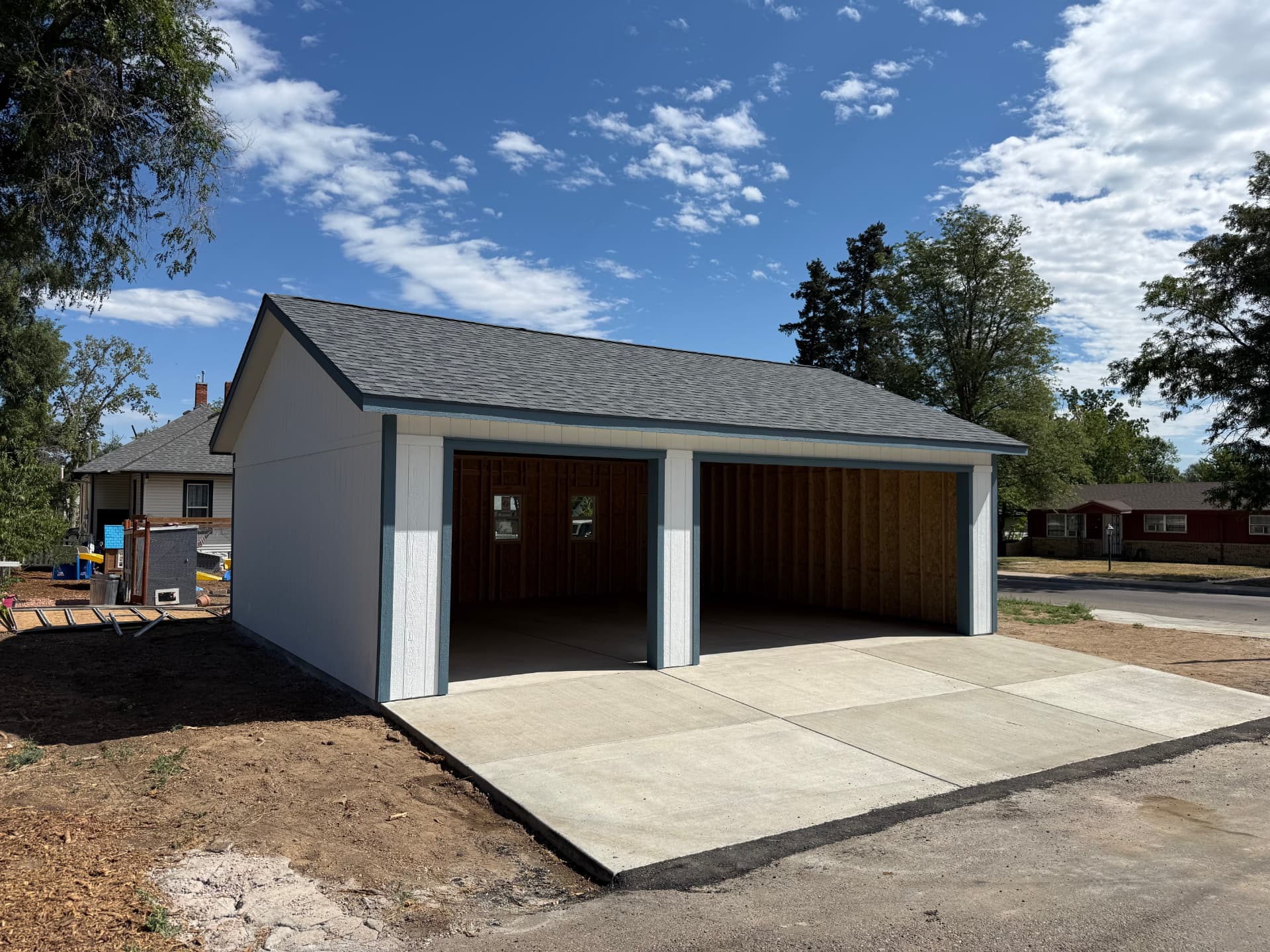
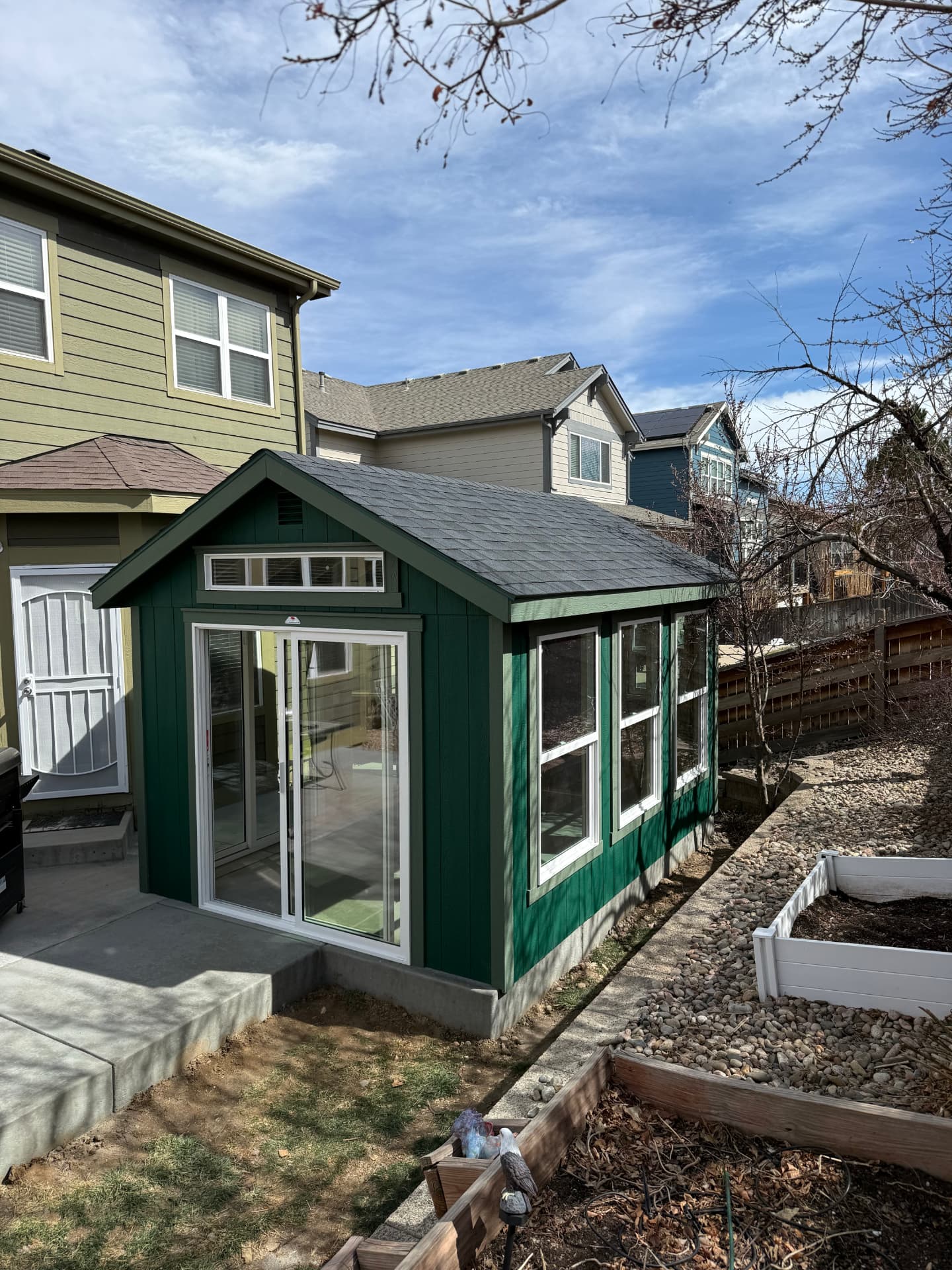
The Shed Yard offers James Hardie fiber cement siding on sheds, garages, and code-compliant home shells. Our standard siding is LP® SmartSide® engineered wood, which is a strong choice for most buyers. Hardie is the upgrade for buyers who want a cement-based material, a long-lasting factory color, or a better fit for wildfire-area planning.
What Is Hardie Fiber Cement Siding?
According to James Hardie, its siding is made of sand, water, cellulose fibers, and Portland cement, plus proprietary additives (James Hardie FAQ). That cement-based makeup is why it behaves differently from wood products:
- Fire: noncombustible per ASTM E136, with a flame spread index of zero per ASTM E84. James Hardie notes that fire resistance does not extend to applied paints or coatings, which may char when exposed to flame (catalog; HZ5 warranty).
- Weather: HZ5® products are warranted against cracking, splitting, or warping from water, heat, and freezing temperatures when tested to ASTM C1185, and to resist hail damage (HZ5 warranty).
- Pests: warranted against termites and other wood-boring insects, and to resist woodpecker damage (same source).
- Warranty: a 30-year non-prorated limited substrate warranty (James Hardie FAQ).
7" HardiePlank® Lap Siding vs. Hardie Board & Batten
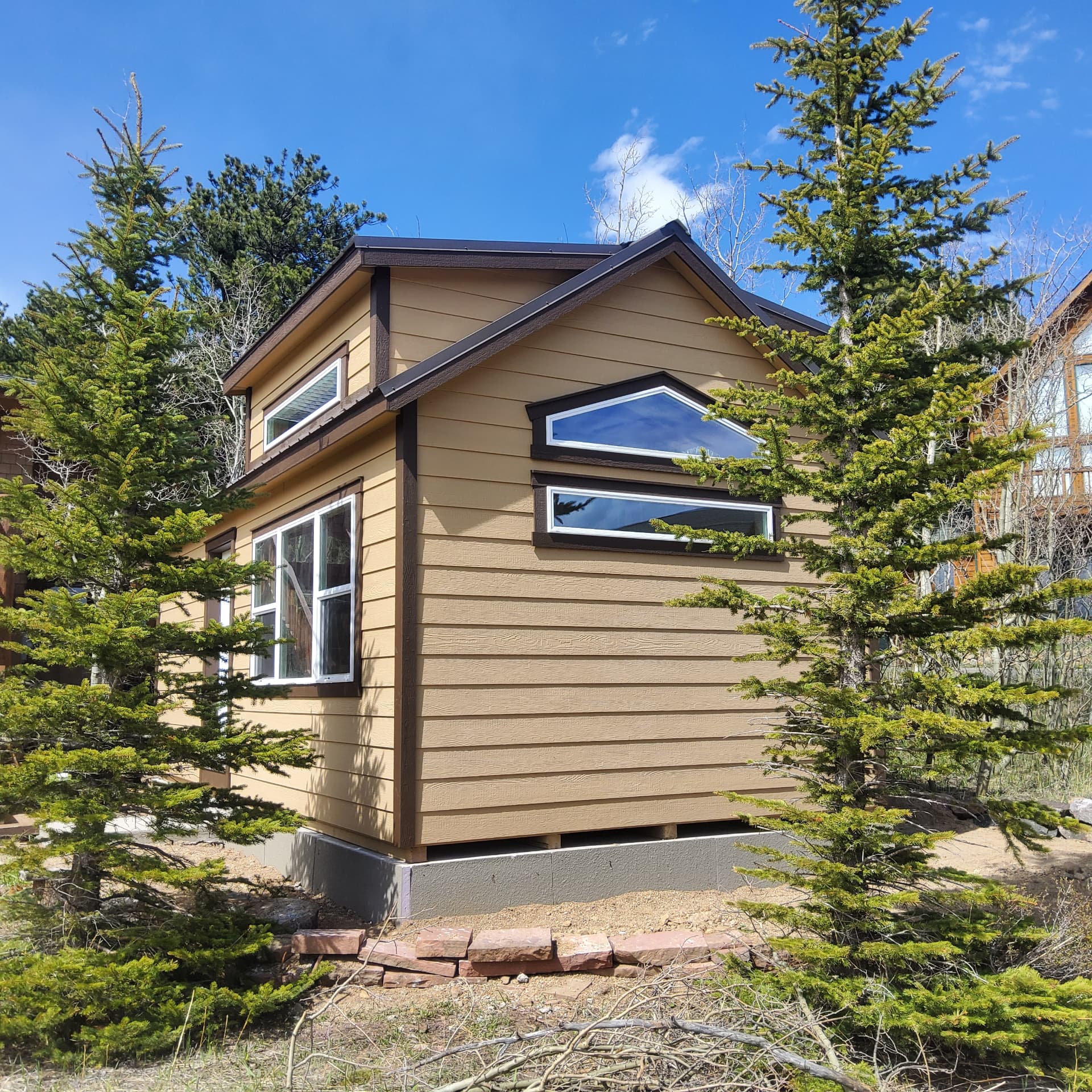
Hardie lap siding
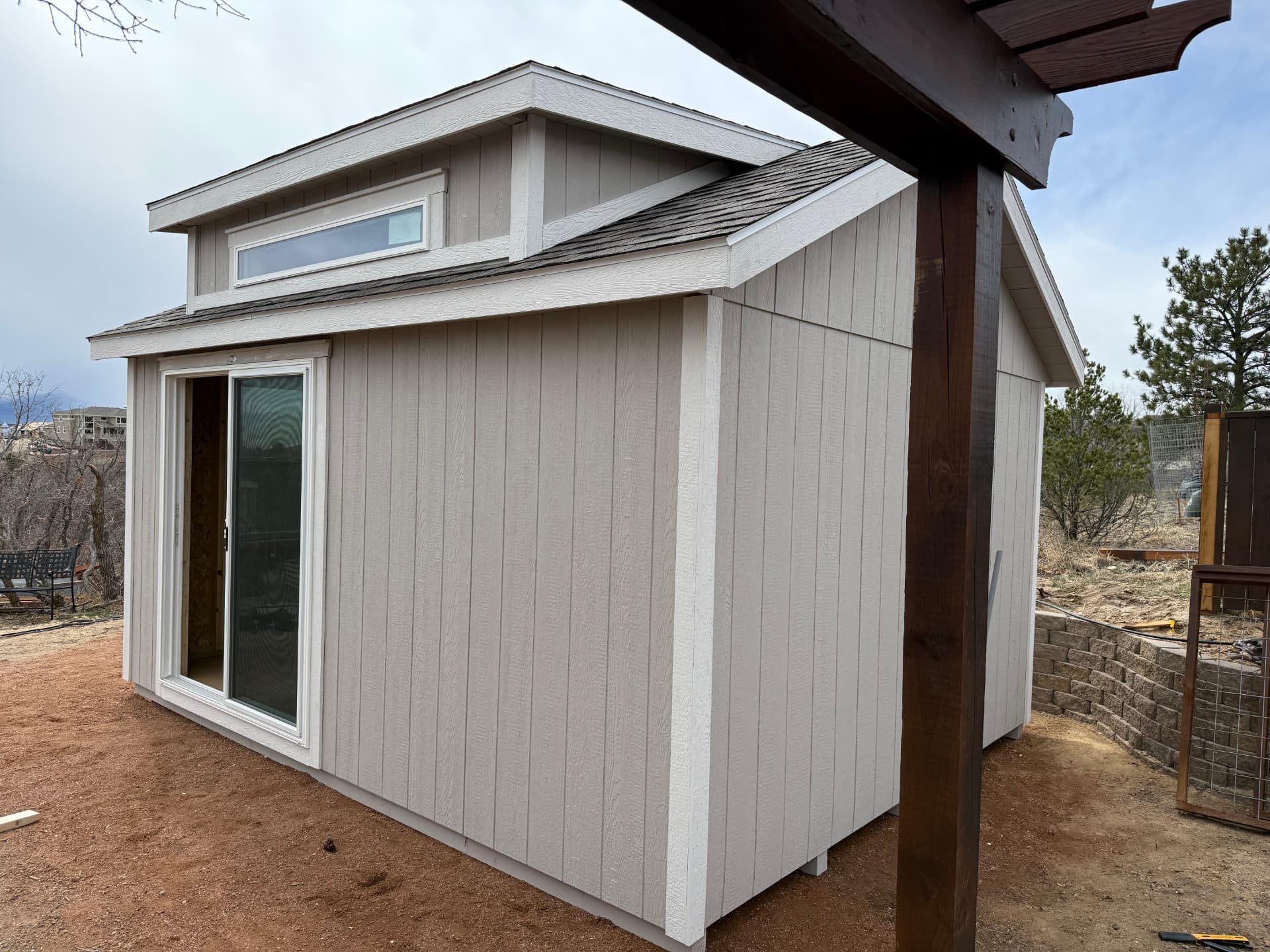
LP SmartSide
| 7" HardiePlank® Lap | Hardie Board & Batten | |
|---|---|---|
| Look | Classic horizontal boards with 7" exposure | Vertical panels with trim battens — the Modern Farmhouse look |
| Best for | Traditional sheds, garages that match a lap-sided home | Modern Farmhouse, Mountain Modern, and statement builds |
| Trim (The Shed Yard) | LP wood trim | Battens and trim |
| Relative cost | Lower — our more budget-friendly Hardie option | Higher — more material (battens and trim) and more detailed vertical labor |
| Upgrade starting price | From $3,000 | From $5,800 |
Get the Most Up-to-Date Pricing
Prices shown are current as of Sep 2026 and can change at any time. Options, site prep, permits, and delivery conditions all affect the final cost.
Board and batten costs more for a simple reason: every wall needs vertical panels and a run of battens, and each batten must be laid out, cut, and fastened in line. See board and batten on a home shell on our Mountain Modern Home page.
ColorPlus® Factory Finish vs. Primed Siding
Hardie siding comes either primed (painted after installation) or with a factory ColorPlus® Technology finish. James Hardie describes ColorPlus as a baked-on finish applied in multiple coats and heat-cured in a controlled environment, delivering color retention and fade resistance even in high UV conditions (James Hardie) — a real consideration at Colorado's altitude.
- Warranty: ColorPlus finishes carry a 15-year limited finish warranty against peeling, cracking, and chipping. The finish warranty is prorated after the first year (ColorPlus warranty).
- Maintenance: no jobsite painting, and less repainting compared with typical field paint, per James Hardie (Statement Collection).
- Cost at The Shed Yard: we can order any James Hardie factory color. Factory finish is an additional fee on top of the siding upgrade — ask for a quote on your exact size and color.
Popular Statement Collection® Colors
James Hardie's Statement Collection® is a curated palette of ColorPlus colors. Availability varies by region, so confirm your color with us (James Hardie). Six colors that suit Colorado properties:
- Arctic White: crisp and bright — a classic farmhouse body or trim color.
- Monterey Taupe: a warm neutral that blends with dry grasses and soil.
- Iron Gray: a deep charcoal for a modern look, especially on board and batten.
- Aged Pewter: a mid-tone gray that pairs with stone and dark roofs.
- Mountain Sage: a soft green that settles into foothill and pine settings.
- Evening Blue: a deep blue for a building you want people to notice.
Tip: screens vary. James Hardie recommends ordering physical samples to see true color (James Hardie), and you can compare roof and trim options in our color guide.
Pricing: Hardie Siding on a 200 Sq. Ft. Shed
Here is how the siding choice changes the starting price of a 10x20 (200 sq. ft.) Classic A-Frame Shed, using our 2026 Price Guide. A 10x20 has roughly 500–600 sq. ft. of wall area to cover once gables are included, which is why the siding choice moves the price so much.
| Siding | Upgrade | 10x20 Classic A-Frame starting price |
|---|---|---|
| LP® SmartSide® engineered wood (standard) | Included | $8,542 |
| 7" HardiePlank® Lap with LP wood trim | From $3,000 | From $11,542 |
| Hardie Board & Batten | From $5,800 | From $14,342 |
Which Siding Should You Choose?
- Choose standard LP SmartSide for the best value on a typical storage shed outside higher-hazard areas.
- Choose 7" Hardie Lap for a cement-based, noncombustible siding at the lower Hardie price.
- Choose Hardie Board & Batten for the Modern Farmhouse look and the most design impact.
- In a Class 2 area, talk with your code official and with us before you order so your siding, roofing, and placement are planned together.
Can I Paint My James Hardie Siding Myself?
Yes, you can paint James Hardie lap siding yourself — but buying it pre-painted from the factory is highly recommended. If you choose to paint it yourself, you must buy their unpainted PrimePlus® (primed) siding and strictly follow their warranty guidelines.
| Feature | Factory Pre-Finished (ColorPlus®) | Painting It Yourself (PrimePlus®) |
|---|---|---|
| Warranty | 15-year limited finish warranty against peeling/cracking | Voids the finish warranty (structural warranty remains) |
| Application | Baked-on, multiple coats applied evenly in a controlled factory | Brush, roller, or spray applied on-site; subject to weather and dust |
| Longevity | Typically lasts twice as long as field-applied paint | Requires repainting every 5 to 7 years on average |
| Upfront cost | Higher material cost per board | Lower material cost, but high labor/paint cost |
| Color choice | Limited to Statement or Dream collections | Infinite custom color options |
Strict Rules If You Paint It Yourself
If you decide to DIY or hire a local painter, James Hardie requires these steps to keep your 30-year structural warranty valid:
- Time limit: you must paint the primed siding within 180 days of installation.
- Paint type: you must use a 100% acrylic exterior topcoat. Do not use oil-based, silicone, or vinyl acetate paints.
- Condition: the siding must be completely clean and dry before application. Never paint over wet or frozen siding.
Did you know? James Hardie siding is backed by OSB (oriented strand board), which is one contributing factor to the increased cost of siding options.

Written by the team at The Shed Yard — family owned, Colorado built. We handle the building, the site prep, and the permits, start to finish.